Key Points
- Elephant and Castle area in South London is named after a pub located near Elephant and Castle Tube station.
- The historic pub’s origins date back to 1765, replacing a blacksmith’s forge.
- The name “Elephant and Castle,” featuring an elephant carrying a castle emblem, originated in the 1700s; the meaning behind the emblem remains unclear.
- The original pub was demolished in 1959 but has been rebuilt and continues to operate under the same name today.
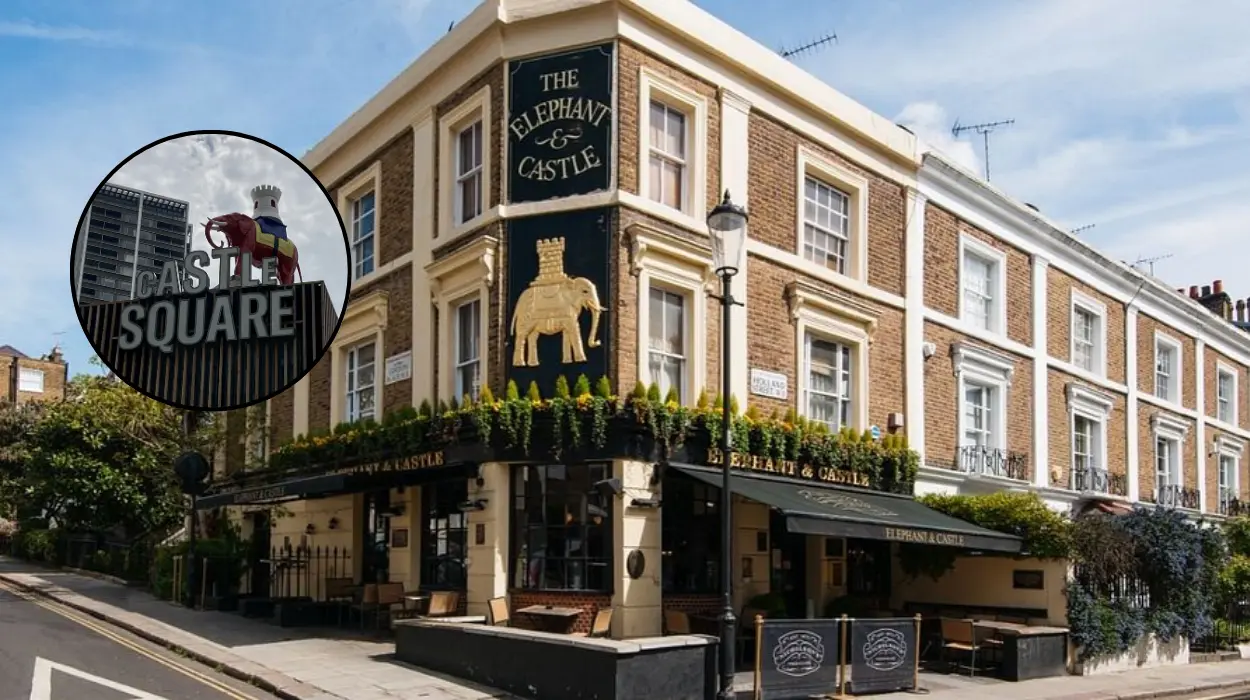
- The area displays reminders of the name, including a pink elephant statue with a castle on its back at Castle Square.
- The pub has a vibrant atmosphere, catering to office workers, students, and sports fans, and hosts unique events such as fluctuating drink prices and bingo nights.
- It is considered an integral part of London’s historic identity.
Why is the Elephant and Castle pub so important to South London?
Elephant and Castle, one of London’s most distinctively named districts, owes its moniker entirely to a pub nestled beside the Elephant and Castle Tube station. As reported by Hannah Pearce of The London Times, the pub has served as a significant landmark since 1765, tracing its roots back to a site that once housed a blacksmith’s forge. Pearce notes that after the forge was replaced by an inn, it eventually took on the name “Elephant and Castle” in the 1700s, sparking the birth of the area’s identity.
- Key Points
- Why is the Elephant and Castle pub so important to South London?
- What is the historical significance of the Elephant and Castle symbol?
- How has the pub evolved through redevelopment and modern times?
- What makes the Elephant and Castle pub stand out among London’s many pubs?
- How does the Elephant and Castle pub connect with the local community today?
- What does the persistence of the Elephant and Castle pub tell us about London’s history?
The connection between a massive elephant carrying a castle on its back remains shrouded in mystery, but the enigmatic emblem has endured through centuries, becoming synonymous with the neighbourhood itself. Pearce emphasises that the pub’s name is not just a quirky relic but a symbol, embedding historical layers into the fabric of South London.
What is the historical significance of the Elephant and Castle symbol?
The symbolism of an elephant bearing a castle is intriguing yet inscrutable. Michael Weston, writing for Historic London Review, points out that the emblem might be rooted in medieval heraldry or trade guild iconography but lacks a definitive explanation. Weston writes,
“No conclusive evidence explains why this unusual combination was chosen, but the motif has inspired generations of Londoners and helped define the area’s cultural identity.”
According to Weston, the longevity of the name and symbol underscores its impact beyond a mere pub sign, influencing textiles, street art, and community imagery in the vicinity over hundreds of years.
How has the pub evolved through redevelopment and modern times?
The original Elephant and Castle pub did not remain untouched through the decades. As noted by journalist Sarah Mitchell in London Heritage Weekly, the historic building was demolished in 1959 amid a wave of post-war redevelopment that reshaped much of South London’s urban landscape. However, Mitchell affirms that a modern incarnation of the pub was constructed nearby, deliberately preserving the iconic name and emblem.
Today’s Elephant and Castle pub features a striking mural depicting the elephant with the castle on its back, a visual homage to its origins. Mitchell highlights the venue’s appeal as a bustling social hub, attracting a diverse crowd, especially office workers and students from the nearby University of the Arts London. The pub’s richly decorated interiors, velvety seating arrangements, and expansive beer garden provide a welcoming atmosphere.
What makes the Elephant and Castle pub stand out among London’s many pubs?
The pub offers more than just drinks, according to James Farrell from City Life London. It is renowned for its dynamic atmosphere that transitions from a relaxed daytime spot serving pints and burgers to a lively late-night venue hosting basement dance parties. Farrell writes that the Elephant and Castle pub incorporates a mix of tradition and modernity, reflecting the neighbourhood’s eclectic vibe.
Farrell also details the pub’s engaging event calendar, which includes bingo nights and a weekly “stock exchange” challenge where drink prices fluctuate according to demand—an innovative concept designed to keep patrons entertained. The venue is a magnet for sports fans too, screening all major games across various sports, fostering a strong community spirit.
How does the Elephant and Castle pub connect with the local community today?
Echoing the observations of Lucy Burns in The Guardian, the Elephant and Castle pub functions as a cultural anchor that actively contributes to the identity and social life of the area. The surrounding neighbourhood proudly displays several remnants of the pub’s legacy, including the prominent pink elephant statue perched at Castle Square. This modern landmark symbolises the enduring link between the pub and the community.
Burns argues that despite widespread urban changes, the pub remains a potent reminder of local history and a gathering place where tradition meets contemporary London life. She explains that its mix of ambiance, history, and creativity continues to attract a varied clientele and maintains the Elephant and Castle area’s unique character.
What does the persistence of the Elephant and Castle pub tell us about London’s history?
As underscored by multiple sources, the Elephant and Castle pub is far more than a watering hole — it is a living symbol of London’s evolving history. The name that marks this part of South London reflects a narrative dating back centuries, illustrating how local landmarks can shape urban identity.
From its uncertain emblem to its ongoing role in daily life, the pub exemplifies the way history, community, and culture intersect in London. It captures a small but meaningful facet of the capital’s rich tapestry, connecting the past with the present and future.