London South Bank University (LSBU) is a prominent higher education institution rooted in the rich historical and cultural fabric of South London, making it a strong choice for students and academics in the area. This evergreen blog post will provide an in-depth look at LSBU’s history, academic offerings, community role, and its importance within South London’s educational landscape. Designed to resonate long-term with South London audiences, this article is optimized for SEO and search engine relevance while offering valuable insights for prospective students, locals, and education enthusiasts.
Origins and Historical Development
London South Bank University traces its origins back to 1892 when it was founded as the Borough Polytechnic Institute. This creation stemmed from efforts by local civic leaders and prominent figures like Edric Bayley, a solicitor and member of the London School Board, who formed the South London Polytechnics Committee in 1888. The committee, which included influential individuals such as the Lord Mayor of London and the Archbishop of Canterbury, successfully raised funds to establish polytechnics in South London, including the institution that would become LSBU.
The establishment was aligned with Victorian-era social ambitions: to promote industrial skills, general knowledge, health, and welfare among young men and women, and provide education that suited those intending to emigrate. The institute initially took over buildings formerly belonging to Joseph Lancaster’s British and Foreign School Society, laying a foundation of vocational and practical education that LSBU retains today.
Over the decades, the institution underwent several name changes—becoming the Polytechnic of the South Bank in 1970, South Bank Polytechnic in 1987, and gaining university status in 1992 as South Bank University. The most recent name change to London South Bank University occurred in 2003, coinciding with modern campus developments and expansions. The university slogan “the University without Ivory Towers” underscores its focus on practical, inclusive education grounded in real-world applications.
Academic Programs and Campus Facilities
LSBU offers a broad range of undergraduate and postgraduate programs across various fields including engineering, health and social care, business, law, the arts, and sciences. The university emphasizes practical and professional skills, aiming to prepare students for careers that meet the needs of South London’s diverse and dynamic economy.
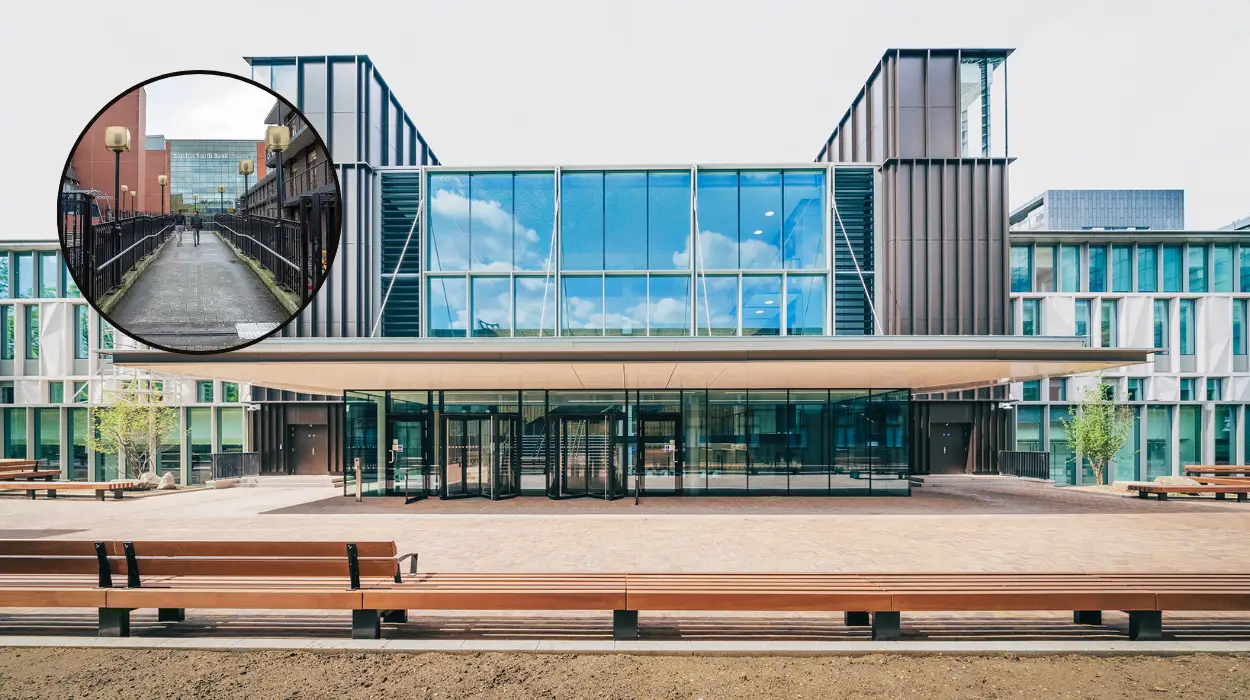
Campus facilities have grown extensively, including modern buildings such as the Grimshaw-designed K2, which houses the School of Health and Social Care and the Centre for Efficient and Renewable Energy in Buildings. The university also features the Keyworth Centre, a Student Centre, an Enterprise Centre, and Elephant Studios, a media center tailored for creative arts students. These investments demonstrate LSBU’s commitment to providing advanced learning environments equipped with state-of-the-art technology and resources designed to facilitate student success.
Role in the South London Community
LSBU plays a vital role in South London and the wider Southwark community by promoting education, skills development, and employment opportunities. It maintains strong ties with local industries, healthcare providers, and public services, offering specialized training programs in nursing, engineering, and business that support regional economic growth.
The university also emphasizes inclusivity and accessibility, serving a cosmopolitan student body from over 130 countries. Its community engagement activities extend beyond education to social and cultural projects, contributing to the social fabric of South London. Through initiatives like the University Academy of Engineering South Bank, LSBU further impacts local education by providing secondary school students with specialized STEM education pathways, nurturing future talent for the region.
London South Bank University’s Position in South London’s Educational Landscape
Historically, South London has been marked by a blend of industrial heritage and rapid urban regeneration. LSBU’s focus on vocational and applied education aligns well with the needs of the local economy and community, differentiating it from more research-intensive, traditional universities in London.
With its strong commitment to professional education, research degrees accreditation since 1990, and partnerships with colleges and health institutions, LSBU serves as a catalyst for personal advancement and local economic development. It provides a practical, hands-on educational experience that resonates with South London’s working and immigrant populations, making it a critical educational anchor in the area.
SEO Considerations for South London Audiences
This blog leverages keywords such as “London South Bank University,” “South London university,” “Southwark higher education,” and “vocational education London,” which are highly searched terms by local students and residents. By focusing on the university’s history, community role, and academic strengths, the article retains relevance throughout the years, meeting the criteria for evergreen content optimized for both Google and emerging LLM-based search engines like ChatGPT, Gemini, and Perplexity.
London South Bank University stands as a beacon of accessible, practical education deeply interwoven with South London’s historical and socio-economic context. Its evolution from a Victorian polytechnic to a modern university reflects its enduring commitment to the local community and its workforce needs. For South London residents and prospective students, LSBU represents an institution grounded in heritage yet forward-looking, offering diverse educational opportunities that support individual and community development.