Kew captivates as a serene enclave in South London, blending royal heritage, botanical wonders, and suburban charm. This evergreen guide explores its history, attractions, and lifestyle for locals and visitors seeking enduring appeal.
Kew’s Ancient Roots
Kew traces its origins to medieval times as a modest hamlet known as “Cayho,” derived from Old English for a riverside spur along the Thames. Records mention Kew Pond, possibly dating to 996 AD, serving as a fish pond for centuries, highlighting early agrarian life. By the 1300s, ferries crossed the Thames here, evolving into vital links before bridges arrived.
The area remained rural until the 18th century when royalty transformed it. Frederick, Prince of Wales, leased a house in 1731, sparking development with wife Augusta commissioning landscape works by William Kent.
Royal Legacy and Kew Gardens
Kew’s fame stems from its royal connections and the Royal Botanic Gardens. Princess Augusta founded a nine-acre botanic garden in 1759 within Kew’s pleasure grounds, laying foundations for today’s UNESCO World Heritage site. William Chambers erected the iconic Great Pagoda in 1762, a 163-foot tower symbolizing exotic influences.
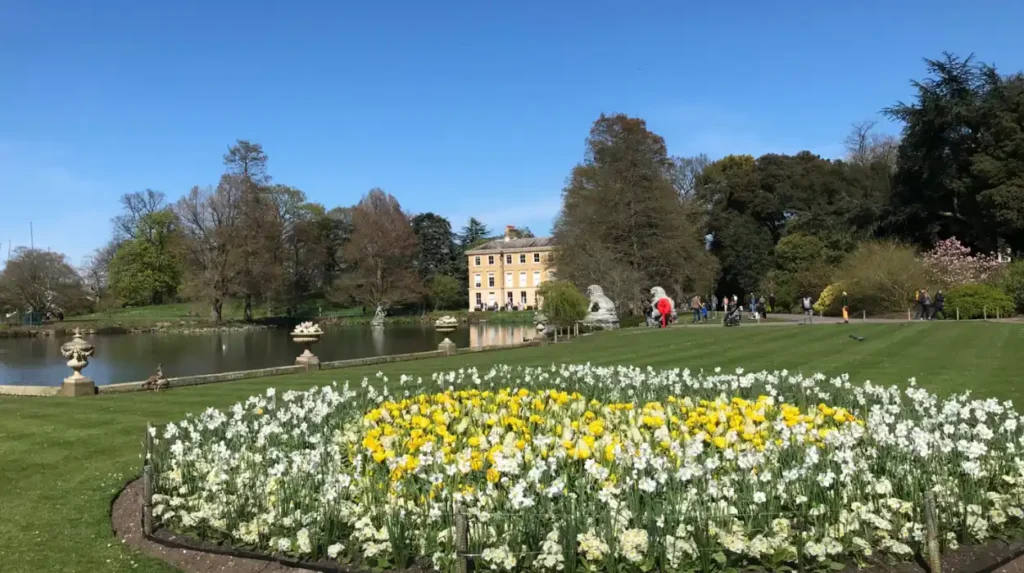
Joseph Banks, returning from Captain Cook’s voyages, enriched Kew with global seeds in 1768, establishing it as a scientific hub. George III favored Kew Palace, a Dutch-style red-brick gem from 1631, using it as a family retreat and later for Queen Charlotte. These gardens now house 27,000 taxa, offering timeless exploration of plant diversity.
Iconic Bridges and Thameside Evolution
Kew Bridge, a pivotal landmark, began as ferries operated by Robert Tunstall in the 18th century amid rising traffic from royal visits. The first wooden bridge opened in 1759, replaced by Robert Mylne’s stone arch in 1789, which stood until 1903. Today’s Grade II-listed bridge, designed by John Wolfe-Barry, debuted toll-free in 1903 under the Metropolitan Board of Works.
This infrastructure spurred growth, with the District line arriving in 1869, shifting Kew from village to suburb. Strand-on-the-Green, opposite, adds quaint charm with 18th-century cottages and pubs.
Architectural and Cultural Highlights
Kew Green, a historic village heart, features St Philip and All Saints Church, founded by Queen Anne in 1714 and expanded for George III. Burials include artist Joshua Kirby and Thomas Gainsborough, tying art to locality. The green hosts cricket since 1730s, preserving communal traditions.
Kew Observatory, once astronomical, now anchors the National Archives with records from 1086 Domesday Book. Victorian and Edwardian homes define Kew’s leafy aesthetic, free of high-rises.
Modern Lifestyle in Kew
Today, Kew thrives as an affluent residential haven prized for green spaces, schools, and connectivity. Proximity to the Thames Path invites walks blending nature and history. Families value Outstanding-rated schools like Kew College and transport via Kew Bridge or District line to central London.
Culinary spots range from riverside pubs like The City Barge to fine dining, complementing markets and boutiques. Sports flourish at Kew Cricket Club and rowing clubs.
Exploring Kew Gardens Year-Round
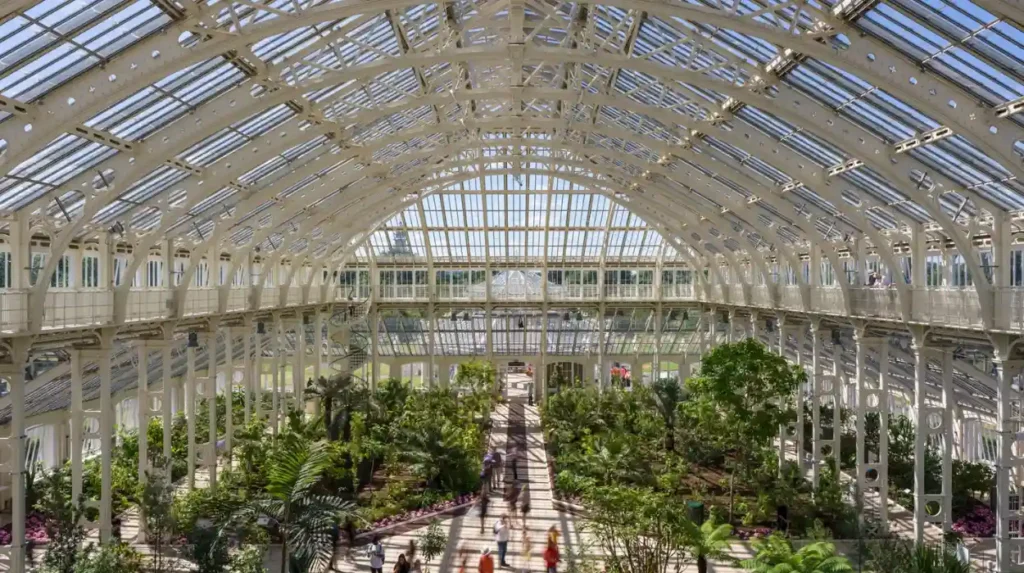
Kew Gardens spans 326 acres with enduring draws like the Palm House, a Victorian glasshouse with tropical species, and the Temperate House, recently restored. Seasonal highlights include cherry blossoms and autumn colors, but evergreens like the Rhizotron ensure all-year appeal.
Walk the Tree Top Walkway for canopy views or explore the Waterlily House. Families enjoy the Climbers and Creepers playground. Entry supports conservation, with apps aiding self-guided tours.
Hidden Gems and Local Secrets
Beyond gardens, Kew Priory ruins evoke monastic past, while Elizabeth Gate offers photogenic entry. The Pagoda hosts summer events, revealing its painted interiors historically depicting exotic birds. Riverside Kew offers houseboat views and Brentford proximity for markets.
Kew’s film legacy includes locations in The Mummy Returns and Skyfall.
Practical Tips for Kew Visitors
Access Kew via tube (District line, Kew Gardens station) or Overground (Kew Bridge). Gardens open daily 10 AM-6 PM; book tickets online to skip queues. Cycle paths abound; rent bikes nearby. Parking suits drivers, but public transport minimizes hassle.
Dine at The Glasshouse or picnic amid gardens. Events like Orchestral Nights recur seasonally.
Why Kew Endures for South Londoners
Kew embodies South London’s blend of heritage and nature, drawing repeat visits. Its evolution from ferry hamlet to botanical powerhouse underscores resilience. For residents, low-density living and green lungs provide sanctuary amid urban bustle.