Key Points
- Greenwich Council approved plans for a new 3,000-capacity theatre on the Greenwich Peninsula at its Planning Board meeting on January 20, 2026.
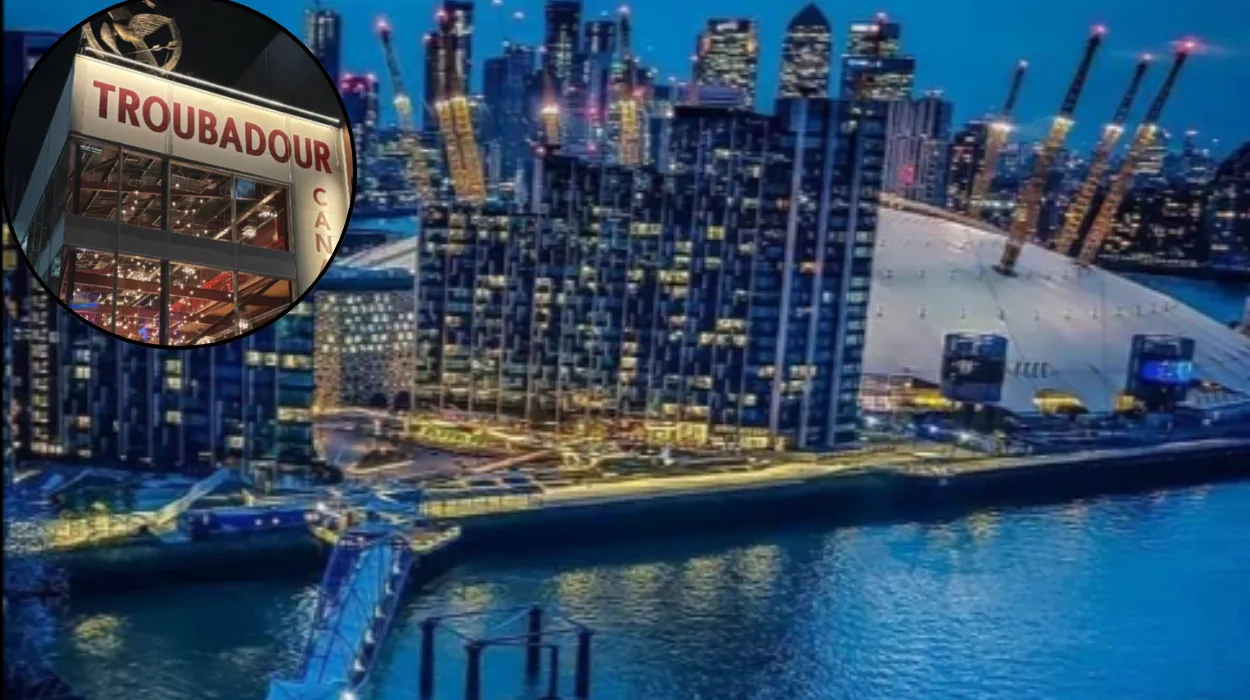
- The theatre, named Troubadour Greenwich Peninsula Theatre, will be split across two 1,500-seat auditoriums and built on land east of the peninsula, adjacent to the cable car station.
- It will surpass the London Coliseum’s 2,359 seats to become London’s largest by capacity.
- Plans were proposed by Troubadour Theatres, which operates venues in Wembley Park (hosting Andrew Lloyd Webber’s Starlight Express) and Canary Wharf (opened October 2025, currently showing the world premiere of The Hunger Games theatrical adaptation).
- Approval is temporary for 10 years, after which the site will become residential tower blocks per the Greenwich Peninsula Masterplan.
- Troubadour joint founders and CEOs Oliver Royds and Tristan Baker welcomed the decision, highlighting their commitment to large-scale live performance spaces.
- Sylvia Williams of the Greenwich Millennium Village Residents Association supported the plans, calling for conditions on education, community access, and traffic management.
- Troubadour Chief Operating Officer Rowley Gregg affirmed community support via the Troubadour Trust, which allocates 50p per ticket to local workshops, school schemes, and charities.
- Construction is slated to begin in June 2026, with completion expected in nine months.
Greenwich Peninsula (South London News) January 27, 2026 – Greenwich Council has approved plans for what will become London’s largest theatre, a 3,000-seat venue on the Greenwich Peninsula proposed by Troubadour Theatres. The decision, made at the Planning Board meeting on January 20, marks a significant expansion of the capital’s cultural infrastructure, though the permission is temporary for 10 years before residential development takes over the site.
- Key Points
- What Are the Details of the Approved Theatre Plans?
- Why Did Greenwich Council Approve the Plans?
- What Do Troubadour’s Leaders Say About the Approval?
- Who Supported the Plans from the Local Community?
- What Is the Timeline for Construction and Opening?
- How Does This Fit into the Greenwich Peninsula Masterplan?
- What Makes Troubadour Theatres Qualified for This Project?
- Will the Theatre Benefit Local Schools and Residents?
- What Challenges Might the Project Face?
- Broader Impact on London’s Theatre Scene
What Are the Details of the Approved Theatre Plans?
The new Troubadour Greenwich Peninsula Theatre will feature two 1,500-seat auditoriums on a plot east of the peninsula, next to the Emirates Air Line cable car station. This design positions it to eclipse the 2,359-seat London Coliseum in the West End as the capital’s biggest by capacity. Troubadour Theatres, the developers behind the project, currently manage successful venues elsewhere in London.
As reported across multiple sources covering the Planning Board meeting, the venue aims to host landmark productions in versatile spaces. The company’s existing Canary Wharf Theatre, which opened last October, is currently home to the first-ever theatrical adaptation of the book and film series The Hunger Games. Meanwhile, Andrew Lloyd Webber’s Starlight Express continues its run at the Wembley Park venue. These successes underscore Troubadour’s expertise in delivering large-scale entertainment.
Why Did Greenwich Council Approve the Plans?
Greenwich Council’s Planning Board gave the green light on January 20, fulfilling a vision for a borough ‘National Theatre’ on the peninsula. The approval aligns with efforts to enrich the area’s cultural offerings, though it is limited to a 10-year temporary period. Post-2036, the land will transition to residential tower blocks as outlined in the Greenwich Peninsula Masterplan, ensuring long-term housing development.
Councillors weighed community benefits against temporary land use during deliberations. The project promises economic boosts through jobs, tourism, and events, while fitting into the peninsula’s evolving masterplan. No significant objections were noted from council proceedings, paving the way for swift progression.
What Do Troubadour’s Leaders Say About the Approval?
Troubadour Theatres’ joint founders and CEOs, Oliver Royds and Tristan Baker, issued a statement celebrating the milestone.
“At Troubadour, we are driven by a belief in creating extraordinary spaces that inspire artists, audiences, and the stories they come together to share,”
they said.
“Securing planning permission for the new Troubadour Greenwich Peninsula Theatre marks a major milestone for us, and an exciting new chapter in our commitment to bold, large-scale live performance.”
The CEOs further emphasised expansion following recent triumphs.
“Following the success of our Canary Wharf Theatre and the world’s first stage adaptation of The Hunger Games, the opening of Greenwich Peninsula Theatre will further expand London’s cultural landscape,”
Royds and Baker added.
“We are proud to be investing in the future of theatre – creating versatile, ambitious spaces designed to host landmark productions and deliver unforgettable experiences for audiences for years to come.”
Troubadour Chief Operating Officer Rowley Gregg addressed community integration during the meeting. He described supporting Greenwich residents as a “key desire” for the company. Gregg highlighted the Troubadour Trust, which directs 50p from every ticket sold across Troubadour venues towards local initiatives, including workshops, ticket schemes for schools, and charities.
Who Supported the Plans from the Local Community?
Sylvia Williams spoke on behalf of the Greenwich Millennium Village Residents Association at the January 20 meeting. She endorsed the theatre as a “welcome addition… to the cultural life of the Greenwich Peninsula” and urged the council to impose conditions for local school use.
“A theatre could be a valuable and positive addition to the peninsula if it is delivered with clear commitments to education, community access and responsible traffic planning,”
Ms Williams concluded.
“With the right conditions, it can become a cultural asset that genuinely serves the local community and local people.”
Her intervention reflected broader resident sentiments for inclusive development. Williams’ call for safeguards on education and traffic was not contested in reports, suggesting alignment with council priorities.
What Is the Timeline for Construction and Opening?
Rowley Gregg indicated that construction will commence in June 2026, with the build process likely taking nine months. This timeline positions a potential opening in early 2027, allowing the venue to integrate into the peninsula’s cultural calendar promptly. The temporary 10-year lifespan provides a defined operational window before residential redevelopment.
Planning documents detail the site’s adjacency to the cable car station, facilitating public transport access. Troubadour’s experience with rapid builds at Canary Wharf and Wembley supports confidence in the schedule.
How Does This Fit into the Greenwich Peninsula Masterplan?
The approval adheres strictly to the Greenwich Peninsula Masterplan, which earmarks the site for residential tower blocks after 10 years. This masterplan guides the area’s transformation into a mixed-use hub with housing, culture, and commerce. The theatre serves as an interim cultural anchor, bridging current development phases.
Reports note the peninsula’s ongoing evolution, with the cable car station already a transport nexus. The temporary permission balances immediate cultural gains against housing needs, a common approach in urban planning.
What Makes Troubadour Theatres Qualified for This Project?
Troubadour Theatres brings proven credentials, owning and operating London venues in Wembley Park and Canary Wharf. The Wembley site hosts Starlight Express, a long-running Andrew Lloyd Webber production drawing global audiences. Canary Wharf’s October 2025 opening with The Hunger Games – the first stage version of Suzanne Collins’ dystopian series – has been a commercial hit, validating their model for blockbuster adaptations.
The company’s portfolio demonstrates scalability for the 3,000-seat Greenwich venue. Joint CEOs Oliver Royds and Tristan Baker have steered expansions amid post-pandemic theatre recovery, positioning Troubadour as a innovator in large-scale live performance.
Will the Theatre Benefit Local Schools and Residents?
Community access emerged as a focal point. Sylvia Williams advocated for school usage conditions, envisioning educational programmes. Rowley Gregg reaffirmed Troubadour’s commitment, citing the Troubadour Trust’s ticket levy funding workshops and subsidies. This mechanism has supported locals at existing venues, promising similar impacts in Greenwich.
Traffic and noise concerns were raised but mitigated by planning conditions. The site’s peninsula location aids containment, with public transport emphasis reducing car reliance.
What Challenges Might the Project Face?
The 10-year limit poses the primary hurdle, requiring Troubadour to maximise impact swiftly. Residential transition demands foresight on decommissioning. Community calls for conditions, like those from Sylvia Williams, must be formalised to sustain support.
Economic factors, including construction costs and audience draw in southeast London, warrant monitoring. Yet, Troubadour’s track record and the peninsula’s growth trajectory augur well.
Broader Impact on London’s Theatre Scene
This approval elevates Greenwich as a cultural destination, challenging West End dominance. London’s theatre capacity expands, fostering competition and innovation. Productions like The Hunger Games signal appetite for adaptations, potentially drawing diverse crowds.
For residents, it promises jobs, events, and pride in a ‘National Theatre’ for the borough. As Troubadour invests, London’s live performance landscape diversifies beyond traditional hubs.