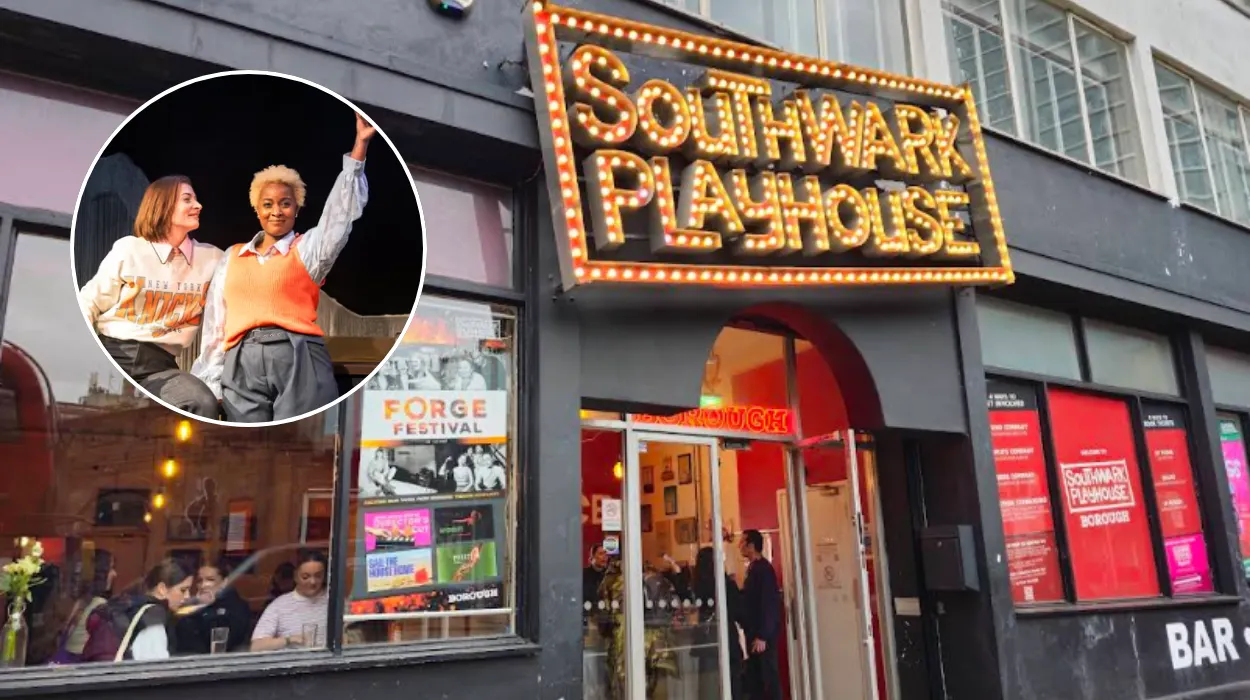
Key Points
- New musical Ballad Lines at Southwark Playhouse, created by writer-composer Finn Anderson and director‑co‑creator Tania Azevedo, spans several centuries and geographies while interrogating ancestry, motherhood and bodily autonomy.
- The show’s title plays on the phrase “blood lines”, signalling its focus on generational legacy and the transmission of stories, songs and trauma through a maternal line.
- The narrative follows three interlinked stories of women in different eras and locations: Cait, a 17th‑century Scottish parson’s wife; Jean, a 15‑year‑old Irish girl heading for New York; and Sarah, a present‑day New Yorker with roots in conservative West Virginia.
- Contemporary couple Sarah and Alix, both thirtysomething professionals in New York, find their relationship tested when the question of having a baby exposes starkly different desires: “now” for Sarah and “never” for Alix.
- As reported by Joe Muggs of The Arts Desk, Sarah is forced to confront a box of belongings from her past, including cassette tapes left by her late Aunt Betty, which she has been reluctant both to open and to discard.
- Those tapes, narrated in character by Betty, contain family histories stretching back to Ireland and Scotland, tracing how women brought their ballads, their babies and their blood to the New World.
- The musical’s score fuses newly written numbers with traditional material, drawing strongly on folk, country and bluegrass colours while maintaining a consistent thematic thread.
- Rebecca Trehearn, as Aunt Betty and narrator, opens the show vocally and anchors its moral universe with songs about rural self‑sufficiency and attachment to “old values”.
- Frances McNamee’s Sarah bridges past and present, caught between passionate love for Alix and an equally powerful pull towards the ancestral stories and expectations embedded in her family line.
- Sydney Sainté’s Alix is portrayed as forthright and resistant to conventional family structures, joining Sarah in the number “Chosen Family” to reject the worldview of Sarah’s Appalachian upbringing.
- Kirsty Findlay’s Cait embodies the perilous choice to seek an abortion in 17th‑century Scotland, confronting both physical danger and social condemnation.
- Yna Tresvalles’ Jean, a young pregnant Irish girl five generations later, chooses to carry her pregnancy to term and faces a crossroads between a widowed doctor and a new start across the Atlantic.
- Arranger Daniel Jarvis reshapes several traditional ballads, integrating them with original songs such as “Words Are Not Enough” to link historical dilemmas with contemporary reproductive debates.
- The production is billed as “A Folk Musical” but consciously eschews cosy, stereotype folk aesthetics in favour of harder‑edged storytelling and a modern musical‑theatre sensibility.
- The two‑and‑a‑half‑hour running time allows the show to weave its three strands into a multi‑generational meditation on whether to bear children, who gets to decide and at what cost.
- As noted by Joe Muggs of The Arts Desk, the reviewer admired the show’s craft and ambition yet felt a personal “empathy gap”, particularly around the embodied experience of pregnancy and childbirth.
- The review explicitly invokes Rainer Maria Rilke’s line “Let everything happen to you: beauty and terror. Just keep going. No feeling is final” to frame the emotional expectations audiences often bring to tragic narratives.
- The critic reflects on the limits of male understanding of pregnancy, suggesting that such limits reinforce the argument that women must retain control over their own bodies.
- While recognising the production as a “really fine musical”, the reviewer concludes that, for them, appreciation did not translate into full emotional identification, though they predict that many audience members will respond more viscerally.
- The show’s combination of queer contemporary romance, historical female narratives and folk‑inflected musical language positions it as an unusually specific, intimate yet thematically “epic” new British musical.
South London (South London News) January 31, 2026 – In a new musical that reaches back across oceans and generations, Ballad Lines at Southwark Playhouse uses folk‑rooted songs and a queer contemporary love story to explore whether, when and why women choose to have children, and what happens when those choices collide with partners, families and long‑entrenched social norms.
- Key Points
- How does ‘Ballad Lines’ set up its multi‑generational story about motherhood?
- How do Sarah’s family tapes link West Virginia to Ireland and Scotland?
- Which women from the past does the musical bring to life, and what choices do they face?
- How does the score blend folk traditions with contemporary musical theatre?
- Who are the principal performers, and how do they anchor the story?
- How does the reviewer grapple with empathy, gender and the limits of understanding?
- Does ‘Ballad Lines’ succeed more as an artistic achievement than an emotional experience?
How does ‘Ballad Lines’ set up its multi‑generational story about motherhood?
Ballad Lines opens not with a single protagonist but with an interlaced web of women whose lives are separated by centuries yet stitched together by song, blood and memory.
The premise, as relayed in the original Arts Desk review by Joe Muggs, is that the show is co‑created by composer‑writer Finn Anderson and director‑co‑creator Tania Azevedo, who consciously frame their musical as both epic in scale and intimate in psychological focus. The title itself is a pun: said quickly, “Ballad Lines” becomes “Blood Lines”, signalling from the outset that this is a drama about ancestry, inheritance and the often fraught decision to extend a lineage.
In the present day strand, thirtysomething New Yorkers Sarah and Alix are shown moving into a new apartment, bantering about the impossibility of either of them getting accidentally pregnant but acknowledging that this does not rule out the deliberate choice to have a child. That apparently light joke soon exposes a deep fissure between them, as Sarah begins to consider motherhood “now” while Alix remains firmly in the “never” camp. This contemporary conflict is the hinge on which the older stories turn, drawing Sarah back into the conservative world of her West Virginian upbringing through the physical artefacts she has tried so hard to leave behind.
How do Sarah’s family tapes link West Virginia to Ireland and Scotland?
As reported by Joe Muggs of The Arts Desk, Sarah’s emotional journey is triggered when, during the move, she must decide what to do with a box from her past that she has been avoiding for years. Inside are cassette tapes left by her Aunt Betty, a figure with whom she once shared a close bond before a catastrophic argument severed contact, prompting Sarah not only to ignore Betty’s voicemails but to stay away from her funeral. In choosing at last to listen to the tapes instead of throwing them away, Sarah opens a channel to voices that long pre‑date both Betty and herself.
Those tapes, narrated on stage by the character of Betty, recount stories of women who left Ireland and Scotland for the New World, bringing with them not just children but ballads and beliefs that would shape generations to come.
The musical uses these recordings as a dramatic device to slip back and forth between timelines, showing how decisions about pregnancy and motherhood have constantly been made under pressure from religion, poverty, patriarchy and the promise—or illusion—of a better life across the ocean. For Sarah, hearing these stories means confronting what the reviewer calls her “biological clock”, an expression he himself labels “horrible” yet acknowledges as central to the character’s crisis.
Which women from the past does the musical bring to life, and what choices do they face?
The ancestral narrative focuses on two key figures whose contrasting decisions echo across the years. First is Cait, a 17th‑century Scottish parson’s wife who does not wish to carry her pregnancy to term, knowing that any attempt at abortion is fraught with physical danger and social ruin.
In the Arts Desk account, actor Kirsty Findlay is singled out for bringing “steel” to Cait’s determination, portraying a woman for whom the choice not to bear a child is both an act of self‑preservation and a challenge to the theological and cultural structures surrounding her.
Five generations later, the story turns to Jean, a 15‑year‑old Irish girl whose situation mirrors Cait’s in some respects but diverges in others. Jean is pregnant and does want her baby, yet she hovers between staying with a widowed doctor who is grieving his own lost family and seizing the chance for a clean break by sailing to New York.
The review notes that Yna Tresvalles’ Jean embodies the tension between security and risk, domestic attachment and the promise of reinvention on another continent. Through Cait and Jean, the production sets up a lineage of women whose decisions about pregnancy are never purely personal but are shaped by geography, class, faith and historical moment.
How does the score blend folk traditions with contemporary musical theatre?
Ballad Lines is described as being “largely told” through its score, which weaves together newly written songs with traditional material in a way that underpins the show’s thematic continuity. The Arts Desk review emphasises that the music maintains a strong focus on folk, country and bluegrass textures, allowing the audience to
“find the souls of these women through our ears”.
Rather than treating numbers as decorative interludes, the creative team uses them to drive the narrative and to centre the characters’ emotional lives, in contrast to what the reviewer calls the “rickety stitching together” often found in less cohesive new musicals.
Among the original numbers mentioned, “Words Are Not Enough” exemplifies the show’s attempt to articulate the inexpressible pressure and pain around reproductive decisions, while other songs are drawn from ballad traditions that link contemporary characters back to their ancestors.
Daniel Jarvis is credited in the review with providing new arrangements for roughly half a dozen traditional songs, reshaping them so that they resonate within a modern theatrical context without losing their historical weight. Although the marketing strapline labels the show “A Folk Musical”, the critic is keen to stress that this is not the “finger‑in‑the‑ear and chunky jumpers” folk of nostalgic cliché, but rather “hard‑edged tales of hard lives” given a vivid contemporary pulse.
Who are the principal performers, and how do they anchor the story?
Casting is highlighted as “critical” in the Arts Desk review, with particular praise for the performers who open and carry the narrative. Rebecca Trehearn, whose voice is reportedly the first heard on stage, plays Aunt Betty, the narrator figure whose songs articulate the stoic, self‑sufficient ethos of rural West Virginia, where “old values” persist as if “the 1960s never happened”.
The reviewer notes tonal echoes of Dolly Parton’s storytelling style in Trehearn’s number “Unexpected Visitor”, suggesting that fans of Parton’s narrative country songs may be drawn to the show’s musical language and emotional directness.
Frances McNamee’s Sarah is described as doing much of the “heavy lifting” in tying together the present‑day and historical strands; she is portrayed as deeply in love with Alix yet irresistibly pulled towards the stories unfolding on the tapes. Sydney Sainté plays Alix as “feisty and forthright”, forming with McNamee a credible couple whose duet “Chosen Family” asserts their rejection of the narrow, conservative definitions of home and kinship that dominate Sarah’s Appalachian background.
Around them, Kirsty Findlay and Yna Tresvalles bring distinct textures to Cait and Jean, ensuring that the past does not feel like a mere backdrop but rather a fully inhabited set of parallel lives pushing against the same question: to breed or not to breed.
How does the reviewer grapple with empathy, gender and the limits of understanding?
In one of the most striking sections of the Arts Desk review, critic Joe Muggs turns the lens on himself, acknowledging a “yawning empathy gap” that he feels was not bridged during the show’s two‑and‑a‑half‑hour running time. He invokes Rainer Maria Rilke’s line
“Let everything happen to you: beauty and terror. Just keep going. No feeling is final”
as a kind of credo for critics and audiences when approaching tragic characters like Vanya, Yerma or Cio‑Cio‑San, whose suffering invites a level of identification that ideally dissolves the distance between stage and stalls. In the case of Ballad Lines, however, he suggests that pregnancy and childbirth may remain uniquely inaccessible to men, even the most sympathetic.
Building on that reflection, Muggs argues that one of the reasons women must retain control over their own bodies is precisely because men cannot fully comprehend the “physical and psychological havoc” that pregnancy can wreak, nor the transformations that even contemplating those nine months can provoke.
He notes that while men can attend antenatal classes, read pamphlets and offer unflagging support, they will never be “even close” to experiencing the “bloody mess” of childbirth as their own pain or joy. Instead, he suggests, for men the dominant feeling is one of relief rather than ownership, and that this distance helps preserve a “perspective” in which ultimate power rightly sits with the mother.
Does ‘Ballad Lines’ succeed more as an artistic achievement than an emotional experience?
By the end of his assessment, Joe Muggs offers a nuanced verdict that separates his intellectual appreciation of Ballad Lines from his personal emotional response. He commends the
“heart and soul and technical achievement”
on stage, from the integrated score and thoughtful casting to the ambitious interweaving of three timelines that interrogate reproductive choice and generational legacy. In his view, the show stands out among new musicals for its understanding of the “language of musical theatre”, where the whole becomes “so much greater” than the sum of book, music and lyrics.
Yet, even with that admiration, he reiterates that he did not “really feel it” in the way he might have hoped, attributing this gap at least partly to the gendered asymmetry around pregnancy rather than to any failing of the production itself.
Crucially, he is careful not to generalise his reaction, predicting that many audience members, particularly those whose own experiences align more closely with the women on stage, will find the show profoundly affecting. The resulting portrait of Ballad Lines is that of a bold, distinctive musical that may divide audiences along lines of identification but is unlikely to leave them indifferent, especially as debates over bodily autonomy and family formation continue to resonate both on and off the stage.