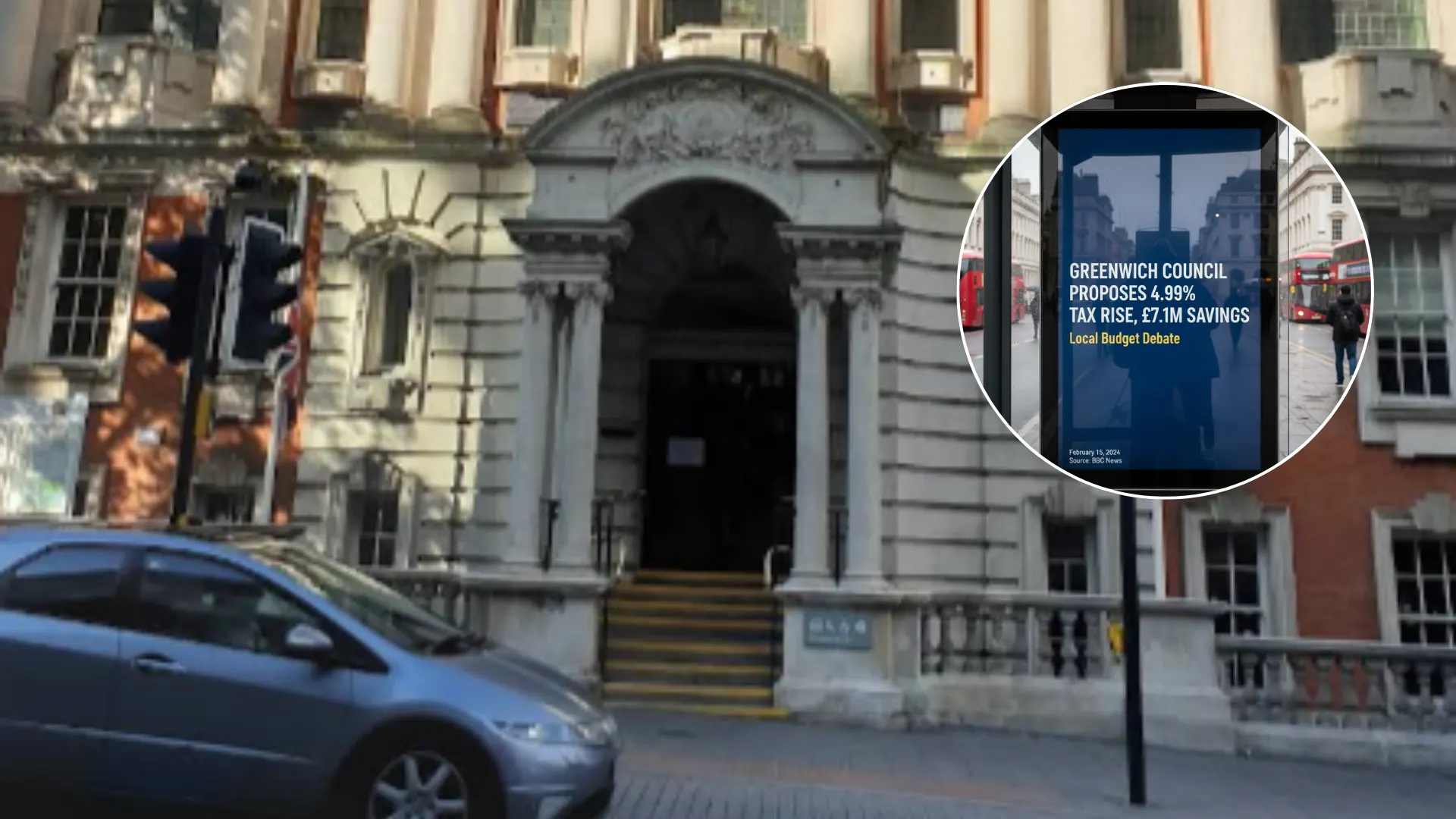
Key Points
- Greenwich Council proposes a 4.99 per cent council tax increase starting April 2026, equating to £1.85 more per week for Band D households, comprising a 2.99 per cent rise in the main rate and a 2 per cent Adult Social Care precept increase.
- The rise is the maximum allowable without triggering a local referendum and is expected to generate £6.9m, covering nearly half of the £14m budget gap for 2026/27.
- An additional £7.1m in savings are planned, primarily from a comprehensive review of children’s social care, influenced by the Department for Education’s Family First reforms.
- Savings will also target adult social care (£508k via improved staffing models), older people’s mental health support reviews, and customer services (£500k through a demand-led digital shift).
- A report on the council’s medium-term financial strategy for the next four years will be presented to the Overview and Scrutiny Committee on February 9, 2026.
- Forecasted budget deficits include £35m in 2027/28, escalating to over £100m by 2029/30, following the government’s provisional Local Government Finance Settlement.
- The Greater London Authority (GLA) precept will rise by £20.13 for Band D properties, resulting in a total council tax increase of 4.8 per cent for Greenwich residents.
- Children’s social care review will examine operations and management, focusing on reducing agency staff usage.
- Adult social care savings involve transitioning to a neighbourhood-based model to enhance community access.
- Customer services will shift to digital channels, utilise automation, and avoid replacing departing contact centre staff.
Greenwich, London (South London News) February 5, 2026 – Greenwich Council is proposing a 4.99 per cent council tax hike effective April 2026 alongside £7.1m in targeted savings to address a £14m budget shortfall for the 2026/27 financial year. This measure forms part of a broader medium-term financial strategy report due before the Overview and Scrutiny Committee on February 9, amid projections of escalating deficits reaching £35m by 2027/28 and over £100m by 2029/30. The cash-strapped authority aims to balance its budget through these steps following the government’s provisional Local Government Finance Settlement.
- Key Points
- What is the Proposed Council Tax Increase for Greenwich Residents?
- How Will Greenwich Council Achieve £7.1m in Savings?
- What Changes Are Planned for Adult Social Care in Greenwich?
- Why Shift Customer Services to a Demand-Led Model?
- When and Where Will the Budget Strategy Be Discussed?
- What Are the Long-Term Budget Projections for Greenwich Council?
- How Does the GLA Precept Affect Greenwich Taxpayers?
- Why Focus Savings on Children’s Social Care?
- What Broader Context Shapes Greenwich’s Financial Strategy?
- Implications for Greenwich Residents
What is the Proposed Council Tax Increase for Greenwich Residents?
The council plans to raise its council tax by 4.99 per cent at the start of the next financial year, comprising a 2.99 per cent increase in the main council tax rate and a 2 per cent uplift in the Adult Social Care precept. This represents the maximum permissible rise without necessitating a local referendum.
For a typical Band D household, this translates to an additional £1.46 per week from the council tax alone, or nearly £76 annually. When factoring in the Greater London Authority (GLA) precept increase of £20.13 for Band D properties, the total weekly rise amounts to £1.85, yielding a combined 4.8 per cent increase.
Greenwich Council anticipates this tax revenue boost will generate £6.9m, sufficient to bridge just under half of the £14m forecasted budget gap for 2026/27. Residents will also contribute to the GLA precept, which funds Transport for London (TfL), emergency services, and other citywide resources. Mayor Sadiq Khan is set to implement this £20.13 Band D increase.
How Will Greenwich Council Achieve £7.1m in Savings?
To close the remaining £7.1m portion of the budget gap, the council has outlined multiple savings initiatives, with the bulk stemming from a thorough review of children’s social care. This review is prompted by the Department for Education’s Family First reforms and will scrutinise both operational practices and management structures.
Key to these savings is reducing reliance on agency staff within children’s social care. The council report details that most of the £7.1m will derive from this area, though exact breakdowns beyond the review were not specified in the initial proposals.
Additional efficiencies target adult social care, where £508k will be saved by refining staffing models. The council intends to adopt a neighbourhood-based approach, described as one “which will bring support closer to local communities and make it easier for residents to access the support they need.”
What Changes Are Planned for Adult Social Care in Greenwich?
Beyond the £508k staffing model savings, Greenwich Council is conducting a specific review of support delivery for older people with mental health needs. This assessment will evaluate “the most appropriate staffing arrangements” to ensure a “high-quality, well-coordinated service that meets residents’ needs.”
These measures reflect broader pressures on local authorities amid funding constraints. The council’s strategy emphasises maintaining service quality while adapting to fiscal realities.
Why Shift Customer Services to a Demand-Led Model?
A further £500k in savings is earmarked through transforming customer services into a demand-led model. This involves transitioning contact from predominantly phone-based to digital channels.
As staff in the contact centre depart, their roles will not be refilled. The council will also leverage automation to diminish manual workloads, streamlining operations without specified impacts on response times or accessibility.
When and Where Will the Budget Strategy Be Discussed?
The medium-term financial strategy report, covering the next four years, is scheduled for review by Greenwich Council’s Overview and Scrutiny Committee on February 9, 2026. This session will outline pathways to a balanced 2026/27 budget and forecast future gaps.
The report follows the government’s provisional Local Government Finance Settlement, which informed the £14m gap prediction for next year. Without these interventions, deficits are projected to balloon significantly.
What Are the Long-Term Budget Projections for Greenwich Council?
Greenwich Council foresees a £35m budget deficit in 2027/28, deteriorating to over £100m by 2029/30. These figures underscore the mounting financial pressures on the authority, described as cash-strapped in coverage of the proposals.
The council tax rise and savings package represent immediate responses, but sustained balancing will require ongoing scrutiny. The strategy report provides a framework for these challenges over the medium term.
How Does the GLA Precept Affect Greenwich Taxpayers?
While Greenwich’s portion drives the 4.99 per cent headline rise, the GLA precept adds £20.13 annually for Band D properties, tempering the total increase to 4.8 per cent. Funds support TfL operations, fire and police services, and wider London public resources.
Mayor Sadiq Khan’s decision aligns with citywide needs, compounding local bills. Greenwich residents face this dual impact, with the council’s £6.9m revenue gain partially offset by external factors.
Why Focus Savings on Children’s Social Care?
The children’s social care review takes precedence as the primary savings source within the £7.1m total, aligning with national Family First reforms from the Department for Education. It encompasses operational efficiencies and management restructuring, particularly curbing agency staff expenditure.
This focus highlights sector-wide issues, where high costs and demand strain budgets. Greenwich aims to realign resources without compromising safeguarding duties.
What Broader Context Shapes Greenwich’s Financial Strategy?
Local councils nationwide grapple with similar fiscal squeezes, exacerbated by central government settlements and rising service demands. Greenwich’s projections mirror trends in other authorities, where social care dominates expenditure.
The proposals, if approved, would stabilise 2026/27 while flagging longer-term risks. Public consultation and committee deliberation will precede final decisions.
Implications for Greenwich Residents
Band D households, the standard benchmark, face tangible weekly hikes of £1.85, prompting concerns over affordability amid cost-of-living pressures. Savings initiatives prioritise efficiency but raise questions on service delivery.
Neighbourhood models in adult care promise closer support, yet digital shifts in customer services may challenge those less tech-savvy. The council stresses resident needs in its rationale.