Key Points
- Residents on the Lennox Estate in Roehampton, South London, oppose Wandsworth Council’s plans to build 81 new council homes on the estate’s central green space, describing the proposal as going “too far”.
- The development includes two apartment blocks: one reaching 14 storeys and the other six storeys, located at the heart of the estate.
- Tenants and leaseholders have submitted 122 written objections, citing concerns over increased crowding on an already congested estate, strained local roads, and overstretched services.
- Objectors argue the 14-storey block is excessively tall and would overshadow neighbouring homes.
- The green space is considered central to the estate’s community and environment, with residents fearing loss of this amenity would exacerbate existing pressures.
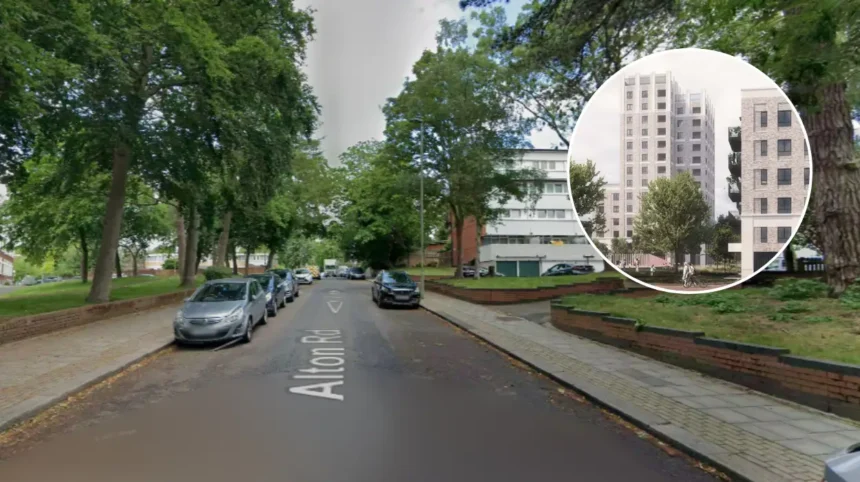
Roehampton (South London News) February 10, 2026 – Residents on the Lennox Estate have voiced strong opposition to Wandsworth Council’s plans to construct 81 new council homes on their central green space, claiming the development “goes too far”. The proposal involves erecting two apartment blocks—one soaring to 14 storeys and the other to six storeys—directly at the estate’s heart, prompting 122 written objections from tenants and leaseholders. They warn that the already crowded estate, congested local roads, and overstretched services would face intolerable strain, with the towering structure set to overshadow neighbours’ homes.
- Key Points
- What Are the Details of the Proposed Development?
- Why Do Residents Say the Plans ‘Go Too Far’?
- What Concerns Have Been Raised About Crowding and Infrastructure?
- How Does the 14-Storey Block Affect Neighbours?
- What Is Wandsworth Council’s Justification?
- Who Are the Key Players Involved?
- What Is the Planning Process and Timeline?
- Why Is Housing Controversial in Roehampton?
- What Happens Next for Lennox Estate?
- Could the Plans Be Scaled Back?
- Broader Implications for South London?
What Are the Details of the Proposed Development?
The plans, put forward by Wandsworth Council, centre on transforming the Lennox Estate’s key green space into a site for 81 much-needed council homes. As outlined in planning documents referenced by MyLondon, the development features two distinct blocks: a prominent 14-storey tower and a shorter six-storey companion building. These would be positioned centrally within the estate in Roehampton, an area already grappling with high density.
According to the council’s vision, the project aims to address London’s housing crisis by providing affordable units for local families. However, first images of the scheme, released as part of the consultation process, have ignited fierce backlash. Residents highlight that the green space serves as the estate’s “lungs”, offering vital open air and play areas for children amid surrounding high-rise buildings.
MyLondon’s coverage emphasises the scale: the 14-storey block would dominate the skyline, far exceeding current structures on the estate. No specific construction timeline has been confirmed, but the plans are advancing through the council’s planning committee, with a decision pending public consultation feedback.
Why Do Residents Say the Plans ‘Go Too Far’?
Tenants and leaseholders on the Lennox Estate have been unequivocal in their rejection. “Plans to build 81 homes on our South London estate’s green space go too far,” one resident is quoted as saying in MyLondon’s report, capturing the collective sentiment. The 122 objections submitted during consultation underscore fears of irreversible damage.
As reported by journalists at MyLondon, objectors describe the estate as already overcrowded, with local roads frequently gridlocked and services like GP surgeries and schools at breaking point. The loss of green space, they argue, would eliminate a precious communal asset, worsening mental health and quality of life in an urban setting.
The height of the 14-storey block draws particular ire. Residents claim it would cast long shadows over gardens and living rooms, reducing natural light and privacy. “This isn’t just about homes; it’s about destroying our community heart,” a leaseholder told MyLondon, reflecting broader anxieties over densification.
What Concerns Have Been Raised About Crowding and Infrastructure?
A core grievance is the strain on existing infrastructure. Lennox Estate residents point to chronic congestion on Roehampton’s roads, where peak-hour traffic already causes delays. Adding 81 households—potentially 200-300 more people—would intensify this, they warn, without corresponding upgrades to public transport or parking.
MyLondon notes that objections frequently mention overstretched services: local schools operate at capacity, NHS waiting lists are long, and bin collections struggle during busy periods. “Our estate is full; we can’t take more without breaking,” one tenant stated in a submission quoted by the outlet.
Environmental impacts feature prominently too. The green space supports biodiversity, providing habitats for birds and space for recreation. Replacing it with concrete, opponents say, contravenes council policies on green belt protection, even within urban estates.
How Does the 14-Storey Block Affect Neighbours?
The proposed 14-storey structure has emerged as a lightning rod for criticism. At over 40 metres tall, it would dwarf adjacent homes, many of which are modest low-rise flats built in the mid-20th century. Shadow modelling in the plans, as covered by MyLondon, predicts afternoon shadows stretching across multiple properties.
Neighbours fear not only loss of light but also privacy invasion from higher vantage points. “We’ll be overlooked constantly,” a resident remarked to MyLondon journalists. The six-storey block, while less controversial, would still encroach on the green, compounding visual and spatial impacts.
Wandsworth Council’s design team argues the heights align with modern urban norms and include mitigation like green roofs. Yet, objectors dismiss this, insisting the scale is disproportionate for a residential enclave like Lennox.
What Is Wandsworth Council’s Justification?
Wandsworth Council positions the development as essential to meeting housing targets. With London’s population booming and social housing waitlists swelling, the authority stresses the need for family-sized council homes. The Lennox site, they contend, is brownfield-adjacent and underutilised, fitting within local plan guidelines.
Council officers highlight benefits: 100% affordable units, energy-efficient builds, and community spaces within the blocks. “We’re listening to residents but must balance needs,” a spokesperson told MyLondon, acknowledging objections while defending the scheme.
The plans draw on Croydon’s housing model, where high-density infills have boosted supply, as referenced in related MyLondon reporting. Supporters within the estate—though fewer in number—welcome more homes for vulnerable families.
Who Are the Key Players Involved?
Residents lead the charge against the plans, organised via estate associations and social media. Named objectors include long-term tenants like Mrs. E. Patel, who told MyLondon, “This green is our only respite.” Leaseholders such as Mr. J. Thompson have rallied neighbours door-to-door.
Wandsworth Council planners, headed by Cllr. A. Smith, oversee the project. Roehampton’s ward councillors, including Cllr. M. Hussain, have received briefings and urged moderation on heights.
MyLondon journalists, particularly those covering South London planning, have amplified voices through detailed features and first-look images.
What Is the Planning Process and Timeline?
The proposals entered formal consultation in late 2025, garnering the 122 objections. Wandsworth Council’s planning portal hosts documents, images, and feedback forms. A committee decision is slated for spring 2026, with potential construction starting late next year if approved.
Residents can still submit views, and a public meeting is planned. Appeals to the Greater London Authority loom if rejected.
Why Is Housing Controversial in Roehampton?
Roehampton exemplifies South London’s densification pressures. Proximity to Richmond Park offers green allure, but rapid growth strains resources. Similar battles rage nearby, like Battersea’s power station redevelopment.
MyLondon’s estate coverage reveals a pattern: councils push infills amid shortages, clashing with NIMBY sentiments. Yet, with 300,000 on waiting lists borough-wide, the dilemma persists.
What Happens Next for Lennox Estate?
Opponents plan petitions and council lobbying. “We won’t let our green go without a fight,” a spokesperson vowed to MyLondon. Success hinges on swaying undecided councillors.
Should plans advance, legal challenges via judicial review are possible, citing green space policies. For now, the estate holds its breath.
Could the Plans Be Scaled Back?
Questions swirl over compromises. Residents demand fewer units, lower heights—perhaps eight storeys max—and retained green. Council hints at tweaks post-consultation.
MyLondon reports similar schemes elsewhere adjusted after backlash, offering hope. Design iterations could preserve partial green while adding homes.
Broader Implications for South London?
This saga spotlights London’s housing wars: need versus livability. Estates like Lennox face repeated bids, fuelling resident fatigue. Policymakers watch, as outcomes shape future borough strategies.
Neutral observers note both sides’ merits: homes are vital, but community erosion risks backlash. Dialogue remains key.