Key Points
- Metropolitan Police in Greenwich have imposed a Section 35 Dispersal Order in response to the escalating “Red vs Blue” school wars social media trend involving young people.
- The dispersal order runs from 11.30am to 10pm today (27 February) and gives officers powers to move on groups of youths to prevent crime and disorder.
- Police say the order is aimed at reducing the risk of violent incidents and anti-social behaviour linked to the trend, which has encouraged confrontational gatherings.
- The wider TikTok-led trend, referred to as “Red vs Blue school wars”, has spread from secondary schools into sixth forms and universities.
- Online posts have advertised scheduled meet-ups for today and for multiple dates in March, raising concerns about organised clashes between young people.
- Post-16 and higher education institutions name-checked in online posts include Harris Sixth Form Sydenham, Lewisham College, Bromley College and the University of Greenwich.
- Several educational institutions have been inaccurately associated with specific boroughs in posts, and police say there are currently no confirmed physical meeting locations.
- The trend first appeared online earlier this month under labels such as “Croydon War”, encouraging rival groups of students to face off while carrying items including scissors, compasses and metal combs.
- Variations of the trend have been reported across several London boroughs, including Croydon, Greenwich, Redbridge, Havering, Bexley and Ealing.
- In Tower Hamlets, the theme has evolved into a “Green vs Black” variation of the same school wars phenomenon.
- Police and local authorities have warned that even where weapons are not explicitly mentioned, the encouragement of confrontation among school-age children poses serious safety risks.
- Parents and carers are being urged to speak to young people about the dangers of attending these meet-ups and of carrying any object that could be used as a weapon.
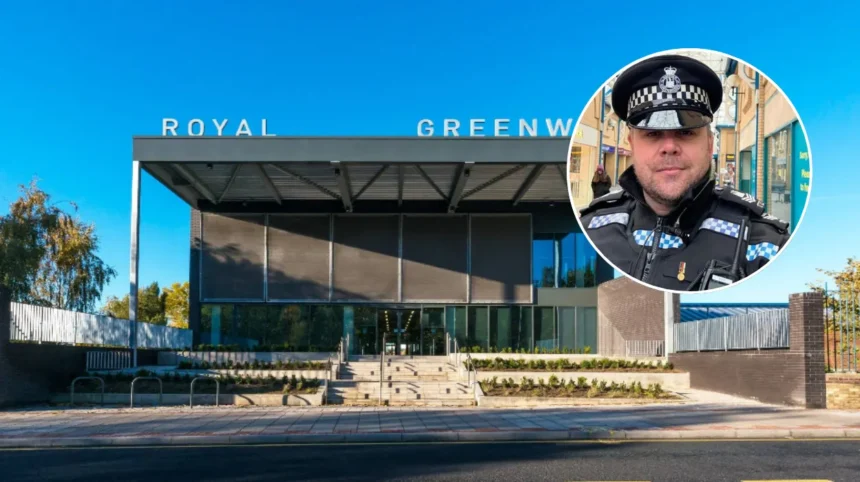
Greenwich (South London News) February 27, 2026 – A Section 35 Dispersal Order has been imposed across parts of Greenwich today as officers move to curb the growing “Red vs Blue” school wars trend, which has led to fears of violent clashes and anti-social behaviour among young people. The measure, in force from 11.30am until 10pm, allows police to disperse groups of youths where they believe crime or disorder may occur and reflects mounting concern about social media posts encouraging organised confrontations between students.
- Key Points
- Why have Greenwich police issued a Section 35 dispersal order?
- What is the ‘Red vs Blue’ school wars trend and how did it begin?
- How far has the school wars trend spread across London?
- Which schools, colleges and universities have been named in posts?
- What powers does a Section 35 dispersal order give officers in Greenwich?
- How have police justified linking the dispersal order to TikTok ‘school wars’?
- What risks do everyday objects like scissors and metal combs pose in this context?
- How are schools, colleges, parents and students being asked to respond?
- What happens next and could further measures be taken?
Why have Greenwich police issued a Section 35 dispersal order?
The dispersal order has been introduced after officers identified a pattern of online activity promoting “Red vs Blue” school wars gatherings, with specific times and dates shared on social media. Police say that while not all posts translate into real-world incidents, the scale and tone of the content has raised the risk of large youth groups assembling with the potential for violence.
Under Section 35 of the Anti-social Behaviour, Crime and Policing Act 2014, officers can direct individuals or groups to leave a designated area and not return for a set period if they suspect their presence may contribute to crime, disorder or harassment. In Greenwich, the order applies from late morning through the evening, covering the period when students are likely to be leaving school and congregating in public spaces. Officers have stressed that the use of these powers is a preventative step rather than a response to a single major incident.
Police have linked the dispersal order explicitly to efforts to “reduce the risk of violent incidents and anti-social behaviour” associated with the school wars trend. They argue that early intervention is vital where online challenges encourage young people to travel across boroughs to confront rival groups, often at short notice. At the same time, officers insist they will use dispersal powers proportionately, focusing on gatherings where clear risks are identified.
What is the ‘Red vs Blue’ school wars trend and how did it begin?
The “Red vs Blue” school wars trend is a social media-driven phenomenon that pits groups of students, often aligned with different schools or informal “teams”, against each other in staged confrontations. The colour labels “Red” and “Blue” are used online to distinguish rival sides, with posts encouraging participants to turn up at specified locations to “back their team” or defend their area.
According to material circulating earlier this month, the trend first gained traction under headings such as “Croydon War”, with videos and posts urging students to gather for confrontational meet-ups. These posts frequently referenced everyday items – including scissors, compasses and metal combs – which, while not always described as weapons, could easily be used as such in a hostile encounter. The normalisation of bringing such objects to a planned confrontation has heightened concerns among police, schools and parents.
As the initial “Croydon War” content spread, iterations of the same idea began appearing under the broader “Red vs Blue school wars” label. The framing of these meet-ups as games, challenges or “wars” has been criticised by safeguarding professionals, who say it trivialises the risk of serious harm and may undermine school and parental efforts to discourage risky behaviour. The trend’s reliance on short-form video and viral sharing has made it particularly difficult to contain once content starts to circulate.
How far has the school wars trend spread across London?
The school wars trend has moved beyond its initial focus on one borough and is now linked to multiple areas across London. Online posts and discussions have referenced gatherings and rivalries in Croydon, Greenwich, Redbridge, Havering, Bexley and Ealing, suggesting a wide geographic spread. Each borough has seen variations in how the trend manifests, but the common thread is the encouragement of face-to-face confrontations between young people.
In Tower Hamlets, the theme has evolved into a “Green vs Black” variation, indicating that the concept of colour-coded rival groups has been adapted to local contexts. Social media accounts have used these colour tags to promote rivalries between different areas or institutions, often in ambiguous or provocative language that blurs the line between banter and genuine incitement. The emergence of new colour combinations illustrates how quickly the trend can mutate.
Police and local authorities in the affected boroughs have been monitoring these developments and liaising with schools, colleges and youth services. While not every reference leads to a physical gathering, the sheer volume of posts, and the speed at which planned meet-ups can be shared, has contributed to a sense of urgency among those responsible for public safety. The Greenwich dispersal order is being viewed as part of a wider effort to discourage similar events across London.
Which schools, colleges and universities have been named in posts?
The school wars trend has expanded beyond secondary schools into post-16 and higher education settings, with several institutions mentioned in online posts about possible gatherings. Among those referenced are Harris Sixth Form Sydenham, Lewisham College, Bromley College and the University of Greenwich. These references often appear in lists of supposed participants or targets for meet-ups tied to particular colours or “teams”.
However, some of the institutions named in social media content are not located in the boroughs suggested by the posts, raising questions about the reliability of the information being shared. In some cases, locations have been misattributed or left deliberately vague, making it more difficult for authorities to identify genuine risks. Despite this, the naming of recognisable colleges and universities has been enough to cause concern among staff, students and parents.
Police have emphasised that, at this stage, no confirmed physical meeting locations have been identified in relation to many of the circulating posts. That absence of confirmed venues has not reduced the perceived risk, given that students might attempt to initiate confrontations in public spaces close to transport hubs, parks or shopping areas. Educational institutions have been urged to ensure their own safeguarding messages reach students who may have seen the online content.
What powers does a Section 35 dispersal order give officers in Greenwich?
A Section 35 Dispersal Order allows uniformed officers, including Police Community Support Officers where authorised, to instruct individuals or groups to leave a designated area and not return for up to 48 hours. In Greenwich today, the order is time-limited from 11.30am to 10pm, reflecting the period when youth gatherings linked to the trend are most likely. Officers must have reasonable grounds to believe that the presence or behaviour of those individuals could cause harassment, alarm or distress, or contribute to crime and disorder.
When issuing a dispersal direction, officers can require individuals to take a specified route when leaving and can seize items that they reasonably believe have been or could be used to commit anti-social behaviour. Failure to comply is a criminal offence, and those who refuse to leave or who return to the area in breach of the direction can be arrested. These powers are designed to give police flexibility to break up groups before tensions escalate.
In Greenwich, police have framed the order as a preventive measure specifically connected to intelligence and online monitoring around “Red vs Blue” school wars activity. Officers will be deployed in key locations to enforce the order and to engage with young people, explaining why the powers are in place. They are also expected to work alongside safer schools officers and local council teams to ensure any underlying issues are identified and addressed.
How have police justified linking the dispersal order to TikTok ‘school wars’?
Officers have drawn a direct line between the dispersal order and the online trend after observing a series of posts that advertise “Red vs Blue” and related “school wars” events. These posts have promoted meet-ups for today (27 February) and for several dates in March, often inviting large numbers of students to converge on unspecified or loosely described locations. Police say this pattern of activity, combined with the involvement of multiple boroughs, creates a credible risk of disorder.
By explicitly citing the school wars trend, police aim to send a message that they are aware of the online discussions and prepared to act before gatherings take place. The order is presented as part of a broader strategy to tackle youth-related violence and anti-social behaviour, in which early disruption of potentially risky assemblies is a key tool. Officers have also highlighted the presence of references to items such as scissors, compasses and metal combs in some posts as a particular concern.
At the same time, police have been careful to stress that the majority of young people are not involved in violence and that the dispersal powers will be targeted at situations where genuine risks are identified. The focus, they say, is on preventing harm rather than criminalising young people who have been drawn into online trends without fully appreciating the consequences. Police have encouraged parents and carers to reinforce this message at home.
What risks do everyday objects like scissors and metal combs pose in this context?
The school wars trend has referenced objects that are commonly found in school bags – including scissors, compasses and metal combs – as part of the imagery associated with confrontational meet-ups. While these items are not illegal to possess in most circumstances, they can become dangerous if used as weapons or brandished in a threatening way. Their inclusion in online videos and posts has led to concerns that young people may be encouraged to carry them deliberately for confrontations.
Safeguarding experts warn that presenting such items as props in a “war” scenario risks normalising the idea of turning everyday objects into tools of intimidation or violence. In a crowded environment where tensions are high, even a brief altercation involving sharp objects can result in serious injury. Police have underlined that anyone found using or threatening to use such items in a hostile context could face arrest and prosecution.
Schools and colleges are being advised to review their policies on prohibited items and to remind students that carrying any object with the intention of using it as a weapon is a criminal offence. Staff are also being encouraged to watch for changes in behaviour, such as students discussing “wars” or boasting about bringing particular objects to meet-ups, and to share relevant information with safer schools officers.
How are schools, colleges, parents and students being asked to respond?
Educational institutions named in posts – including Harris Sixth Form Sydenham, Lewisham College, Bromley College and the University of Greenwich – are expected to reinforce messages about safety, attendance and behaviour. Many schools and colleges are likely to issue communications to parents and carers, explaining the nature of the school wars trend and asking for support in discouraging participation. Assemblies, tutor sessions and pastoral meetings may be used to address the issue directly with students.
Parents and carers are being urged to speak openly with their children about what they are seeing online, stressing the potential consequences of attending confrontational gatherings or carrying items that could be used as weapons. They are being advised to monitor social media use where appropriate and to check on plans for after-school activities, particularly on dates highlighted in posts circulating among peer groups. Police have signalled that cooperation from families is crucial to preventing incidents.
Students themselves are being encouraged to avoid meet-ups linked to “Red vs Blue”, “Croydon War”, “Green vs Black” or similar slogans, and to report any worrying content to trusted adults or through school reporting channels. Youth workers and community organisations are also expected to play a role, offering safe spaces and alternative activities where possible. The aim across agencies is to de-escalate tensions and disrupt the appeal of the trend before serious harm occurs.
What happens next and could further measures be taken?
The current Section 35 Dispersal Order in Greenwich is time-limited to today (27 February), but police retain the power to authorise further orders if they believe the risk of school wars-related gatherings remains. Decisions on extending or re-imposing such measures will depend on real-time intelligence, reports from schools and colleges, and any incidents that occur in the coming days and weeks. Officers will also be assessing whether the publicity around the order has deterred would-be participants.
If the trend persists or escalates, additional tactics could include increased patrols around transport hubs and known gathering spots, closer liaison with social media companies over harmful content, and targeted engagement with specific schools or youth groups. Local authorities may also consider broader safeguarding initiatives, such as awareness campaigns on online challenges and peer pressure. Any serious incident linked to the trend would likely prompt renewed scrutiny of how quickly warnings were acted upon.
For now, the focus in Greenwich and other affected boroughs is on prevention, visibility and communication. Police, schools, colleges and families are being urged to work together to ensure that the school wars phenomenon does not translate into real-world violence. With further dates in March already circulating online, authorities are preparing for the possibility that the issue will remain a concern beyond today’s dispersal period.