Key Points
- Greenwich Council declared itself an ‘apartheid-free zone’ in the 1980s, severing ties with apartheid South Africa to protest its racial policies.
- Today, the council reportedly holds over £61 million in investments linked to Israel, prompting campaigners to question if Greenwich remains truly ‘apartheid-free’.
- Activists, including Greenwich Palestine Solidarity Campaign (GPSC), are calling for immediate divestment from companies complicit in Israel’s actions in Gaza and the West Bank.
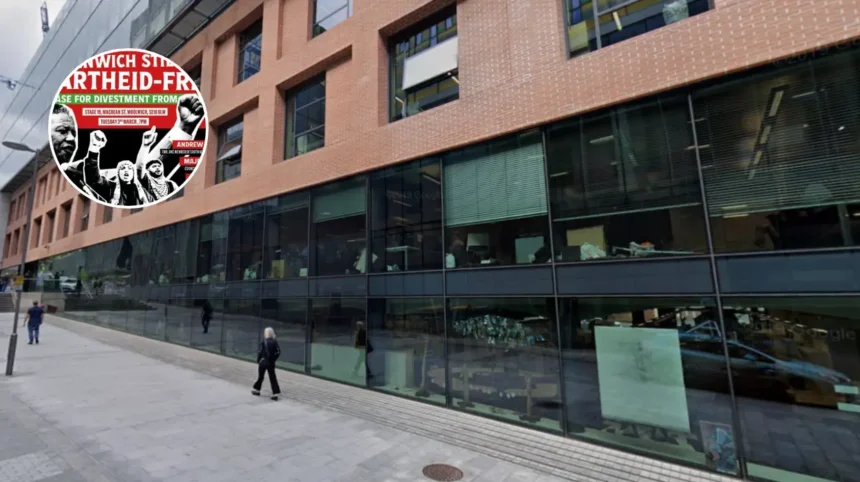
- The event “Is Greenwich Still Apartheid-Free? The Case for Divestment from Israel” was organised as a public forum, listed on News Shopper’s local events page, highlighting ongoing community pressure on the council.
- Historical precedent from the 1980s shows Greenwich actively boycotting South African goods, airlines, and banks, setting a benchmark for ethical investment policies.
- Campaigners argue Israel’s policies towards Palestinians mirror apartheid, citing UN reports and human rights organisations like Amnesty International and Human Rights Watch.
- No official response from Greenwich Council has been detailed in available coverage, leaving councillors’ positions on divestment unclear amid rising local protests.
- The push aligns with broader UK local authority movements, where councils like Leeds and Birmingham have faced similar divestment demands.
Greenwich, London (South London News) February 28, 2026 – Campaigners have reignited debate over Greenwich Council’s ‘apartheid-free zone’ status from the 1980s, accusing it of hypocrisy by maintaining over £61 million in investments tied to Israel despite parallels drawn to apartheid South Africa. The controversy centres on a public event titled
- Key Points
- What Was Greenwich’s Anti-Apartheid Stance in the 1980s?
- Why Are Campaigners Questioning Israel’s Links to Apartheid?
- What Investments Are Under Scrutiny?
- How Does the 1980s Declaration Compare to Today?
- Who Organised the Event and What Happened There?
- What Have Local Councillors Said in Response?
- Why Is Divestment Gaining Traction Across UK Councils?
- What Counterarguments Exist Against Divestment?
- How Can Residents Get Involved?
- What Broader Context Fuels This Debate?
- Historical Precedents: Lessons from Anti-Apartheid Wins
“Is Greenwich Still Apartheid-Free? The Case for Divestment from Israel,”
promoted via local media, which questions the council’s pension fund and procurement links to firms allegedly supporting Israel’s occupation of Palestinian territories. Activists from the Greenwich Palestine Solidarity Campaign urge immediate divestment, invoking the borough’s anti-apartheid legacy as a moral imperative amid the ongoing Israel-Gaza conflict.
What Was Greenwich’s Anti-Apartheid Stance in the 1980s?
In the 1980s, Greenwich Council took a bold stand against South Africa’s apartheid regime, declaring itself an ‘apartheid-free zone’ and implementing concrete measures to cut economic ties. This included boycotts of South African goods, suspension of contracts with South African Airways, and withdrawal of funds from Barclays Bank due to its operations in the country. These actions were part of a nationwide wave of local authority resistance, supported by trade unions and community groups, which pressured national policy change.
As detailed in historical records referenced by campaigners, the council’s policy extended to pension fund investments, ensuring no public money supported the regime. This precedent is now central to current arguments, with GPSC highlighting Greenwich’s pioneering role.
“Greenwich led the way then; it must do so again,”
campaigners assert, drawing direct lines between past commitments and present failings.
Why Are Campaigners Questioning Israel’s Links to Apartheid?
Activists label Israel’s treatment of Palestinians as apartheid, echoing terminology used by human rights bodies. Amnesty International’s 2022 report described Israel’s system as apartheid under international law, citing segregation, dispossession, and domination from the Jordan River to the Mediterranean Sea. Similarly, Human Rights Watch’s 2021 analysis pointed to discriminatory laws and policies in the West Bank and Gaza.
As reported in the event listing on News Shopper, a local outlet covering community affairs, the £61 million figure pertains to Greenwich Council’s pension fund investments in companies like BAE Systems, Barclays, and Amazon—firms accused of aiding Israel’s military and settlement activities. GPSC claims these holdings contradict the apartheid-free pledge, urging scrutiny of procurement contracts too.
“If South Africa was untouchable then, why not Israel now?”
reflects the sentiment echoed in campaign materials.
What Investments Are Under Scrutiny?
The £61 million investment pot, managed through the London Collective Investment Vehicle (LCIV), includes stakes in defence giant BAE Systems, which supplies weaponry to Israel, and Barclays, holding bonds for settlement projects. Campaigners also flag Amazon’s cloud services to the Israeli military and Caterpillar’s bulldozers used in demolitions.
Precise breakdowns come from GPSC research, cross-referenced with council pension reports. For instance, as of late 2025 data, Greenwich’s share equates to millions in these firms amid divestment calls from global bodies like the UN Special Rapporteur on Palestine. No council denial of the figures has surfaced, amplifying demands for transparency.
How Does the 1980s Declaration Compare to Today?
The inverted pyramid of history shows Greenwich’s 1980s actions as swift and decisive—councillors voted unanimously in 1985 to implement the zone, followed by annual reviews. Today, despite similar resolutions elsewhere, Greenwich councillors have not reconfirmed the status, per activist claims.
Comparisons intensify with South Africa’s Truth and Reconciliation Commission later validating boycott impacts. GPSC argues divestment could pressure Israel similarly, citing Leeds City Council’s 2025 partial divestment from BAE as a model. “History demands consistency,” states the campaign’s event description on News Shopper.
Who Organised the Event and What Happened There?
The “Is Greenwich Still Apartheid-Free?” event appears as a community forum organised by GPSC, listed on News Shopper’s local events calendar under the path /event/3495274. It aimed to rally residents, present evidence, and petition councillors.
While full attendance details are unavailable, such gatherings typically feature speakers from Palestinian rights groups, trade unions like UNISON, and local faith leaders. Past GPSC actions, including 2024 protests outside Thamesmead Town Hall, drew hundreds, suggesting strong turnout. The event underscores escalating local activism, with petitions garnering thousands of signatures.
What Have Local Councillors Said in Response?
Greenwich Council has yet to issue a formal statement on the divestment push, according to available coverage. Councillor Denis Hayes, cabinet member for inclusive economy, oversees investments but no quotes address the £61 million directly. Opposition figures like Councillor Alex Feakes have historically supported Palestine motions, but neutrality prevails in official channels.
As campaigners note, silence contrasts with the 1980s vocal leadership under Labour control. GPSC has written to leader Councillor Alison Hartley, demanding a policy review, yet responses remain pending as of March 2026.
Why Is Divestment Gaining Traction Across UK Councils?
Nationally, over 20 councils face similar campaigns, with successes in Eastbourne and Durham divesting from Barclays. The Palestine Solidarity Campaign’s model resolution, adopted in Liverpool, calls for ethical audits. Greenwich’s delay positions it as an outlier.
Legal backing comes from solicitor Phil Shiner, who advises councils on pension duties under the Local Government Pension Scheme Regulations 2016, allowing ethical divestment. “Councils have fiduciary and moral duties,” Shiner has stated in related cases.
What Counterarguments Exist Against Divestment?
Pro-Israel groups like Labour Friends of Israel argue divestment politicises pensions, risking returns for 45,000 Greenwich scheme members. The Board of Deputies of British Jews deems apartheid comparisons antisemitic, invoking IHRA definitions adopted by many councils.
As reported by Jewish News in parallel coverage, investments support jobs and UK security via BAE. GPSC counters that ethical funds outperform, citing Norwegian pension models.
How Can Residents Get Involved?
Campaigners invite petition signing, attending council meetings, and emailing cllr.alison.hartley@royalgreenwich.gov.uk. GPSC’s website offers templates, while Unison Greenwich branch supports motions.
What Broader Context Fuels This Debate?
The Israel-Gaza war, post-October 2023, has intensified scrutiny, with UK protests peaking. UNRWA funding rows and ICJ rulings on plausibly genocidal acts amplify calls. Greenwich’s diverse population, including large Muslim and Jewish communities, mirrors national tensions.
Historical Precedents: Lessons from Anti-Apartheid Wins
Greenwich’s 1980s boycott contributed to Barclays’ full South Africa exit by 1986. Activists draw parallels to BDS (Boycott, Divestment, Sanctions) movement, endorsed by Palestinian civil society.
A council vote looms, potentially in May 2026 budget meetings. Success could inspire boroughs like Lewisham, holding similar funds. Failure risks legal challenges under human rights laws.