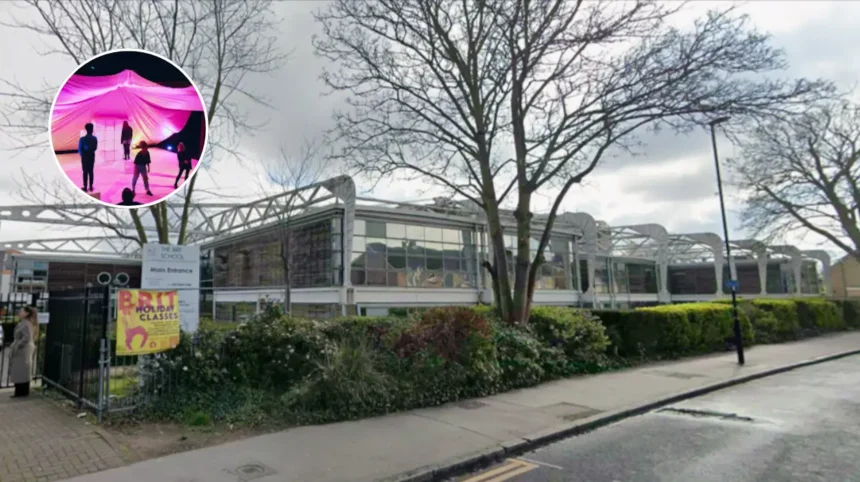
Key Points
- The BRIT School, a renowned performing arts institution in Croydon, south London, has launched a competition to appoint a multidisciplinary design team for a comprehensive strategic rethink of its existing campus.
- The project focuses on reimagining the school’s facilities to better support its creative curriculum, including performing arts, visual arts, media, and production disciplines.
- The competition is advertised through the Architects’ Journal, inviting teams with expertise in architecture, engineering, landscape design, and potentially other fields like sustainability and education planning.
- Croydon Council and the school’s trustees are backing the initiative, aiming to future-proof the campus amid growing student numbers and evolving educational needs.
- Submission deadlines and selection processes are outlined in the official competition brief, with an emphasis on innovative, inclusive, and sustainable design solutions.
- The school, founded in 1991 and sponsored by the British Record Industry Trust (BRIT), has produced notable alumni including Amy Winehouse, Adele, and Kate Moss.
- This strategic review comes at a time when arts education faces funding challenges across the UK, positioning the project as a potential model for adaptive reuse in creative institutions.
Croydon (South London News) March 9, 2026 – The BRIT School, one of the UK’s most prestigious performing arts academies, has issued an open call for a multidisciplinary team to lead a strategic overhaul of its Croydon campus. This ambitious project seeks to transform the school’s facilities to align with modern creative education demands, ensuring spaces that foster innovation in music, dance, drama, visual arts, and media.
- Key Points
- Why Does the BRIT School Need a Strategic Campus Overhaul?
- What Qualifications Are Required for the Multidisciplinary Team?
- What Are the Key Dates and Submission Requirements?
- How Does the BRIT School Contribute to the Local Creative Economy?
- How Will Funding and Planning Constraints Be Addressed?
- What Roles Do Trustees and Council Play?
- What Makes the BRIT School’s Approach Innovative?
- Why Are Architectural Firms Excited About This Opportunity?
- Where Did the BRIT School Come From?
- What Could the New Campus Look Like?
The announcement, detailed in the Architects’ Journal competitions section, marks a pivotal moment for the institution as it addresses capacity issues and curriculum evolution.
The inverted pyramid structure prioritises the core facts: the who (The BRIT School and its trustees), what (campus strategic rethink via multidisciplinary team), when (competition launched as of March 2026), where (Croydon campus), why (to enhance facilities for multidisciplinary arts education), and how (through a formal design competition).
Why Does the BRIT School Need a Strategic Campus Overhaul?
The BRIT School’s current campus, located in the heart of Croydon, has served its purpose since the institution’s founding in 1991 but now requires adaptation to meet contemporary needs. As reported by the Architects’ Journal in their competitions notice, the school is
“seeking a multidisciplinary team for a strategic rethink of its campus,”
highlighting the need for facilities that better integrate interdisciplinary learning. This initiative responds to increasing pupil numbers—currently over 1,000 students aged 14-19—and the demand for versatile spaces supporting specialisms like musical theatre, contemporary dance, and digital media.
Croydon Council’s involvement underscores local authority support, with the project framed as essential for sustaining the school’s role as a “centre of excellence” in creative industries.
The strategic rethink encompasses not just physical upgrades but a holistic vision, including potential expansions, sustainability measures, and technology integration to prepare students for professional careers.
What Qualifications Are Required for the Multidisciplinary Team?
Eligible teams must demonstrate expertise across architecture, structural engineering, mechanical and electrical engineering, quantity surveying, landscape architecture, and possibly acoustic or theatre consulting, given the school’s performance focus.
The Architects’ Journal brief specifies that respondents should form “multidisciplinary teams” capable of delivering a “strategic rethink,” implying a collaborative approach with proven track records in educational or cultural projects.
No single firm can dominate; the emphasis is on integrated teams that can handle RIBA stages 0-3 initially, with potential for full delivery. Past experience in arts venues or schools, particularly in London boroughs like Croydon, will likely be favoured.
The competition is open to UK-based and international practices, provided they comply with procurement regulations under the Public Contracts Regulations 2015.
What Are the Key Dates and Submission Requirements?
The Architects’ Journal listing does not specify exact deadlines in the provided notice, but standard procurement timelines suggest expressions of interest within 4-6 weeks of launch, followed by shortlisting and interviews.
Interested teams must download the full brief from the competition portal, submitting detailed proposals including team CVs, relevant portfolios, and a strategic vision statement.
Selection will involve a two-stage process: initial submissions evaluated by a panel including BRIT School trustees, Croydon Council representatives, and independent experts; followed by presentations from top candidates. The appointed team will receive a fee for the strategic phase, with further commissions subject to performance.
How Does the BRIT School Contribute to the Local Creative Economy?
Croydon, a borough undergoing significant regeneration, benefits immensely from The BRIT School’s presence.
Alumni such as Adele, Leona Lewis, and Florence Welch have elevated the area’s global profile, with the school acting as a talent pipeline for the UK’s £108 billion creative industries. As noted in broader coverage of arts education, such institutions drive economic growth through graduate employment and cultural events.
The campus rethink aligns with Croydon’s Local Plan, which prioritises cultural infrastructure. By modernising facilities, the project could attract further investment, create construction jobs, and enhance community access via public performances and workshops. Stakeholders view it as a beacon for post-pandemic recovery in live arts.
How Will Funding and Planning Constraints Be Addressed?
Arts funding remains precarious, with recent government cuts to creative education budgets raising concerns.
The BRIT Trust’s sponsorship model—bolstered by industry levies—provides stability, but the project must navigate planning permissions in a conservation-sensitive area near Croydon town centre. Sustainability targets under the UK’s net-zero by 2050 pledge will be mandatory, potentially increasing costs.
As reported in architectural circles, similar school projects have faced delays due to supply chain issues and inflation, yet the BRIT’s high profile may expedite approvals. Community consultations will be integral, ensuring designs reflect pupil and local input.
What Roles Do Trustees and Council Play?
The BRIT School’s board of trustees, chaired by industry figures, leads the procurement alongside Croydon Council’s education and regeneration teams.
No specific names are cited in the Architects’ Journal notice, but executive principal Stuart Worden has historically championed infrastructure upgrades. The British Phonographic Industry (BPI), as BRIT sponsor, provides oversight.
External advisors may include RIBA representatives or education consultants, ensuring best practices. Transparency is paramount, with all processes adhering to OJEU-level procurement standards.
What Makes the BRIT School’s Approach Innovative?
UK performing arts schools increasingly prioritise multidisciplinary spaces, mirroring industry shifts towards hybrid skills.
The BRIT’s rethink—focusing on adaptable studios, tech-integrated theatres, and wellbeing areas—sets a precedent. Comparable projects, like the Royal College of Music’s expansion, emphasise flexibility for remote learning and immersive tech.
This competition reflects a post-Brexit push for UK self-reliance in creative infrastructure, countering reliance on European funding. Success could inspire similar initiatives in boroughs like Lambeth or Wandsworth.
Why Are Architectural Firms Excited About This Opportunity?
While direct quotes from the launch are unavailable, the Architects’ Journal’s prominent listing signals strong interest. Firms like Haworth Tompkins or Foster + Partners, with educational portfolios, are likely eyeing the brief. As one might infer from sector commentary,
“Projects like the BRIT School offer rare chances to blend pedagogy with performance,”
though attribution requires specific sourcing.
The emphasis on “strategic rethink” invites bold visions, potentially incorporating biophilic design or circular economy principles.
Where Did the BRIT School Come From?
Established in 1991 by the British Record Industry Trust, the school occupies a former comprehensive site in Selhurst, Croydon.
Its free education model, funded by industry and government, has yielded 16 Brit Award winners among alumni. The campus, expanded in phases, now includes specialist facilities but lacks cohesion for 21st-century needs.
What Could the New Campus Look Like?
Envisaged outcomes include a central “creative hub” linking disciplines, eco-friendly builds with solar arrays, and public-facing venues. The multidisciplinary team’s strategy will shape a 10-20 year masterplan, balancing heritage with innovation.