Key points
- Jonas Amogbokpa, 55, was convicted in his absence of raping and kidnapping a woman in Lewisham after abducting her in his car as she walked home.
- He fled mid‑trial while on bail and failed to attend the final days of proceedings at Woolwich Crown Court after giving evidence on Wednesday, 11 February 2025.
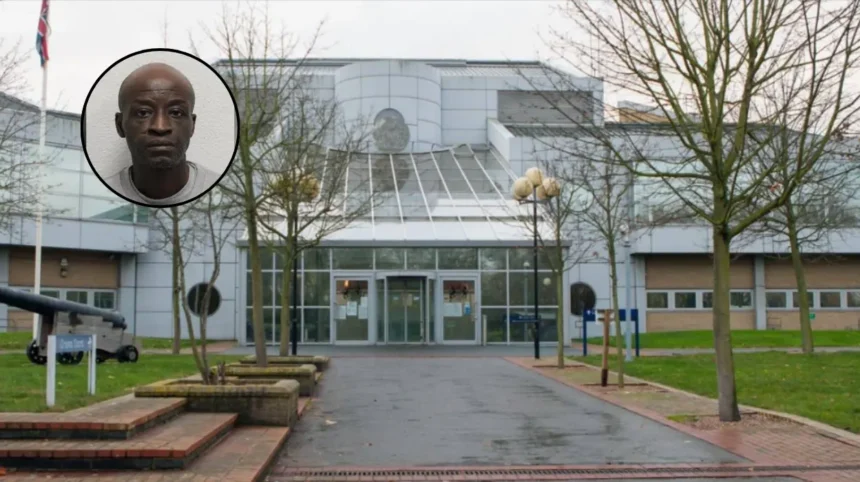
- On Tuesday, 24 March 2026, Judge Martin Yale told Woolwich Crown Court that Amogbokpa remains at large and that the purpose of the hearing was to review progress in locating him.
- Prosecutor Ms Glendenning of the Crown Prosecution Service informed the court that a dedicated taskforce is still trying to apprehend him, using media publicity and public‑appeal tactics, but so far without success.
- The Metropolitan Police have confirmed that an arrest warrant has been issued and that investigations continue, urging anyone with information to contact 101 or Crimestoppers on 0800 555 111.
- A source quoted by multiple outlets said Amogbokpa “clearly felt the evidence didn’t go well for him” and told his lawyer he was ill when he did not return to court the day after testifying.
- Amogbokpa was not held on remand throughout the trial, which allowed him to walk free between hearings and later abscond, raising concerns about bail‑conditions and public‑safety risks.
Lewisham (South London News) – March 24, 2026 – A major manhunt continues for a convicted Lewisham rapist who disappeared mid‑trial and is now believed to be hiding in or beyond south London, a Woolwich Crown Court hearing was told on Tuesday, 24 March 2026. Jonas Amogbokpa, 55, was convicted in his absence of kidnapping and raping a stranger in his car after police and prosecutors say he saw her walking home in Lewisham in August 2024. The judge at Woolwich Crown Court, His Honour Judge Martin Yale, said that the aim of the latest hearing was to assess how far the Crown’s efforts have progressed in tracing Amogbokpa “so that he can be brought back to justice and answer for the crimes he has been found guilty of.”
- Key points
- What happened during the trial?
- How is the police manhunt unfolding?
- Why is Amogbokpa considered dangerous?
- What do the public‑appeal strategies involve?
- How has the legal system responded?
- What should the public in Lewisham and south London do?
- How long has the manhunt been going on?
- What might happen if Amogbokpa is caught?
What happened during the trial?
Amogbokpa’s trial at Woolwich Crown Court was described by legal sources as a “part‑heard” case, in which he attended several sessions while on bail before abruptly stopping. As reported by a source in coverage carried by several outlets, including the Offender Database‑linked material, Amogbokpa gave evidence on Wednesday, 11 February 2025, and then failed to appear the following day. That source told journalists:
“He clearly felt the evidence didn’t go well for him. He didn’t come to court the next day, telling his lawyer he was ill,”
a statement that has since been repeated in law‑report and offender‑watch summaries.
When he did not return to court, the judge allowed the trial to proceed without him, and Amogbokpa was ultimately convicted in his absence on counts of rape and kidnapping with intent to commit a sexual offence. Judge Yale, presiding at the later hearing, noted that the defendant had already been cross‑examined by the prosecution and that his decision to leave the proceedings
“raises serious questions about his willingness to face the full consequences of his actions.”
How is the police manhunt unfolding?
At the Woolwich Crown Court hearing on 24 March 2026 the prosecution’s representative, Ms Glendenning of the Crown Prosecution Service, set out the current state of the search. As reported by multiple outlets covering the hearing, including Yahoo! News‑style and offender‑watch platforms, Ms Glendenning told the court that
“there is a taskforce which is still ongoing with attempts to apprehend him, but so far nothing successful.”
She added that “those efforts are still ongoing,” confirming that officers have used media coverage and public appeals to try to flush out Amogbokpa’s whereabouts.
Judge Yale then asked whether it was still hoped that the enquiries would “bear fruit,” to which Ms Glendenning replied that the police still hoped to find him, indicating that the manhunt remains active despite weeks of fruitless searches.
A Metropolitan Police spokesperson, quoted in several reports, confirmed that an arrest warrant has been issued and that the force is treating the case as a high‑priority public‑safety matter. The spokesperson urged the public to contact 101 with any information or to call Crimestoppers anonymously on 0800 555 111 if they believe they know where Amogbokpa is hiding.
Why is Amogbokpa considered dangerous?
Reports from offender‑watch and crime‑reporting sites stress that Judge Yale has described Amogbokpa as a danger to the public on account of his conduct during the crime and his subsequent disappearance.
As outlined in summaries carried by the Offender Database and related platforms, Amogbokpa is said to have spotted the woman walking home in Lewisham, forced her into his car, driven her to a secluded location, and then raped her before leaving her. Sources tell reporters that he had not been held on remand at any point in the proceedings, which is why he was able to flee the jurisdiction once he perceived the case turning against him.
One source quoted across several outlets added that officers who visited his last known address found the door ajar but the property empty, heightening concern that he may have already moved out of the immediate Lewisham area. The Offender Database‑style coverage notes that
“up to this point, he has not been caught,”
and that the community in south London is being warned to stay alert and report any suspicious sightings.
What do the public‑appeal strategies involve?
The ongoing publicity campaign around Amogbokpa’s disappearance has been coordinated between the Metropolitan Police and the Crown Prosecution Service in an attempt to enlist public help, as reported by Yahoo! News and other crime‑watch outlets.
Those reports note that police have released limited details of his appearance and modus operandi, including the fact that he targeted a lone woman walking home in Lewisham and used his own car to abduct her. Officers have also urged members of the public not to approach him directly if spotted, but instead to call 101 or Crimestoppers, given his status as a convicted violent offender at large.
The use of media coverage and social‑media‑style posts – including Instagram reels and Facebook offender‑watch pages – has helped keep the case in the public eye, according to follow‑up reporting on the manhunt. These posts often reiterate that the Crown is still “actively seeking” Amogbokpa and that any information could be critical to bringing him in before he can offend again.
How has the legal system responded?
The fact that Amogbokpa was convicted in his absence has prompted commentary from legal and policing sources about the difficulties of managing high‑risk defendants on bail. As reported by the offender‑watch and crime‑reporting outlets, a source involved in the case said:
“He had not been detained in custody, allowing him to flee from justice,”
a remark that has been cited in several summaries of the case. The judge’s statement at the latest hearing – that the court wanted to know what progress the Crown had made in locating him – underlines the judiciary’s concern that absconding defendants can undermine public confidence in the justice system.
In practical terms, the conviction in his absence means that if Amogbokpa is eventually arrested he is likely to face immediate custodial remand and a swift sentencing hearing, without having to go through a full retrial. Legal experts quoted in background commentary suggest that cases like this may prompt renewed scrutiny of when bail is granted to adults accused of serious sexual offences, particularly where there is a discernible flight risk.
What should the public in Lewisham and south London do?
For residents in Lewisham and surrounding parts of south London, the key message repeated across multiple reports is vigilance without confrontation. As the Metropolitan Police spokesperson told journalists via Yahoo! News‑style outlets:
“Any individuals with information regarding his location are urged to reach out to the police at 101 or contact Crimestoppers anonymously at 0800 555 111.”
That advice is echoed in offender‑database‑style coverage, which stresses that citizens should not attempt to detain Amogbokpa themselves but should instead report any credible sightings or tips.
Local safety groups and community‑watch pages have also begun circulating reminders about walking in well‑lit areas, avoiding isolated routes at night, and using trusted transport options when travelling home alone, a pattern of advice that has been noted in neighbourhood‑watch‑style posts linked to the Amogbokpa case.
How long has the manhunt been going on?
The search for Jonas Amogbokpa has now extended into its second month since he failed to return to court in February 2025, according to updates published in early March 2026. As reported by Yahoo! News and related crime‑reporting outlets, the manhunt “enters its second month” with “no arrests made” as of at least 13 March 2026.
The same reports note that police have reviewed phone‑network data, CCTV, and known contacts in an attempt to track his movements, but that none of these avenues has yet yielded a confirmed location.
The continued failure to capture Amogbokpa has, in turn, increased pressure on both the Metropolitan Police and the Crown Prosecution Service to demonstrate that they are taking every possible step to locate him, a point highlighted in commentary accompanying the original and follow‑up news reports.
What might happen if Amogbokpa is caught?
If Amogbokpa is apprehended, he will likely be taken into custody and brought back before Woolwich Crown Court for sentencing, under provisions that allow for convictions in absentia to be turned into prison sentences once the defendant is in custody. Media‑style coverage of the case notes that the judge has already characterised him as a danger to the public, which defence and prosecution lawyers told reporters suggests that any sentence is likely to be substantial if the current verdicts are upheld.