Key Points:
- London has been awarded the Lee Kuan Yew World City Prize 2026, in its eighth edition.
- The Lee Kuan Yew World City Prize recognises cities that lead in innovation and effective governing in the face of complex urban challenges.
- Established by the Singapore’s Urban Redevelopment Authority and Centre for liveable Cities in 2010, the prize is awarded once every two years to mark successful urban development.
- According to Sadiq Khan, judges cited ULEZ halving toxic air in central, the delivery of the Elizabeth line which transports 800,000 passengers per day, and the work of the London’s Anchor Institution’s Network, as well as free universal school meals and Oxford Street’s pedestrianisation as key policies accounted for by judges.
- Other cities given special mention included Antwerp, Budapest, Guangzhou, Taipei and Tianjin.
London Mayor, Sadiq Khan has commented on London’s 2026 Lee Kuan Yew World City Prize during yesterday’s Mayor’s Question Time (MQT) Meeting. The prize, named after Singapore’s first prime minister, cited the introduction of the Mayor and the Greater London Authority in 2000 as enabling London to have developed a long term strategic plan while coping with urban changes.
Yesterday, beginning the MQT session, Sadiq Khan said:
“At a time when good news is in short supply and global events are understandably casting long shadows over people’s daily lives I want to begin on a positive note that hopefully all members can take pride and encouragement from. I’m pleased to say, London was awarded the highly prestigious Lee Kuan Yew World Prize. On account of the transformative policies we’ve introduced to improve Londoners’ lives.”
What does the Prize Recognize?
The prize was introduced in 2010 by the Singapore Urban Development Authority and Centre for Liveable Cities in 2010, and named after Singapore’s first prime minister. The prize recognises cities that innovate with effective governance to tackle complex urban issues.
The Lee Kuan Yew World City Prize Lecture and Award Ceremony will include a banquet, and will be held at the World Cities Summit from the 14th to the 16th of June 2026 at the Suntec Singapore Convention & Exhibition Centre. In addition to the award, London will also receive a cash prize, sponsored by Keppel Ltd. a Singaporean asset manager and operator specialising in sustainable solutions.
At yesterday’s MQT session, Sadiq Khan said:
“Named after Singapore’s first Prime Minister. The prize recognises outstanding innovation, effective governance and strategic leadership in tackling complex urban challenges and is undoubtedly another feather in London’s already much decorated cap, not least because it’s been referred to as the Nobel Prize for cities.”
CEO of Keppel Ltd., the Prize’s sponsor, Loh Chin Hua said:
“We extend our warmest congratulations to London, this year’s prize winner, for its remarkable ability to continually reinvent itself and be one of the world’s most liveable, vibrant and sustainable cities.”
Why Did London Win?
According to London Mayor Sadiq Khan, judges specifically looked at the delivery of the Elizabeth Line and its current 800,000 passengers per day, the delivery of the controversial Ultra Low Emission Zone (ULEZ) policy in halving toxic air within central London, the collaboration between citizens and institutions done by the London Anchor Institutions Network which has committed some businesses to paying the London living wage, as well as free universal school meals and Oxford Street’s pedestrianisation.
In a press release, by the Singapore Urban Redevelopment Authority, these policies overcame challenges to deliver an equality centred solution in a diverse city of more than 300 languages, while driving innovation in equality for residents.
Sadiq Khan said:
“The judges were particularly impressed with several of our programs and projects including our ultra low emission zone which has helped to halve toxic air pollution in central London, the delivery of the Elizabeth Line which now transport eight hundred thousand passengers a day, the work of the London Anchor Institutions Network which has boosted small and medium sized businesses and helped to get more of our employers signed up to pay London living wage, and the introduction of Universal Free School Meals in London’s state primary schools. The judges also cited our plans to pedestrianise Oxford Street and turn it into a truly world class public space as worthy of praise. Together the judging panel concluded and I quote: These efforts have sustained London’s position as a global magnet for investment, talent and visitors with the city standing out as an exceptional cosmopolitan centre due to its rich cultural tapestry and rich cultural character.”
What Policies did Judges Look At?
Judges championed policies such as Universal Free School meals which is said to save families five hundred pounds per child per year, the delivery of the Elizabeth Line, which is 118km long and has transported 800 million passengers to date and catalysed the introduction of 71,000 homes, according to the press release by the Singaporean Urban Redevelopment Authority, and high-quality planning of public spaces and community facilities as key policies that benefit residents and visitors.
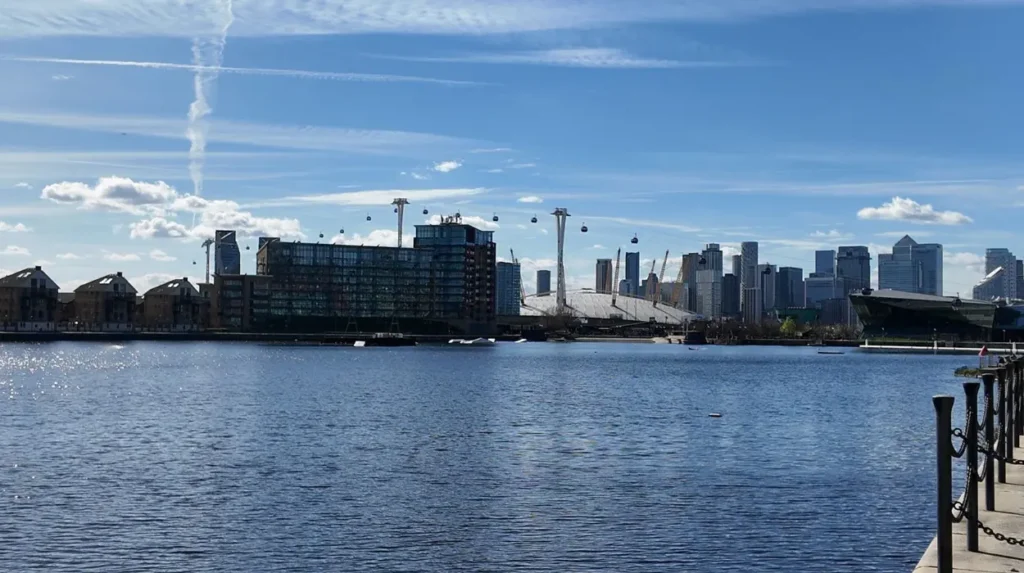
Other specific developments referenced included the redevelopment of King’s Cross, the Queen Elizabeth Olympic Park project, the Oxford Street pedestrianisation slated for this summer, and the City of London Corporation’s growth strategy within the square mile.
CEO of the London Legacy Development Corporation, responsible for Queen Elizabeth Park, Shazia Hussain said:
“Queen Elizabeth Olympic Park demonstrates how London, a historic global city, can continue to evolve through investment in homes, culture, innovation and local talent – creating a thriving new district that unlocks opportunities for local communities.”
Founder and Chief Executive of School Food Matters, Stephanie Slater MBE, said:
“This honour rightly recognises the Mayor’s leadership in helping young people throughout the city thrive. At School Food Matters, we are particularly proud to support the Mayor’s free school meals programme and it’s brilliant to see it recognised as part of this Prize.”
Policy Chairman at the City of London, Chris Hayward said:
“London’s recognition with the 2026 Lee Kuan Yew World City Prize is a powerful endorsement. Our unique partnership celebrates not just what London has achieved, but what we can achieve together. The City Corporation is proud to play its part in that success, and we will continue working with London and for London to ensure our capital remains the best place in the world to live, work and thrive.”
What other cities received special mention in 2026?
Special mentions included Antwerp citing projects such as the Big Link which promises green infrastructure for recreational and civic uses, Budapest for their work in multi-modal transport hubs and connectivity, Guangzhou for their community engagement and resident driven projects that have improved neighbourhood living conditions and job opportunities for some 19 million people, Taipei for their work in public spaces, infrastructure, urban solutions citing their “Fresh Milk for Every Child” Program, and finally, Tianjin, for their focus on integrating cultural preservation and urban development with historic districts and eco-conscious approach to urban planning.
What other cities have won in the past?
A list of previous winners of the prize include:
- Mexico City in 2024
- Vienna in 2020
- Seoul in 2018
- Medellín in 2016
- New York City in 2012
- Bilbao in 2010