Key Points
- The NHS has collected over 758,000 litres of British plasma since the ban on its use was lifted in 2021, with positive effects felt in South London.
- Plasma is used to produce immunoglobulins for autoimmune conditions and albumin for surgery, trauma care, and liver conditions; it is separated from donated blood or collected via specialist donations.
- In 2025, 3,286 patients received treatment from UK-donated plasma after the Medicines and Healthcare products Regulatory Agency (MHRA) confirmed safe collection.
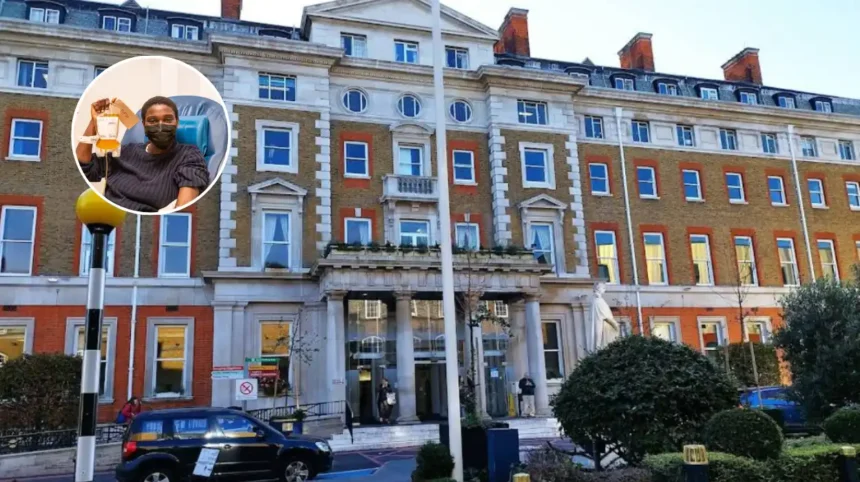
- Sixty-three-year-old Niall Whatley from Brixton, diagnosed with multiple sclerosis in 2011, relies on monthly IVIG infusions at King’s College Hospital following a failed stem cell transplant.
- Niall Whatley stated that plasma-derived medicines are a “lifesaver” and that without monthly IVIG, he would be constantly hospitalised or worse.
- Whatley thanked plasma donors, saying they are “literally saving people’s lives” and “helping to keep us alive through the IVIG infusions we receive.”
- Intravenous immunoglobulin (IVIG) derives from plasma, which comprises 55% of blood and carries cells vital for medicines treating immune deficiencies and rare diseases.
- King’s College Hospital notes positive impact from UK plasma on care quality in its bone marrow and liver transplant centres.
- The 1998 ban stemmed from vCJD risks linked to BSE; lifted in 2021 after MHRA review deemed risks negligible.
- By March 2025, NHSBT collected 250,000 litres in England; plans for 25% immunoglobulin self-sufficiency by end-2025, 30-35% by 2031, 80% albumin by 2026.
- About 17,000 NHS patients yearly benefit from plasma-derived treatments.
- Sir Stephen Powis, NHS England national medical director, called it a “landmark moment” reducing import reliance.
- Dr Jo Farrar, NHSBT chief executive, thanked donors for enabling life-saving medicines “for the first time in a generation.”
- Health minister Baroness Gillian Merron highlighted steps toward self-sufficiency and resilient supply chains.
South London (South London News) March 30, 2026 – South London residents are expressing profound gratitude to UK plasma donors as the NHS marks record collections exceeding 758,000 litres since the 2021 lifting of a long-standing ban, enabling life-saving treatments that have directly benefited patients at local hospitals like King’s College Hospital.
- Key Points
- Why Was the UK Plasma Ban Introduced?
- What Changed to Lift the Ban?
- How Much Plasma Has the NHS Collected?
- What Is Plasma and How Is It Used?
- Who Is Niall Whatley and How Has Plasma Helped Him?
- How Has King’s College Hospital Benefited?
- What Do NHS Leaders Say About This Milestone?
- What Are the Government’s Plans?
- Are There Other Patient Stories?
- What Does This Mean for South London Donors?
Why Was the UK Plasma Ban Introduced?
The ban on using domestically collected plasma for fractionation was imposed in 1998 due to concerns over the risk of transmitting variant Creutzfeldt-Jakob Disease (vCJD), linked to exposure from bovine spongiform encephalopathy (BSE), or mad cow disease.
This forced the UK to rely entirely on imported plasma for manufacturing critical medicines. As reported by Romilly Schulte of Southwark News, the restriction halted the use of UK-sourced plasma amid fears of prion transmission in the fatal brain disease.
What Changed to Lift the Ban?
In February 2021, the government lifted the ban following a comprehensive MHRA review, which concluded that risks were now negligible. Dr June Raine, MHRA Chief Executive, stated:
“I am very pleased that after our thorough review of the evidence, there is now the potential to produce life-saving treatments from plasma donated in the UK for the benefit of NHS patients.”
Health Minister James Bethell added:
“Following expert advice, I am pleased we are now able to lift this ban to help thousands of NHS patients access these potentially life-saving treatments as quickly as possible.”
This paved the way for domestic plasma to be fractionated into usable components.
How Much Plasma Has the NHS Collected?
Since 2021, the NHS has amassed over 758,000 litres of British plasma, with NHS Blood and Transplant (NHSBT) collecting 250,000 litres from donors in England by early 2025. Officials hail this as a step toward self-sufficiency, targeting 25% of immunoglobulin needs met domestically by the end of 2025, rising to 30-35% by 2031, and 80% for albumin by 2026. These volumes support treatments saving around 17,000 patients annually, including those with immune deficiencies, bleeding disorders, and severe burns.
What Is Plasma and How Is It Used?
Plasma, the liquid component making up 55% of blood, transports white blood cells, red blood cells, platelets, nutrients, hormones, and waste. It is harvested from whole blood donations or specialist apheresis sessions and fractionated into immunoglobulins for autoimmune conditions and albumin for surgery, trauma, burns, and liver issues. As Romilly Schulte explains in Southwark News, these derivatives are vital for patients like those at King’s College Hospital’s specialist centres.
Who Is Niall Whatley and How Has Plasma Helped Him?
Sixty-three-year-old Niall Whatley from Brixton, diagnosed with multiple sclerosis in 2011, depends on monthly intravenous immunoglobulin (IVIG) infusions at King’s College Hospital after a stem cell transplant failed to stabilise his immune system. As reported by Romilly Schulte of Southwark News, Whatley said:
“The plasma-derived medicines are a lifesaver for me and many other patients. If your immune system goes right down to where your body can’t fight off any infections, then you’re in a world of problems. If you’re lucky, you’ll survive – and if you’re not lucky, you don’t.”
He continued:
“If I didn’t have the IVIG infusions every month, I would be in and out of hospital constantly – or probably even a lot worse than that. Anyone that donates plasma – I want them to know that they are donating a blood component that is literally saving people’s lives… you are literally helping to keep us alive through the IVIG infusions we receive.”
How Has King’s College Hospital Benefited?
King’s College Hospital has acknowledged the positive impact of UK plasma collections on its quality of care, particularly in bone marrow and liver transplant centres. BBC London News featured Niall Whatley in coverage marking the historic milestone of using UK plasma after 25 years. The hospital’s recognition underscores how domestic supplies enhance treatment reliability for South London patients.
What Do NHS Leaders Say About This Milestone?
Sir Stephen Powis, NHS England national medical director, described it as:
“This landmark moment ensures patients relying on crucial plasma-derived medicines will always have access to the treatment they need. Thanks to NHS efforts, new plasma-derived products, owned from start to finish by the UK, will reduce our reliance on imported stock and boost the fortitude of hospital supplies.”
Dr Jo Farrar, NHSBT chief executive, said:
“Thanks to the incredible generosity of our donors, NHS patients are now receiving life-saving medicines made from UK plasma for the first time in a generation.”
What Are the Government’s Plans?
Baroness Gillian Merron, Health and Social Care minister, stated:
“This is a significant milestone for the NHS as we take a step toward UK self-sufficiency in these vital medicines. As part of our Plan for Change, we are improving access to life-saving treatments for thousands of NHS patients and strengthening healthcare security. By sourcing our own medicine, we are building a more resilient and domestic medical supply chain and boosting economic growth.”
In 2025 alone, 3,286 patients received UK plasma treatments, reflecting rapid progress.
Are There Other Patient Stories?
While South London spotlights Niall Whatley, Jill Jones from Oxford became the first patient this century to receive UK-sourced immunoglobulin for non-Hodgkin’s lymphoma, receiving infusions every three weeks. She said: “Infusions have been life-changing for me in keeping me well. Before I started on them, I was regularly in hospital with infections – which just doesn’t happen now.
It’s made a huge and positive difference to my life and my family’s life. I felt really privileged today to be the first patient in the UK to be receiving immunoglobin that was made from UK plasma for the first time in a very long time.” These stories echo the gratitude from South Londoners.
What Does This Mean for South London Donors?
The ripple effects in South London highlight the direct link between local generosity and patient outcomes, with calls for continued donations amid growing needs, such as for Kawasaki disease treatments. King’s College Hospital’s involvement reinforces community pride in contributing to national self-sufficiency. As Romilly Schulte reports, the record collections are “reverberating around South London,” saving lives like Niall Whatley’s.