
Noise complaints are one of the most common issues handled by local environmental health teams, and Sutton Council provides a formal route for residents, businesses, developers, and other affected parties to report them. If noise from a neighbour, a business, construction activity, or equipment is affecting your home or wellbeing, Sutton Council’s Environmental Health Team can investigate and, where appropriate, take enforcement action under statutory nuisance rules.
- What counts as a noise nuisance
- Sutton Council’s reporting route
- How to make the complaint
- Evidence you should keep
- What happens after you report it
- Abatement notices and enforcement
- Night-time noise rules
- Construction and business noise
- When the council may not act
- Practical steps before reporting
- Why this matters in South London
- Final guidance for residents
This guide explains how the complaint process works, what counts as a noise nuisance, what evidence Sutton Council is likely to need, and how to improve your chances of getting a fast and effective response. It is written as an evergreen resource for South London readers who want a practical, legally grounded explanation of the process.
What counts as a noise nuisance
In England, councils must investigate noise complaints that may amount to a statutory nuisance under the Environmental Protection Act 1990. The legal test is whether the noise unreasonably and substantially interferes with the use or enjoyment of a home or other premises, or is likely to injure health.
Sutton Council says it can deal with a wide range of noise problems, including loud music, barking dogs, construction-related noise, extractor fans, deliveries and collections, intruder alarms, and other sources from homes, businesses, or land. Government guidance also confirms that councils are responsible for investigating noise from premises and from vehicles, machinery, or equipment in the street in certain situations.
Not every irritation will meet the statutory nuisance threshold. A noise complaint becomes more likely to succeed when it is frequent, intrusive, happens at unreasonable hours, or clearly prevents normal sleep, rest, or use of a property.
Sutton Council’s reporting route
Sutton Council directs residents to report noise nuisance using its online form. The council also recommends first trying to discuss the issue with the person causing the noise, if that is safe and practical, because many complaints can be resolved without formal enforcement.
The council says its Environmental Health Team operates a noise complaints service and aims to provide a fair, balanced, prompt, and efficient response. It also states that service requests are responded to within two working days, with same-day visits for urgent problems where needed.
For South London residents, this matters because noise issues often escalate quickly, especially in dense housing areas where sound travels easily between flats, terraced homes, and mixed-use streets. A clear, documented complaint gives the council a stronger basis to decide whether the issue is a nuisance and what action to take next.
How to make the complaint
The most direct way to file a noise complaint with Sutton Council is to use the council’s online report form for noise nuisance. Sutton also provides Environmental Health contact information and general guidance through its environmental health pages.
Before you submit the complaint, it helps to gather the key details the council is likely to need. That usually includes the address where the noise is coming from, the type of noise, when it happens, how long it lasts, how often it occurs, and how it affects you. Council guidance and legal advice both show that environmental health officers rely heavily on timing, pattern, and impact when deciding whether to investigate further.
If the problem is urgent, Sutton Council says it may carry out a same-working-day visit. For less urgent matters, it can still investigate, make up to five visits to gather evidence, use recording equipment where appropriate, and make out-of-hours visits when necessary.
Evidence you should keep
Sutton Council specifically recommends keeping detailed records of the noise problem using its noise diary sheets, which may be used in court proceedings. This is one of the most important parts of a successful complaint because councils often need repeated evidence before they can prove a statutory nuisance exists.
A strong diary should note the date, start and end times, type of noise, where it came from, and what it prevented you from doing, such as sleeping, working, or relaxing. It is also helpful to record whether the noise was one-off or ongoing, and whether you contacted the source directly or any other authority.
If possible, keep any supporting material such as short audio recordings, photographs of equipment or alarms, or screenshots of messages that show the timing of repeated disturbances. Sutton Council says it may use recording equipment where appropriate, and it encourages residents to be prepared to give evidence if a case reaches court.
What happens after you report it
Once you report the noise, Sutton Council may contact you to discuss the best way to progress the complaint. The council says it will make every effort to improve or control the noise and will contact you before closing a complaint.
Environmental health officers can investigate whether the noise amounts to statutory nuisance. Government guidance says councils must look into complaints about noise that could be a statutory nuisance and may issue abatement notices if they decide the legal threshold has been met.
In practice, the council may speak to the person responsible, visit the site, monitor the noise, ask for a diary, or carry out technical assessments before deciding whether formal enforcement is justified. Sutton Council says it may make up to five visits to gather evidence and assess whether the nuisance exists.

Abatement notices and enforcement
If the council decides the noise is a statutory nuisance, it must generally serve an abatement notice on the person responsible, or on the owner or occupier of the property if the responsible person cannot be identified. An abatement notice can require the noise to stop or be restricted to certain times, and it may also set out specific steps that must be taken to reduce the nuisance.
If the recipient ignores the notice, the council can take further legal action. Government guidance explains that penalties can be significant, with fines available for breaches and, in some cases, equipment seizure or prosecution depending on the circumstances and source of the noise.
This is one reason documentation matters so much. Councils do not issue notices for every complaint; they need credible evidence that the noise is serious, persistent, and legally actionable.
Night-time noise rules
Noise at night is treated seriously because it is more likely to disturb sleep and health. Government guidance explains that councils can investigate noise complaints at any time of day or night, and they may also issue warning notices for noise above permitted levels between 11pm and 7am.
The Noise Act 1996 gives councils powers to deal with excessive and continuous night noise from dwellings, although the way the Act is used can vary by area. Legal guidance confirms that councils can take swift action against occupiers who create excessive night noise, and in some cases they may confiscate equipment causing the disturbance.
For residents in Sutton, the practical point is simple: repeated late-night noise is often easier to evidence than isolated daytime noise because the time, duration, and impact on sleep are usually clearer. A diary that shows repeated disturbance after 11pm can be especially useful.
Construction and business noise
Not all noise complaints involve neighbours. Sutton Council says it can also deal with construction site development and other noise sources affecting residents and businesses. That matters in South London boroughs where regeneration, road works, deliveries, and mixed-use developments can create ongoing disturbance.
Construction noise and some activity in the street may also fall under different legal regimes, including control of pollution laws and local environmental health powers. This means the council may need to look at the source of the noise, the time it occurs, and whether it is linked to a permitted activity or an enforceable breach.
If the noise is coming from a business, the council may be able to treat it as statutory nuisance if it substantially interferes with nearby homes or premises. In those cases, evidence of hours, frequency, and actual impact on neighbours is often decisive.
When the council may not act
There are limits to what councils can do. Government guidance says statutory nuisance laws do not apply to every type of noise, and councils must focus on cases that meet the legal test rather than general disagreement or occasional irritation.
Some disputes are better handled through neighbour discussion, mediation, tenancy enforcement, or other routes depending on whether the property is privately owned, rented, or housing association managed. Sutton Housing Partnership, for example, advises residents to try speaking to neighbours first where safe and then contact Environmental Health if the issue continues.
If the council cannot resolve the issue, it may still provide advice about next steps, including private legal action in some circumstances. Sutton Council notes on its public guidance that residents can consider taking their own action if the council cannot resolve the problem.
Practical steps before reporting
The strongest complaints are usually calm, factual, and consistent. Before filing, it helps to check whether the issue happens at the same time each day, whether it is linked to specific events, and whether it is something the council can reasonably inspect or hear for itself.
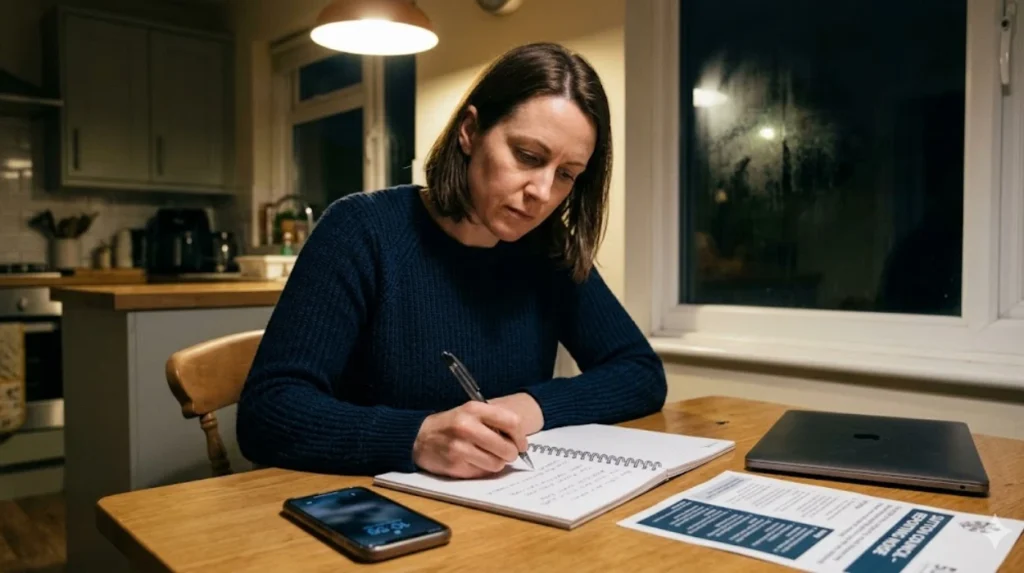
You should also think about safety and escalation. Sutton Council’s guidance suggests discussing the problem with the person creating it and trying to compromise, but only if that is safe and sensible. If you do not feel safe doing that, or if the noise is persistent, it is reasonable to go straight to the council.
Keep your complaint focused on the effect of the noise rather than emotion alone. For example, saying “The music regularly starts after 11.30pm, continues for two hours, and wakes my children” is much more useful than simply saying “They are being annoying.” That kind of specific evidence is what environmental health officers can work with.
Why this matters in South London
South London has a dense mix of residential streets, flats, shops, pubs, construction sites, and transport corridors, so noise disputes are common and often layered. In boroughs like Sutton, a good complaint process helps distinguish between everyday urban background sound and genuine statutory nuisance.
For local residents, the bigger lesson is that noise enforcement is evidence-led. Councils are expected to investigate properly, but they also need a clear pattern before they can issue notices or bring legal action.
That is why Sutton Council’s diary sheets, evidence visits, and follow-up process are so important. They make the complaint more than a one-off report and give the council something concrete to assess over time.
Final guidance for residents
If you need to file a noise complaint with Sutton Council, use the council’s online noise nuisance reporting route, keep a detailed diary, and document the times, frequency, and effect of the noise from the start. Sutton Council says it responds quickly, investigates cases, and may use visits, recording equipment, and legal action where appropriate.
The most effective complaints are specific, consistent, and supported by evidence. When the noise genuinely crosses the line into statutory nuisance, the council has legal powers to require it to stop or be limited, protecting residents who are suffering repeated disturbance.