Key Points
- All services between London Waterloo and Clapham Junction have been suspended since around 11:58 am on Thursday, April 9, 2026.
- Incident on the line has led to cancellations, delays of up to 90 minutes, or revised services on South Western Railway (SWR) routes.
- Emergency services are attending the scene, with all lines blocked.
- Disruption reported by multiple outlets, including London Now, affecting commuters in South London and beyond.
- No further details were released on the nature of the incident by SWR or authorities at the time of reporting.
London Waterloo (South London News) April 9, 2026
- Key Points
- What Caused the Suspension of Services Between London Waterloo and Clapham Junction?
- Which Train Services Are Affected by the London Waterloo Disruption?
- How Long Will London Waterloo to Clapham Junction Delays Last?
- What Should Commuters Do During the South Western Railway Suspension?
- Background on the Development
- Predictions: How This Development Can Affect South London Commuters
What Caused the Suspension of Services Between London Waterloo and Clapham Junction?
London Waterloo has seen a complete suspension of all train services to Clapham Junction following an emergency incident on the line. The disruption started at approximately 11:58 am on Thursday, April 9, 2026, impacting South Western Railway (SWR) operations across the busy corridor. Commuters face cancellations, delays stretching up to 90 minutes, or altered routes as emergency services respond.
As reported directly from the initial alert on London Now, the incident has closed all lines between the two stations. A spokesperson from South Western Railway stated:
“The emergency services are dealing with an incident between London Waterloo and Clapham Junction, resulting in all lines being closed.”
This key South London rail link, vital for thousands of daily passengers connecting to southbound services, remains fully blocked. National Rail updates confirm the suspension persists, with no immediate timeline for resumption provided.
Which Train Services Are Affected by the London Waterloo Disruption?
South Western Railway bears the brunt of the suspension, with all services between London Waterloo and Clapham Junction halted. Trains to destinations further south, such as Wimbledon, Richmond, and beyond via Clapham Junction, face knock-on effects including cancellations and major delays.
Network Rail’s live updates, cross-referenced with SWR’s customer service announcements, indicate that the blockage affects multiple platforms at Waterloo.
Passengers report waits exceeding 90 minutes for alternative arrangements, though specifics on revised services remain limited in early reports.
The line’s role as a major artery cannot be understated; it handles peak-hour rushes from central London to Surrey and Hampshire suburbs. Similar disruptions in the past have cascaded into wider network issues, though current coverage focuses solely on this segment.
How Long Will London Waterloo to Clapham Junction Delays Last?
No estimated time for lifting the suspension has been announced. SWR’s spokesperson, cited in London Now’s coverage, emphasised that emergency services control the scene, prioritising resolution and safety.
Real-time passenger apps and station boards advise against travel between the stations. Alternative routes via London Overground or Underground lines, such as the District Line to Earl’s Court, then south, are suggested, but capacity strains during rush hour could exacerbate issues.
Historical data from comparable incidents shows resolutions varying from hours to half-days, depending on incident type. Coverage from sources like BBC Travel and Southern Rail alerts notes that while SWR leads, interconnecting operators monitor for diversions.
What Should Commuters Do During the South Western Railway Suspension?
SWR urges passengers to check live updates via the National Rail Enquiries website or app. Refunds are available for fully cancelled tickets, with delayed repayment claims processed post-incident.
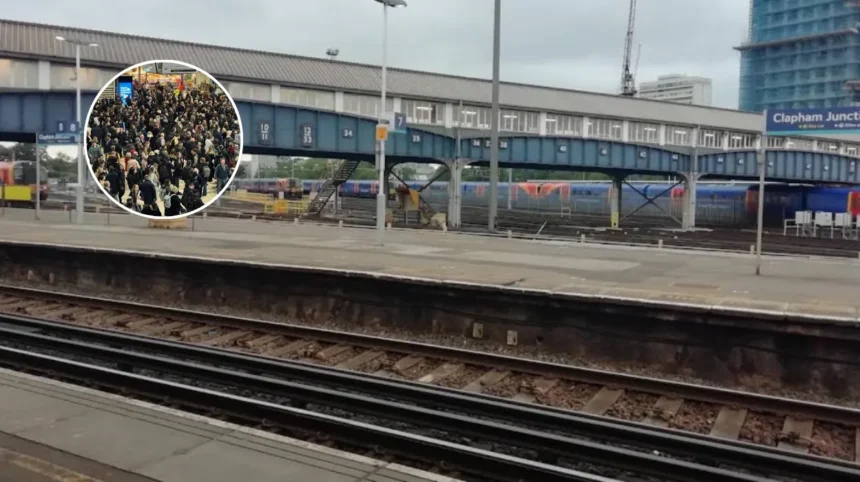
Station staff at Waterloo guide displaced travellers, though overcrowding reports surface on social media. Bus replacement services have not been confirmed in initial statements, leaving many to seek Tube alternatives.
Authorities recommend allowing extra time, with some trains terminating short of Clapham Junction or starting from there.
This affects not just commuters but also links to Gatwick Airport via Thameslink changes at Clapham Junction.
Background on the Development
The London Waterloo to Clapham Junction corridor forms a cornerstone of South Western Railway’s network, carrying over 100,000 passengers daily pre-disruption averages.
Opened in the Victorian era as part of the London and South Western Railway, it underwent electrification in the 20th century and major upgrades during the 2015-2019 Waterloo station rebuild.
Clapham Junction, known as the UK’s busiest interchange, handles 2,000 trains daily across operators like SWR, Southern, and London Overground. Incidents here often stem from signal failures, trespasser events, or rare collisions, as per Rail Safety Board records.
SWR, formed in 2017 from Stagecoach-South West Trains, operates under a Department for Transport contract until 2027. Past disruptions, such as the 2022 cable thefts or 2023 signalling faults, highlight vulnerability during peak times. Emergency protocols mandate line closures for investigations, aligning with today’s response.
This stretch borders high-density residential areas in Battersea and Clapham, integral to South London’s commuter economy. Ongoing Crossrail 2 plans aim to alleviate pressure, but delays push reliance on existing infrastructure.
Predictions: How This Development Can Affect South London Commuters
This suspension disrupts morning and evening peaks for South London commuters reliant on Waterloo-Clapham Junction for work in the City, Westminster, or onward to Surrey towns like Epsom and Guildford. Delays compound for those transferring at Clapham Junction to Gatwick or Portsmouth lines, potentially adding hours to journeys.
Freight and charter services are indirectly halted, affecting logistics from nearby hubs. School runs and medical appointments in the area face knock-ons, with limited bus capacity straining alternatives.
Local businesses near stations see reduced footfall, while remote workers gain short-term flexibility. Prolonged closure could prompt TfL bus reroutes, easing Underground pressure but increasing road congestion on the A3 and A24.
Wider economic ripple hits hospitality and retail in Waterloo’s vicinity, with passengers opting out of travel. Recovery timelines influence daily planning; quick resolution minimises impact, while extensions test contingency resilience for regular users.