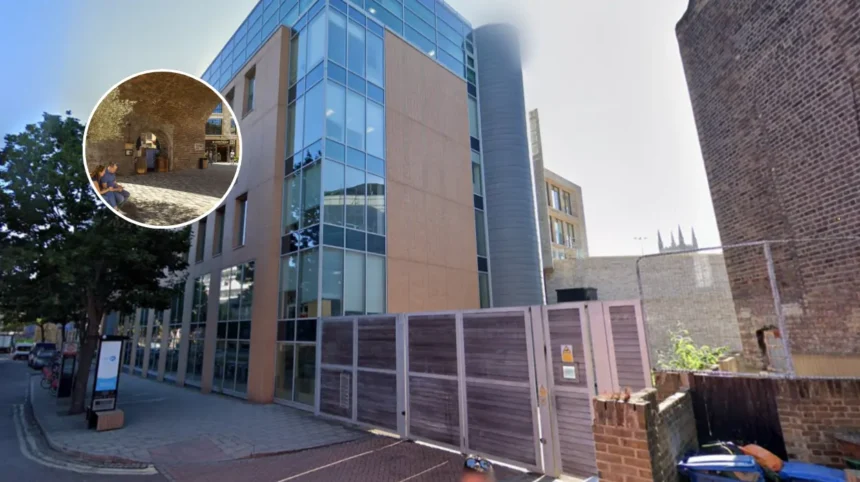
Key Points
- MARK Capital Management handed over its Borough Yards mixed-use scheme in south London to lender Cheyne Capital following a consensual restructuring agreement.
- The scheme, valued at approximately £130 million, is located on the South Bank near Borough Market, featuring retail, leisure, food and beverage, and office space across 194,000 square feet underneath Victorian railway arches.
- Leasing challenges since completion, initially disrupted by the pandemic and followed by slower tenant uptake, contributed to the handover.
- Rising interest rates impacted asset valuations and increased financing pressures, compounding the issues.
- Cheyne Capital provided a £122.8 million senior loan to MARK in 2023 to refinance the scheme, but a subsequent sales process failed to secure a buyer.
- The real estate fund backing the initial investment reached the end of its life, leading MARK to forgo additional capital.
- The handover occurred in July, as reported earlier this month, and was not triggered by foreclosure; Cheyne Capital now manages the development.
- MARK Capital Management, formerly Meyer Bergman, is a London-based firm founded in 2004 with over €7 billion in assets under management as of 2021.
Borough Yards, South London – MARK Capital Management hands Borough Yards scheme to Cheyne Capital (South London News) April 15, 2026 –
- Key Points
- What Led to MARK Capital Management Handing Over Borough Yards to Cheyne Capital?
- Why Did Borough Yards Face Leasing Challenges?
- How Does This Reflect Broader Pressures in the Commercial Property Sector?
- What Role Did Cheyne Capital Play in the Borough Yards Timeline?
- Background of the Development
- Prediction: Impact on Local Property Stakeholders
What Led to MARK Capital Management Handing Over Borough Yards to Cheyne Capital?
In a significant development for London’s commercial property sector, MARK Capital Management has transferred control of its £130 million Borough Yards mixed-use scheme to its lender, Cheyne Capital, through a consensual restructuring agreement. As reported by Bisnow, the handover took place in July after the scheme failed to secure sufficient tenants despite its prime location. The 194,000 square foot development, situated on the South Bank near Borough Market under Victorian railway arches, combines retail, food and beverage outlets, leisure facilities, and office space.
UK Estates noted that the move reflects broader pressures in the commercial property market, particularly for assets facing leasing difficulties amid changing conditions. Cheyne Capital, the investment firm that provided a £122.8 million senior loan to MARK in March 2023 to refinance the newly developed site, has now assumed management responsibilities. This intervention followed Cheyne’s earlier involvement when rising interest rates began eroding asset values across the sector.
Property Week highlighted the event earlier this month, stating that MARK Capital Management handed over the south London scheme to Cheyne Capital, casting doubts on the viability of similar developments. The process avoided foreclosure, distinguishing it from more adversarial lender takeovers.
Why Did Borough Yards Face Leasing Challenges?
Borough Yards encountered leasing hurdles shortly after completion, with initial progress stalled by the pandemic and subsequent slower-than-expected tenant interest. According to UK Estates, these challenges persisted despite the site’s curated tenant mix and proximity to high-footfall areas like Borough Market. Bisnow reported that the development, acquired by MARK in 2016 following the closure of the Vinopolis visitor centre, spans retail, food and beverage, and office components but struggled to achieve the occupancy needed to sustain its financial structure.
Rising interest rates further exacerbated the situation, hitting asset values and intensifying financing pressures. As detailed in Bisnow, Cheyne refinanced the scheme with £123 million in 2023, but MARK later launched a sales process that attracted no buyers. The developer’s real estate fund, which initially backed the investment, had reached the end of its life, prompting MARK to decline to inject further capital.
Property Week’s analysis linked this to a “perfect storm” affecting scheme viability, with the Borough Yards case exemplifying wider market strains. Earlier coverage from CoStar in 2023 described the refinancing as support for a “newly developed, mixed-use scheme,” underscoring Cheyne’s long-term involvement.
How Does This Reflect Broader Pressures in the Commercial Property Sector?
The Borough Yards handover underscores ongoing strains in London’s commercial real estate, where leasing shortfalls and elevated borrowing costs challenge mixed-use viability. UK Estates emphasised that the sector faces impacts from disrupted tenant demand and market shifts post-pandemic. Bisnow connected the event to interest rate hikes that diminished valuations, a trend affecting multiple assets.
MARK Capital Management, a pan-European firm rebranded from Meyer Bergman and founded in 2004 by Ton Meijer and Markus Meijer, manages over €7 billion in assets, specialising in urban mixed-use and value-add properties. Recent reports from Bisnow in December 2025 noted early-stage merger talks between MARK and Amsterdam-based Orange Capital Partners, potentially creating a €10 billion entity, though discussions were paused into 2026. This context highlights strategic responses to market cycles amid individual project setbacks like Borough Yards.
Property Week framed the situation as a cloud over schemes’ prospects, with Borough Yards’ £130 million valuation now under Cheyne’s control. Historical details from SPPARC Studio and Travel Writers Magazine described the project as a £411 million (approximately $500 million at the time) endeavour designed to restore medieval street patterns and repurpose 100,000 square feet of railway arches, set for completion around spring 2022.
What Role Did Cheyne Capital Play in the Borough Yards Timeline?
Cheyne Capital’s engagement began with the 2023 £122.8 million senior loan to refinance Borough Yards, as covered by CoStar. Bisnow detailed how intervention escalated amid rate rises, culminating in the July handover without foreclosure proceedings. UK Estates confirmed Cheyne now oversees the asset, valued at £130 million.
The lender’s actions align with its position as an investment firm supporting distressed but viable properties. Property Week’s recent reporting tied this to MARK’s decision to cede control consensually.
Background of the Development
Borough Yards originated from MARK Capital Management’s 2016 acquisition of the site post-Vinopolis closure, transforming it into a mixed-use hub under SPPARC Studio’s design. The project aimed to revive Victorian railway arches and lost medieval layouts, blending historic elements with modern retail, leisure, offices, and public spaces near Bankside. Valued at around £411 million during planning, it opened around 2022 amid high expectations for South Bank’s regeneration. MARK, headquartered in London with a focus on prime urban assets, oversaw development backed by its real estate fund. Cheyne’s 2023 refinancing marked early financial strain, evolving into full control by 2026.
Prediction: Impact on Local Property Stakeholders
This development can affect developers, investors, and lenders in London’s South Bank commercial sector by heightening scrutiny on mixed-use leasing risks. For developers like those targeting similar railway-arch or post-pandemic sites, it signals the need for diversified tenant strategies to counter slow uptake. Investors may reassess valuations in high-interest environments, favouring assets with proven occupancy over speculative ones. Lenders such as Cheyne could see increased restructuring opportunities, managing handed-over schemes while seeking stabilised returns. Local tenants and operators near Borough Market might experience minimal disruption under new management, but face competitive pressures if viability tests spread. Overall, it prompts stakeholders to prioritise resilient financing amid market volatility.