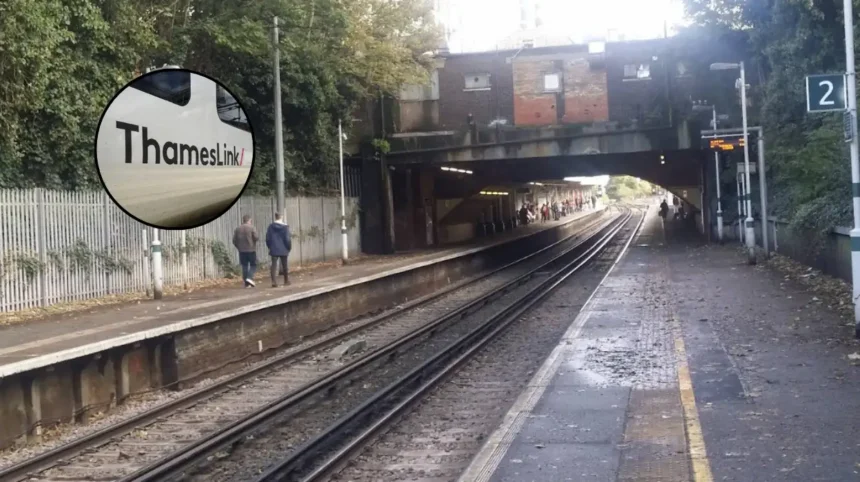
Key points
- A bicycle left on the railway line between Sutton and Wimbledon is causing delays of up to two hours on Thameslink services, as reported by National Rail and Thameslink on 9 May 2026.
- The obstruction, blocking the line towards Wimbledon, was first reported at around 14:00 this afternoon, according to National Rail incident messaging.
- As a result, fewer trains are running between Sutton and Wimbledon, and services may be cancelled, delayed or revised, with disruption expected to last until about 16:00.
- Passengers travelling through the area have been told to expect delays and may need to use alternative routes, including London Underground, London Trams and London buses, where ticket acceptance is in place.
- Thameslink states that journeys through the area are likely to take longer than usual and that trains between West Hampstead and Sutton via Wimbledon are instead running between West Hampstead and Wimbledon via Tooting.
- A reduced number of services are operating between Sutton and Wimbledon via South Merton, while passengers can also use their tickets at no extra cost on South Western Railway services between Epsom, Wimbledon and London Waterloo.
- Commuters are being advised by National Rail and Thameslink to check journey planners and live departure boards before travelling.
Sutton and Wimbledon (South London News) 9 May 2026 –A bicycle on the tracks has brought significant disruption to rail services between Sutton and Wimbledon this afternoon, leaving many commuters facing delays of up to two hours, according to National Rail and Thameslink. As reported by National Rail’s live service‑disruption feed, the incident occurred at around 14:00, with the obstruction blocking the line towards Wimbledon and forcing reduced services and rerouting of Thameslink trains.
- Key points
- How badly are trains disrupted?
- Which routes are still running and which are affected?
- How are passengers being advised to travel?
- What do the operators say about the incident?
- How long is this disruption expected to last and what is the impact on the day?
- How are passengers being told to check for updates?
- Background: How this disruption fits into wider rail‑safety and infrastructure issues
- Prediction: What this means for commuters, local residents and the wider network
How badly are trains disrupted?
National Rail’s incident page for the Sutton–Wimbledon section notes that the line towards Wimbledon is blocked, restricting the number of trains that can run between the two stations. As recorded on the site,
“Fewer trains are able to run between the stations and services may be cancelled, delayed or revised, with disruption expected until 4pm.”
This means passengers must anticipate altered stopping patterns, longer waiting times and possible last‑minute cancellations.
Thameslink, in its own service‑update channels, confirms that
“journeys through the area are likely to take longer than usual.”
The operator has already adjusted the Wimbledon‑loop pattern, with trains between West Hampstead and Sutton via Wimbledon now instead running between West Hampstead and Wimbledon via Tooting.
Which routes are still running and which are affected?
According to the National Rail and Thameslink alerts, trains between West Hampstead and Sutton via Wimbledon are being replaced by a West Hampstead–Wimbledon via Tooting service for the duration of the disruption.
This rerouting shifts pressure onto the Tooting corridor, which may see more crowding and platform‑board changes.
A reduced number of services are also operating between Sutton and Wimbledon via South Merton, with Thameslink stressing that
“this route should be used with caution”
due to the limited frequency. In addition, the Thameslink policy for disruption allows passengers to use their tickets at no extra cost on South Western Railway services between Epsom, Wimbledon and London Waterloo, giving some commuters an alternative back into central London.
How are passengers being advised to travel?
In line with National Rail’s standard guidance for operational incidents, National Rail’s website is warning passengers
“travelling through the area… to expect delays and may need to use alternative routes.”
The advice is repeated on the live incident page, which states that passengers should check the Journey Planner and live departure boards before setting out.
Thameslink has also invoked its ticket‑acceptance policy, as shown in its service‑update text:
“ticket acceptance is in place on London Underground services, London Trams and London buses to help passengers complete their journeys.”
This means that holders of valid Thameslink tickets can switch to Underground lines, trams and buses without having to pay a separate fare, provided they follow a “reasonable” alternative route.
What do the operators say about the incident?
While no specific statement from Thameslink or Network Rail has been published in a press release as of this update, the operators’ official incident messaging and service‑update text are being treated as the primary on‑the‑record information on this disruption.
The National Rail incident page for the Sutton–Wimbledon line makes clear that the cause is “a bicycle on the tracks,” and that the blockage is between Sutton and Wimbledon towards Wimbledon itself.
Thameslink’s own online service‑update text adds that the disruption is expected to last until about 16:00, with the operator reiterating that “journeys through the area are likely to take longer than usual” and that passengers should factor in extra time.
How long is this disruption expected to last and what is the impact on the day?
As stated in the National Rail incident feed, the disruption between Sutton and Wimbledon is currently expected to continue until about 16:00 today, 9 May 2026. During this window, the line towards Wimbledon remains blocked, so through‑services between Sutton and Wimbledon cannot run as normal.
This timing means that afternoon and early‑evening commuters using the Wimbledon–Sutton corridor, particularly those transferring onto Underground or trams at Wimbledon, may experience knock‑on delays into the inner‑London network.
The need to switch to alternative routes can also increase walking distances and waiting times, especially for those unfamiliar with the London Underground and tram options detailed in the ticket‑acceptance policy.
How are passengers being told to check for updates?
Both National Rail and Thameslink stress that passengers should check journey planners and live departure boards before travelling.
As laid out in the National Rail incident page, “Commuters are being advised to check journey planners and live departure boards before travelling,” echoing standard rail‑sector guidance during unplanned incidents.
In addition, Thameslink’s service‑update text notes that ticket acceptance is in place on London Underground, trams and buses, but that passengers must follow a “reasonable” route and may be asked to show their tickets when requested by staff.
This implies that the on‑the‑ground decision‑making at stations and on buses will be guided by the operator’s published guidance rather than ad‑hoc instructions.
Background: How this disruption fits into wider rail‑safety and infrastructure issues
Incidents involving objects on the line, including bicycles, have periodically caused disruption on the Thameslink and surrounding suburban routes in recent years.
National Rail incident logs and operator statements for the Sutton–Wimbledon corridor show a pattern of blockages triggered by items left on or near the tracks, including fallen trees, debris and, occasionally, bicycles.
Thameslink’s own policy on “bringing a bike” explains that non‑folding bicycles are already restricted on peak‑hour trains and that passengers must not ride bikes on station platforms or trains.
Despite these rules, the operator notes that staff may ask a passenger to remove their bike if it blocks doors or poses a safety risk, underlining how the interface between cyclists and infrastructure remains a recurring safety consideration.
Moreover, planned engineering works on the Wimbledon loop and Sutton–Mitcham Junction routes over recent months have already reshaped services in this area, with National Rail and Thameslink detailing alternative timetables and ticket‑acceptance arrangements for similar corridors.
This suggests that the current Wimbledon–Sutton disruption sits within a broader context of a busy, capacity‑constrained suburban network where any unplanned obstruction can quickly translate into two‑hour delays and rerouting.
Prediction: What this means for commuters, local residents and the wider network
If incidents such as a bicycle blocking the line become more frequent, they could push operators to reinforce both physical and procedural measures around the Wimbledon–Sutton corridor and other similar suburban routes. For commuters, this could mean more routine use of alternative routes, longer‑term preparedness for disruptions, and a greater reliance on integrated ticket‑acceptance arrangements with London Underground and trams.
For local residents and businesses along the line, repeated delays of up to two hours may affect punctuality‑sensitive travel, such as school‑run timings, medical appointments and shift work, particularly if the blockage occurs during afternoons or early evenings when the line is already busy. The current expectation that disruption lasts until about 16:00 today suggests that late‑afternoon commuters in particular will be most affected.
For the wider rail network, the episode highlights how a single object on the tracks can ripple out into wider timetable changes, rerouting and altered service patterns. Future planning may therefore lean towards more robust detection systems, clearer signage and public‑safety messaging aimed specifically at cyclists and others near the Wimbledon–Sutton corridor, in an effort to minimise the risk of similar incidents re‑occurring.