Report a dumped (abandoned) car to Royal Greenwich Council using their online abandoned-vehicle form, supply the vehicle’s exact location, registration, make and model, and clear photos; the council will assess, place notices, wait for owner action, then remove the vehicle under statutory procedures.
- What is an abandoned or dumped car?
- Who is responsible for removing a dumped car in Greenwich?
- Why report a dumped car — public impact and legal basis?
- What information do I need to report a dumped car?
- How do I check whether a vehicle is taxed or declared SORN before reporting?
- How do I make a report to the Royal Greenwich Council?
- What does the council inspection and notice process involve?
- How long will it take for a dumped car to be removed?
- What happens to the vehicle after removal?
- When should I contact the police instead of the council?
- Are there specific rules for vehicles on housing estates or private land?
- What evidence improves the effectiveness of a report?
- What fines, fees, or penalties apply for abandoning a vehicle?
- How can residents follow up on their report?
- Real-world example — Greenwich removal in practice
- How will reporting a dumped car remain relevant in future enforcement?
What is an abandoned or dumped car?
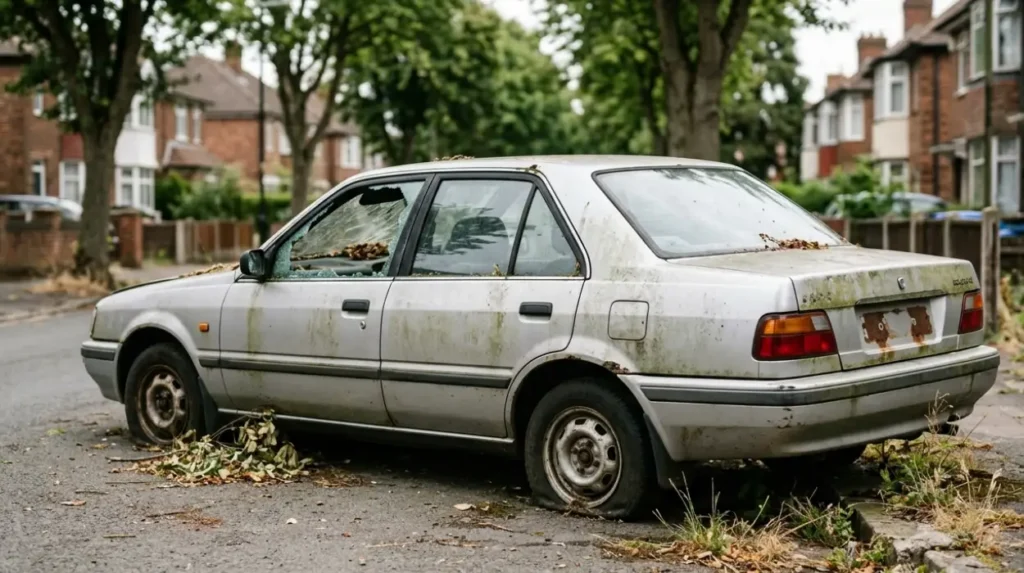
An abandoned or dumped car is a vehicle left on public land or residential streets that is damaged, unroadworthy, untaxed for more than two months, missing plates, or clearly neglected and not under the active control of an owner.
An abandoned vehicle is a car, van, motorbike, or caravan left without apparent ownership or use. Local authorities define clear signs of abandonment: sustained immobility, flat tyres, broken windows, missing registration plates, fire damage, heavy grime or rubbish inside, and visible decay. Councils also treat untaxed vehicles as abandoned once untaxed for statutory periods; the DVLA tax status and any declared SORN (Statutory Off Road Notification) are determinative for removals. Defining the vehicle precisely assists the council and the DVLA in deciding enforcement steps.
Who is responsible for removing a dumped car in Greenwich?
Royal Greenwich Council is the local authority responsible for assessing reports and arranging removal; the Metropolitan Police handle vehicles where criminal activity or immediate danger exists.
Royal Borough of Greenwich (the local council) enforces street cleansing and abandoned-vehicle removal on public highways and council-managed estates. The Metropolitan Police intervene when the vehicle is linked to crime, is a fire hazard, or poses an immediate public-safety risk; in such cases, call 999. For non-emergency illegal parking or suspected untaxed vehicles, councils coordinate with DVLA (Driver and Vehicle Licensing Agency) and follow statutory notice periods before disposal.
Explore More Greenwich News
Galliard’s 1500‑home Morden Wharf scheme approved in Greenwich 2026
Lady Dinah’s Cat Emporium Reopens in Greenwich, 2026
Why report a dumped car — public impact and legal basis?
Dumped cars create road hazards, reduce parking availability, attract vandalism, and pose environmental risks; UK legal frameworks give councils powers to remove abandoned vehicles after statutory notices and DVLA checks.
Abandoned vehicles obstruct pavements, reduce sightlines, and become sites for fly-tipping and vermin. Councils operate under statutory powers set out in UK local-authority regulations and related guidance to identify, notice, and remove vehicles. The DVLA supplies tax and keeper data for enforcement; councils must follow defined notice periods (commonly 10 days after notice) before removal unless the vehicle is clearly dangerous or subject to police action. Removing abandoned vehicles reduces long-term local costs and improves street safety.
What information do I need to report a dumped car?
Provide the exact street location (including nearest house number or landmark), vehicle registration number, make, model, colour, condition, and clear photographs showing plates and damage; include the date and time you first observed the vehicle.
Accurate location data reduces investigation time and misidentification; a postcode, street name, and description (kerbside, layby, estate car park) help enforcement teams. Photos should show registration plates (if present), overall context (distance shot showing surroundings), close-ups of damage (flat tyres, broken windows), and evidence of rust or interior content. State whether the vehicle blocks access, is leaking fluid, or has been stationary for a specified number of days. If reporting via FixMyStreet or the council online form, attach photos and drop-pin map details.
How do I check whether a vehicle is taxed or declared SORN before reporting?
Check the vehicle’s tax status and SORN using DVLA online services by entering the registration number; councils often ask you to check tax status first because untaxed vehicles have statutory waiting periods before removal.
Use the DVLA’s vehicle information service to confirm whether a vehicle is taxed, has a valid MOT, or is declared SORN. Reporting a vehicle that is taxed and legally parked can delay or prevent removal; councils request this check to avoid unnecessary enforcement. If the vehicle is untaxed and has been untaxed for over two months, local authority removal procedures proceed once the notice periods expire. If the vehicle lacks plates or tax details, report to the police via 101 if theft or crime is suspected.
How do I make a report to the Royal Greenwich Council?
Complete Royal Greenwich’s online abandoned-vehicle report form with required details, attach photos, and provide contact details for follow-up; the council logs, inspects, serves notices, and proceeds with removal if unclaimed.
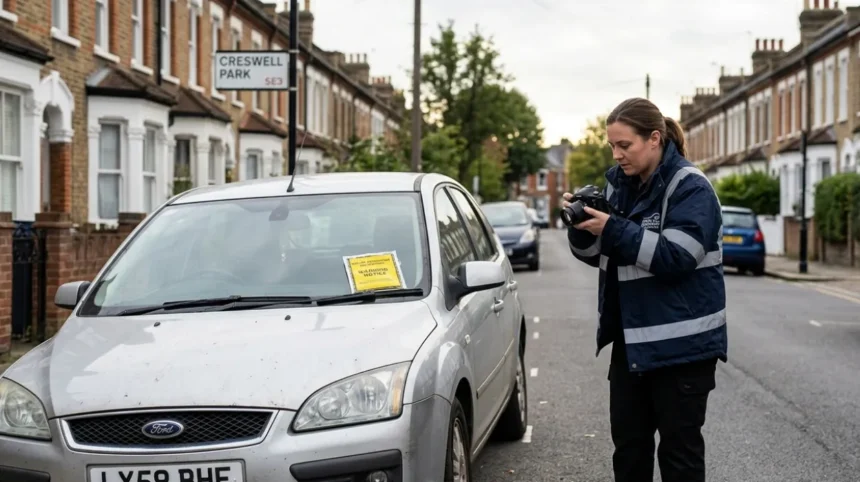
Visit the Royal Borough of Greenwich website’s parking and streets section and locate “report an abandoned or untaxed vehicle.” Fill in fields for vehicle registration, make and model, colour, exact location, description of condition, date seen, and attach photographs. Provide your contact details for council officers to clarify the report. After submission, the council schedules an inspection; enforcement officers place a statutory notice on the vehicle if abandonment appears likely. The notice starts a waiting period for owner’s response or collection.
What does the council inspection and notice process involve?
Council officers inspect the vehicle, place a legal notice (often fixed to the windscreen), wait the statutory period (commonly 10 working days), and then remove the vehicle for disposal if there is no claim or legal reason to retain it.
Inspection confirms abandonment indicators: immobility, damage, pollution, or evidence of dumping. If the vehicle is considered abandoned, enforcement places a notice requiring the owner to contact the council within a specified number of days. Statutory notice periods vary by circumstance but typically include an initial public-notice period of 10 working days before removal. For untaxed vehicles, DVLA timeframes can add constraints; for dangerous or burned-out vehicles, the council may accelerate removal following police consultation.
How long will it take for a dumped car to be removed?
Removal usually takes several weeks: initial inspection within days, a notice period of around 10 working days, then scheduling to tow and dispose; total time depends on DVLA checks, owner response, and operational capacity.
After you report, many councils inspect within 5–15 working days, depending on workload and location. If a notice is needed, the council waits the statutory notice period; removal follows when the notice expires, and no owner claim exists. If the vehicle is untaxed and requires DVLA confirmation, additional delays apply while tax status is verified. Clearance scheduling depends on contractor availability, site access, and safety considerations; high-risk vehicles receive priority.
What happens to the vehicle after removal?
The council stores the vehicle in a pound or disposes of it by scrapping if unclaimed; owners may reclaim the vehicle by paying fees, fines, and towing costs within statutory timelines, the vehicle is sold or destroyed.
Removed vehicles move to an impound yard where the registered keeper can reclaim the vehicle on payment of release fees, accumulated penalty charge notices, and towing/storage charges. If unclaimed after legal time limits, the council may sell the vehicle at auction or scrap it; scrapping requires transfer of ownership via DVLA notification (via online service or V5C transfer) and evidence of lawful disposal. Councils provide procedures for owners to recover their vehicles and for legitimate disposal when property is abandoned.
When should I contact the police instead of the council?
Call 999 for immediate danger, fire, or ongoing theft; contact the Metropolitan Police on 101 if the vehicle is clearly stolen, linked to crime, or if no registration plates exist and suspicion of criminality exists.
Police handle vehicles when crimes are involved, such as theft, arson, violent incidents, or when the vehicle is a potential evidence source. For non-emergency criminal suspicions (e.g., found stolen or used in offences), call 101; the police will advise whether they will investigate or pass the report to the local authority. Local officers may instruct you to report to the council services if the vehicle is purely a nuisance without criminal links.
Are there specific rules for vehicles on housing estates or private land?
For vehicles on council estates or private land, report to the estate management or private landlord first; the council removes vehicles from council-managed land, but will not remove a vehicle from private land without the owner’s permission or a court order.
If a vehicle sits on private property, the landowner or landlord must request removal or provide permission for enforcement. For council-owned estates, use the council’s estate reporting channels; for privately owned communal areas, property managers handle enforcement or instruct the council based on tenancy agreements. Private land removals sometimes require direct action by the landowner, including civil action, unless the vehicle creates immediate danger or legal contravention that invites council powers.
What evidence improves the effectiveness of a report?
Clear dated photos showing registration and condition, precise location markers (house number or landmark), notes of how long the vehicle has been present, and checks of DVLA tax status strengthen case files and accelerate enforcement.
Photographic evidence supports officer assessments and helps identify the vehicle quickly in DVLA records. Use a timestamped photo or include the date in the file name when possible. Indicate whether the vehicle obstructs access, leaks fluid, or stores waste; these hazards increase priority. If neighbours have complained previously, include that information for corroboration.
What fines, fees, or penalties apply for abandoning a vehicle?
Owners who abandon vehicles face removal costs, storage charges, and potential fines under local-authority regulations; unpaid penalty charge notices and recovery costs add to liability.
If the registered keeper reclaims the vehicle after removal, councils require payment of towing and daily storage fees plus any enforcement penalties. If the vehicle is used in contravention (illegal parking, obstruction), the owner may have outstanding PCNs that remain payable. When a vehicle is scrapped due to abandonment, the former keeper may still face civil recovery for incurred council costs. Legal penalties vary but local authorities pursue cost recovery through statutory processes.
How can residents follow up on their report?
Use the council’s reference number from the submitted report to track progress via council contact channels or email Enviro Crime services; provide the reference when requesting updates and retain copies of photographs and forms.
After submission, note confirmation details and any case number. Contact the council’s environmental enforcement or parking services to request an update if the vehicle remains after the expected notice period. If you receive no response, escalate via the council’s complaints procedure or contact your local councillor for public safety urgency. Keep copies of all communications and photos in case further verification is required.

Real-world example — Greenwich removal in practice
A resident reports a burnt-out car blocking a pavement by uploading three photos and the vehicle details to the Royal Greenwich online form; within seven working days, an officer inspects, serves a 10-working-day notice, and then a contractor removes the car and directs DVLA transfer for scrapping.
This example reflects standard practice: photographic evidence plus exact location triggers inspection; a statutory notice allows owner response; absence of claim leads to removal. For burned-out vehicles, police liaison occurs before removal. Councils often contract third-party removal companies; the council coordinates DVLA paperwork to legalise disposal.
How will reporting a dumped car remain relevant in future enforcement?
Reporting supports accurate council records, reduces urban blight, and enables data-driven enforcement trends that councils use to allocate resources and update local policy for vehicle disposal.
Consistent public reporting generates datasets that councils use to spot problem hotspots and to prioritise enforcement budgets. The DVLA and councils adapt processes with evolving digital reporting tools and mapping platforms to speed identification. Public participation continues to be essential for maintaining safe streets and for evidence used in any future tightening of abandoned-vehicle regulations.
What counts as an abandoned vehicle in Greenwich?
A vehicle may count as abandoned if it has flat tyres, broken windows, missing plates, heavy damage, rubbish inside, or appears unused for a long time. Untaxed vehicles left for extended periods can also qualify.