Key Points
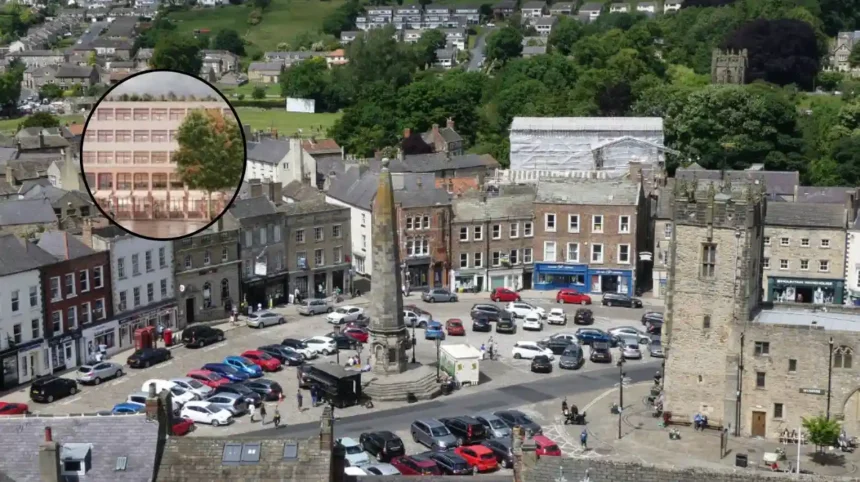
- Richmond, in south‑west London, is the location for a proposed retrofit scheme to convert an empty 1960s office building into a family‑centred membership club.
- The project is being put forward by architecture and interior‑design practice TiggColl.
- The club is intended to function as a private members’ space focused on families, with facilities aimed at children and parents.
- The scheme is being treated as a “retrofit” project, meaning the existing 1960s structure will be repurposed rather than demolished.
- The proposal is still in the planning and submission stage, and has not yet received final council approval.
Richmond (South London News) May 21, 2026 – TiggColl has submitted proposals to Richmond upon Thames Council to retrofit an empty 1960s office building into a family‑centred membership club, in a move that could reshape how local residents use older commercial stock. As reported by the Architects’ Journal, the scheme is being framed as a “retrofit” project, meaning the existing mid‑twentieth‑century structure will be adapted and reused rather than knocked down.
- Key Points
- How big is the site and what condition is the building in?
- Who is behind the design and what have they said?
- How does the scheme fit into the wider area?
- What is the current status of the plans?
- Background of the development
- Prediction: How this development could affect local families and property owners
The club is intended to operate as a private members’ space serving families, with programming and facilities tailored to children and their parents. In their submission, TiggColl emphasise creating a “family‑centred” environment, suggesting that the building’s next life would be less about conventional office work and more about social and recreational activity for households. Details of the specific amenities, such as play areas, co‑working spaces, or event rooms, are described in the planning documents as part of the club’s internal layout, but the outline‑stage submission focuses on the shift in use rather than a full itemised schedule of fittings.
How big is the site and what condition is the building in?
The project centres on a single 1960s office building in Richmond, occupying an established plot that has lain vacant or underused in recent years.
The Architects’ Journal notes that the building is of a typical mid‑century office type, constructed at a time when single‑use corporate blocks were common in suburban and semi‑urban areas of London.
As such, the structure is described as structurally sound but in a state that requires substantial internal reworking if it is to meet contemporary standards for insulation, accessibility and energy efficiency.
The retrofit approach taken by TiggColl acknowledges that the existing shell will be kept, with the design team focusing on upgrading services, reconfiguring floorplates and introducing new internal partitions and circulation routes.
The planners’ brief, as summarised in the Architects’ Journal report, stresses the need to retain the “form and character” of the original building while radically altering its internal function.
No cost figures have been published for the retrofit, but the scheme is being presented as a way of re‑using ageing office stock that might otherwise be considered economically marginal.
Who is behind the design and what have they said?
TiggColl, the London‑based architecture and interior‑design studio, is the practice responsible for the family club‑house design. The firm has built a track record in residential and mixed‑use projects, including floating homes and bespoke family houses, and has been described in architectural media as “award‑winning” and “detail‑driven”.
In the context of the Richmond club‑house, TiggColl are presenting the project as an extension of their broader interest in “family‑centred” spatial design, rather than a one‑off commercial exercise.
Speaking via the Architects’ Journal, a TiggColl representative explained that the concept for the club grew out of conversations with a private operator exploring how older buildings could be converted into social spaces for local families.
The representative said that the studio’s brief was to “design a place where families feel they can belong, rather than simply visit”, indicating that the scheme is being conceived as a “third space” for parents and children between home and school.
The practice added that the 1960s office building offered a “generous” floorplate and clear structural grid, which
“lends itself well to a flexible, family‑oriented layout”.
How does the scheme fit into the wider area?
The vacant office sits within the Richmond borough, an area that has seen several previous attempts to re‑use older office stock for residential and community‑oriented uses.
Local commentators have pointed to the ageing condition of parts of the borough’s commercial estate and have urged councils and developers to consider “deep retrofit” rather than demolition‑and‑rebuild, to reduce embodied carbon and retain existing infrastructure.
In this context, the Architects’ Journal frames TiggColl’s proposal as one of several emerging examples where mid‑century office blocks are being considered for repurposing into social or residential facilities.
Neighbourhood‑level reporting has highlighted that Richmond residents frequently express concern about “empty buildings” in what are otherwise busy residential and commercial zones. Some local activists have argued that the underuse of office space should be balanced against the need for more family‑friendly spaces, such as drop‑ins, play areas and multi‑use community rooms.
The family club‑house scheme is therefore being seen by some local stakeholders as a potential response to that demand, although it is a private, members‑only facility rather than a fully public council‑run service.
What is the current status of the plans?
The scheme is currently at the planning‑submission stage, having been formally lodged with Richmond upon Thames Council.
The Architects’ Journal notes that the submission includes a design and access statement, outline floor‑plans and a brief description of the proposed uses inside the building.
The publication adds that the club would be run as a private membership operation, with the operator and TiggColl working together to define the business model and membership pricing once planning is granted.
No timetable has been published for a decision by the council, but the borough’s planning department has indicated that such office‑to‑club retrofits are relatively uncommon in Richmond and may require additional scrutiny around parking, noise and hours of operation.
The Architects’ Journal observes that the council will need to consider whether the change of use would have an impact on local traffic, on nearby residential properties, and on the overall mix of employment and leisure uses in the area.
At this stage, neither the council nor the architects have disclosed whether the proposal includes any publicly accessible elements, such as a café or event space that could be bookable by non‑members.
Explore More Richmond News
SWR Cancels Richmond Trains: Engineering Disruptions 2026
The Dysart Petersham Richmond Retains Michelin Star for Seventh Year 2026
Background of the development
This family club‑house scheme forms part of a broader trend of “office to club” and “office to residential” conversions taking place across London and other UK cities. In recent years, many older office buildings have struggled to attract tenants in the post‑pandemic working environment, prompting owners and councils to explore alternative uses that make better use of floor space and reduce vacancy rates.
Retrofits of this kind are often promoted as a way of cutting carbon emissions by avoiding complete demolition and re‑building, while also revitalising underused neighbourhoods.
TiggColl has previously worked on projects that emphasise family‑centred living environments, including innovative floating homes and highly customised family houses. In those projects, the practice has highlighted the importance of flexible, open‑plan spaces that can adapt to changing family needs over time.
The Richmond club‑house proposal appears to extend similar principles into a semi‑public, membership‑based setting, where the building must serve multiple families and age groups rather than a single household.
Richmond upon Thames has also been at the centre of local debates about retrofitting older buildings, with borough‑level initiatives aimed at improving energy efficiency and encouraging adaptive re‑use of commercial properties.
Within this framework, the family club‑house submission is being treated as an example of how private investment and architectural design can combine to give ageing office blocks a new social purpose, even if the resulting facility is not fully public.
Prediction: How this development could affect local families and property owners
If the family club‑house scheme is approved and successfully implemented, it could influence several groups in south‑west London. First, local families living in Richmond and nearby boroughs may gain access to a dedicated, indoor‑focused space that is designed specifically for children and parents, rather than relying solely on public libraries, parks or commercial soft‑play centres. For families in densely populated parts of south‑west London, where informal “drop‑in” facilities are limited, a private club of this kind could become a valued alternative, albeit one that requires membership and associated fees.
Second, owners of older office buildings in the wider London region may see the Richmond project as a precedent for considering family‑club or social‑space conversions when trying to let or re‑let vacant stock. If the Richmond scheme is perceived as financially viable, it could encourage more investors to explore similar repurposing models, particularly in areas with high family populations and relatively low availability of dedicated indoor family facilities.