Key Points
- County Lines Charge: Two individuals from Lewisham, South London, have been charged with drug supply offences following a multi-agency county lines investigation targeting Class A narcotics distribution.
- Geographical Scope: The police operation unpicked an illicit network actively connecting drug distribution operations between South London, Croydon, and Dartford in Kent.
- Targeted Substance: Investigators uncovered a specific mobile phone line that was actively being utilised to market and orchestrate the sale of cocaine to buyers across Dartford.
- Co-ordinated Raids: Law enforcement executed simultaneous search warrants on Monday, 18 May 2026, across three distinct residential areas, leading to four arrests.
- Seizures Realised: Officers successfully recovered physical wraps of suspected heroin and cocaine, along with considerable quantities of raw cash and multiple mobile communication devices.
- Court Appearances: The primary male and female suspects have already appeared before Sevenoaks Magistrates’ Court, resulting in one individual being remanded in custody and the other receiving conditional bail.
- Ongoing Enquiries: Two additional women arrested during the coordinated raids have been released on police bail whilst detectives continue to process digital and physical evidence.
Dartford (South London News) May 21, 2026 – A major cross-border county lines drug operation linking South London to the Kent coast has been disrupted following a coordinated law enforcement intervention, resulting in criminal charges against a man and a woman from Lewisham. The development marks the culmination of a month-long intelligence-gathering operation spearheaded by Kent Police in conjunction with regional metropolitan units to dismantle a high-volume Class A supply chain feeding the town of Dartford.
- Key Points
- What triggered the cross-border county lines investigation between London and Dartford?
- How did law enforcement execute the coordinated raids across South London and Kent?
- Who are the individuals charged in connection with the Dartford drug supply line?
- What is the legal status of the other individuals arrested during the Monday raids?
- Background of county lines operations between London and Kent
- Prediction: How this development affects local communities and county line networks
What triggered the cross-border county lines investigation between London and Dartford?
According to formal statements issued by Kent Police Media Services, the origins of the prosecution stem from a dedicated operation initiated in April 2026. Specialist investigators identified a mobile phone line that was actively being utilised to broadcast marketing messages and coordinate retail sales of cocaine directly to users within Dartford.
As reported by police media representatives, initial inquiries rapidly expanded beyond the borders of Kent as digital intelligence and physical surveillance linked the illicit retail activity across Dartford, central London, and Croydon.
The cross-border nature of the network fits the classic methodology of a “county lines” operation, where urban criminal enterprises extend their drug distribution networks into provincial towns and rural areas, often using dedicated mobile phone lines or “deal lines” to manage transactions from a distance.
How did law enforcement execute the coordinated raids across South London and Kent?
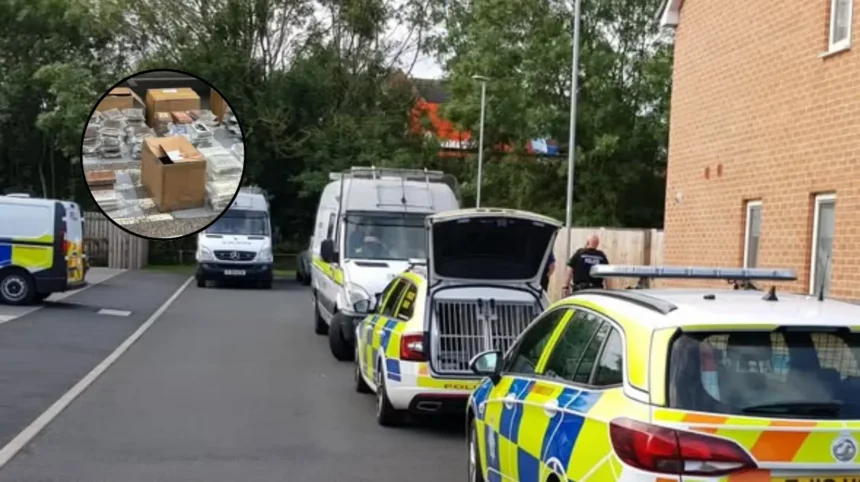
The investigative phase reached its operational climax on the morning of Monday, 18 May 2026. Teams of officers executed simultaneous search warrants at multiple targeted residential addresses in Dartford, London, and Croydon.
The synchronised raids caught the occupants by surprise, allowing officers to secure the premises and prevent the destruction of evidence.
During the physical searches of the properties, law enforcement personnel discovered and seized several wraps of substances suspected to be Class
Drugs, specifically identified as heroin and cocaine. In addition to the illicit substances, officers recovered an undisclosed quantity of physical currency believed to be the proceeds of criminal conduct, alongside multiple mobile phones suspected of being used to administer the distribution line.
Who are the individuals charged in connection with the Dartford drug supply line?
Following extensive post-arrest interviews and evidence processing, regular updates from Kent Police confirmed that two individuals from Cranfield Road, London, were formally charged and processed through the judicial system.
As detailed in the official charge sheets, Tyler Lamptey, aged 20, faced dual counts, including being concerned in the supply of Class A drugs and the physical possession of Class A drugs.
Lily Freel, aged 26, residing at the same Cranfield Road address, was charged with one count of being concerned in the supply of Class A drugs.
Both defendants were processed into custody and escorted to Sevenoaks Magistrates’ Court for their initial administrative hearing on Tuesday, 19 May 2026.
What is the legal status of the other individuals arrested during the Monday raids?
The enforcement action on Monday, 18 May 2026, resulted in a total of four individuals being taken into custody across the three raided sectors.
While Lamptey and Freel faced immediate charging protocols, the remaining two suspects have been processed differently under standard police bail parameters.
An official briefing from Kent Police confirmed that a 20-year-old woman originating from Dartford and a 28-year-old woman from London were both arrested on suspicion of being concerned in the supply of Class A drugs. Following initial interrogations, both women were formally released on police bail.
This status allows detectives to continue their technical and forensic enquiries into mobile phone telemetry and substance purity analysis before submitting a full file to the Crown Prosecution Service (CPS).
Background of county lines operations between London and Kent
The extraction of illicit supply lines running from South London into the Home Counties remains a central focus for both the Metropolitan Police Service and Kent Police.
Historically, the geographic proximity of Kent to major London transport hubs makes towns like Dartford, Gravesend, and Medway highly attractive targets for urban street gangs seeking to expand their commercial footprint.
According to data published by the National County Lines Co-ordination Centre (NCLCC), county lines networks heavily depend on the exploitation of vulnerable adults and children to move materials across borders, while the principal line-holders remain insulated within urban hubs like Lewisham or Croydon.
In previous joint operations, such as the Met’s Operation Orochi, statistics indicate that a single active drug line can distribute several kilograms of Class A materials over a multi-month period, generating tens of thousands of pounds in weekly illicit revenue.
The enforcement approach relies on targeting the digital infrastructure—the phone lines themselves—to permanently collapse the supply chain rather than simply arresting street-level runners.
Prediction: How this development affects local communities and county line networks
The removal of the Dartford-oriented phone line and the subsequent charging of its suspected administrators will cause an immediate disruption to the localised availability of Class A substances in the short term.
For the residents of Dartford and surrounding commuter belts, successful interdictions of this nature typically correlate with a measurable reduction in associated anti-social behaviour, opportunistic property theft, and localised street violence, all of which are frequently fueled by addiction and territorial drug disputes.
Conversely, historical trends monitored by regional violent crime units indicate that the dismantling of an established line creates a commercial vacuum. Nearby active networks based in South London may attempt to expand their operations to absorb the displaced customer base in Kent.
Consequently, local police forces are likely to intensify their proactive community safeguarding visits and step up plainclothes patrols around Dartford’s transport links over the coming weeks to prevent rival gangs from establishing a new foothold. For the legal defendants, the progression of the case to Maidstone Crown Court will serve as a key focal point for regional anti-gang intelligence analytics.