Key Points
- Lime e-bikes are banned from being hired or parked in Richmond, South West London, starting June 1, 2026, as part of a phased operator changeover
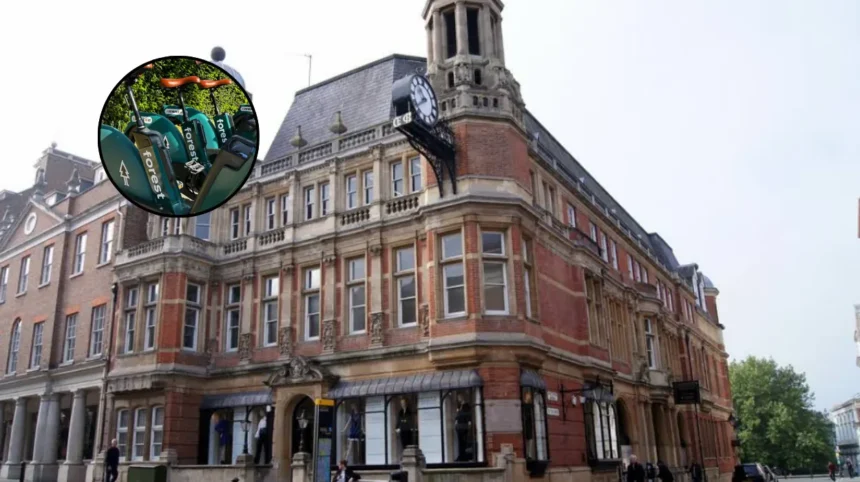
- Forest, London’s homegrown e-bike operator, has begun rolling out 1,500 bikes in Richmond this week
- Richmond Council’s Transport Committee approved Forest as the borough’s sole dockless e-bike operator in March 2026 after a competitive tender process
- Forest already operates in neighbouring boroughs Kingston, Hounslow, Hammersmith and Fulham, Sutton and Wandsworth, creating a contiguous South West London network
- The council states the switch will deliver lower prices, more bikes, and better connectivity for residents
- Lime will wind down operations and remove its bikes from the borough, though some may remain briefly during transition
- Lime has over 1,000 bikes in Richmond and warned of “unintended consequences” if it loses the contract
- The new agreement is part of Richmond’s commitment to sustainable and affordable travel
- London is Europe’s leading city for dockless bike ridership with 28 million trips recorded in 2024
- Bike-sharing across Europe generates €305 million in annual benefits including environmental, health, and economic gains
Richmond (South London news) June 2, 2026 – Lime e-bikes are officially banned from being hired or parked in the Royal Borough of Richmond upon Thames from today, marking the start of a phased transition to new operator Forest as reported by the Evening Standard on June 2, 2026. The change comes after Richmond Council’s Transport and Air Quality Committee approved the switch in March 2026, selecting Forest as the borough’s preferred sole e-bike operator following a competitive tender process.
- Key Points
- Why Did Richmond Council Choose Forest Over Lime?
- How Many Bikes Will Be Available and When Will the Transition Complete?
- What Does This Mean for Forest’s Presence Across South West London?
- What Concerns Did Lime Raise About the Contract Loss?
- How Will This Affect London’s Broader Bike-Sharing Landscape?
- Background: How Richmond Council’s E-Bike Contract Decision Developed
- Prediction: How This Development Will Affect Richmond Residents and Commuters
Forest has begun operating in the South West London borough with its bikes appearing on streets across Richmond, with 1,500 bikes being rolled out this week as confirmed by Micromobility Biz. At the same time, Lime is winding down operations and actively removing its bikes from the borough, though some Lime bikes may remain for a short period during the transition period, according to the same report.
Why Did Richmond Council Choose Forest Over Lime?
According to Richmond Council, the move will bring residents lower prices, more bikes and better connectivity since Forest already operates in neighbouring boroughs Kingston and Hounslow. The council’s transport committee stated that Forest was the highest scoring operator in the thorough competitive tender process, demonstrating stronger commitment to sustainable and affordable travel priorities.
As reported by City AM on March 11, 2026, if councillors backed the proposal, Lime would be forced to withdraw its bikes from Richmond entirely unless the council allowed riders to pass through the borough without hiring or parking them. The council ultimately chose the former option, making Forest the exclusive operator.
Teddingtion.nu.news reported on March 17, 2026 that Lime bikes have been banned from Richmond borough after the council’s transport and air quality committee approved the recommendation to appoint Forest as the borough’s next hire e-bike operator, subject to contract, from this summer. The summer timeline has now arrived with the June 1 enforcement date.
How Many Bikes Will Be Available and When Will the Transition Complete?
Forest will deploy up to 1,500 bikes in Richmond, introduced gradually in line with user demand as stated by Micromobility Biz.
This represents a significant fleet expansion compared to Lime’s presence, which consisted of over 1,000 bikes in the borough according to Reddit discussions about the £3 million deal.
The phased rollout means Forest bikes are already appearing on Richmond streets this week, with the full 1,500-bike fleet expected to be operational as demand increases.
Some Lime bikes may remain temporarily during the transition, but hiring or parking them is no longer permitted from June 1.
What Does This Mean for Forest’s Presence Across South West London?
Forest is London’s only homegrown e-bike operator, operating in 18 boroughs and serving over 1.5 million customers across the Capital according to Micromobility Biz.
The Richmond partnership strengthens Forest’s presence in South West London, where it is now the only e-bike provider to offer a fully contiguous operating area across Kingston, Hounslow, Hammersmith and Fulham, Sutton, Wandsworth and now Richmond.
HumanForest previously announced partnerships with Royal Borough of Kingston and London Borough of Sutton in September 2022 to implement its eBike sharing service, marking its initial South West London expansion. The Richmond addition completes a significant regional network.
What Concerns Did Lime Raise About the Contract Loss?
Lime has announced that if it loses the contract, it will need to remove all of its over 1,000-plus bikes from Richmond, the Reddit thread revealed.
The company has warned of “unintended consequences” if it loses the contract, though specific details of those consequences were not disclosed in available reports.
The £3million deal that encouraged London council to ditch Lime bikes was discussed extensively in Reddit communities, suggesting significant financial arrangements influenced the council’s decision. However, official council statements focused on service quality, pricing, and connectivity benefits rather than financial terms.
How Will This Affect London’s Broader Bike-Sharing Landscape?
London is Europe’s leading city for dockless bike ridership, with 28 million trips recorded in 2024 according to a new study on European urban mobility.
Together with other networks, London’s shared bike systems make up a fleet of 438,000 shared bikes, providing millions of trips each year and connecting people to work, education, and public transport.
A study published in October 2025 revealed that bike-sharing delivers €305 million in annual benefits for Europe, confirming its role as a key element of sustainable urban mobility. The analysis shows shared bikes contribute to significant environmental, health, and economic benefits across the continent.
Each year, bike-sharing saves 46,000 tons of CO₂ emissions and 200 tons of harmful air pollutants across Europe.
By replacing car trips with active mobility, bike-sharing helps prevent 1,000 chronic diseases, resulting in €40 million in healthcare savings. Congestion is eased with 760,000 hours of productivity saved—valued at €30 million—while 6,000 full-time equivalent jobs are supported across Europe.
For users, bike-sharing offers a cost-effective mode of transport, reducing mobility expenses by up to 90 per cent compared with cars. These benefits align with Richmond Council’s stated goals of providing lower prices and better connectivity through the Forest partnership.
Richmond Council’s decision reflects broader trends in London’s micromobility sector, where boroughs are increasingly selecting operators based on comprehensive service networks, pricing competitiveness, and alignment with sustainability goals rather than brand recognition alone.
Background: How Richmond Council’s E-Bike Contract Decision Developed
The road to Forest becoming Richmond’s sole e-bike operator began with a competitive tender process that evaluated multiple operators on service quality, pricing, and network coverage.
Richmond Council’s Transport Committee conducted thorough assessments throughout late 2025 and early 2026, with Forest emerging as the highest-scoring bidder.
In March 2026, the Transport and Air Quality Committee approved the recommendation to appoint Forest as the borough’s next hire e-bike operator, subject to contract finalization.
The committee’s decision was based on Forest’s existing operations in neighbouring boroughs Kingston and Hounslow, which demonstrated proven service delivery in South West London.
The transition timeline was set for summer 2026, allowing both operators adequate time for logistical preparation.
Lime was given notice to withdraw its 1,000-plus bikes from the borough, with the enforcement date set for June 1, 2026. Forest prepared its 1,500-bike rollout to coincide with Lime’s departure, ensuring minimal disruption to residents reliant on e-bike sharing.
The council emphasized that the partnership underscores joint commitment to supporting sustainable and affordable travel, aligning with London-wide environmental objectives.
This decision follows HumanForest’s earlier expansion into Kingston and Sutton in 2022, establishing its South West London presence years before the Richmond contract.
Prediction: How This Development Will Affect Richmond Residents and Commuters
Richmond residents who regularly use e-bike sharing will experience immediate changes in pricing, bike availability, and network connectivity. The council’s promise of lower prices means residents should expect reduced rental costs compared to Lime’s previous rates, potentially making e-bikes more accessible for daily commuting and short trips.
The 1,500-bike fleet rollout represents a 50 per cent increase over Lime’s 1,000-bike presence, suggesting improved bike availability during peak hours and reduced likelihood of finding no bikes when needed. For commuters who rely on e-bikes for last-mile connectivity to train stations or bus stops, this expansion should reduce waiting times and increase reliability.
Residents who frequently travel between Richmond and neighbouring boroughs Kingston, Hounslow, Hammersmith and Fulham, Sutton, or Wandsworth will benefit from Forest’s contiguous operating area, eliminating the need to switch operators or pay different pricing structures when crossing borough boundaries. This seamless connectivity could encourage more multi-borough trips and reduce reliance on cars for regional travel.
The transition may initially cause confusion for users familiar with Lime’s app and pricing, requiring adaptation to Forest’s booking system and fare structure. Some residents who preferred Lime’s interface or loyalty benefits may face a adjustment period, though the council’s emphasis on lower prices should offset this inconvenience for most users.
For environmentally conscious commuters, the switch aligns with broader sustainability goals. With bike-sharing preventing chronic diseases and reducing CO₂ emissions across Europe, Richmond residents contribute to these benefits by using Forest’s e-bikes instead of car trips. The 90 per cent cost reduction compared with cars makes sustainable transport more economically viable for everyday travel.