Key Points
- Network-Wide Blockage: All South Western Railway (SWR) train services running from Teddington Station towards London Waterloo are currently blocked.
- Incident Location: The direct cause of the ongoing disruption is a railway line trespasser identified on the tracks at Clapham Junction.
- Operational Penalties: SWR has officially warned commuters that scheduled train services may face short-notice cancellations, severe delays, or tactical revisions.
- Extended Impact: The disruption radiates across multiple outer London commuter corridors, impacting adjacent services from stations including Twickenham, Richmond, and Kingston.
- Emergency Response: Specialist response teams have been deployed to the site to assist the individual to a place of safety and allow normal operations to resume.
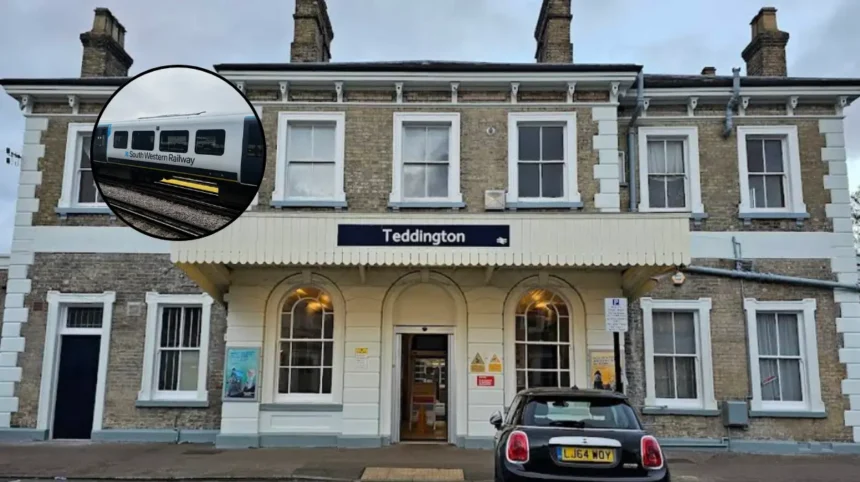
Teddington (South London New) June 4, 2026 — Rail travel across South West London has been thrown into operational disarray this afternoon following a high-risk line incident at one of the UK’s busiest railway bottlenecks. All South Western Railway (SWR) passenger services operating from Teddington Station towards London Waterloo have been completely blocked due to an unauthorized individual trespassing on the live railway infrastructure at Clapham Junction. The sudden suspension of line access has triggered widespread cancellations, rolling delays, and altered route schedules across the regional network, leaving thousands of midday and peak-hour commuters stranded.
- Key Points
- Why are SWR Trains from Teddington to London Waterloo Blocked?
- What Impact is the Clapham Junction Trespass Having on Commuters?
- How are Emergency Teams Handling the Live Railway Line Trespasser?
- Background of Rail Infrastructure Challenges at Clapham Junction
- Prediction: How Will This Disruption Affect Commuters and Businesses?
Why are SWR Trains from Teddington to London Waterloo Blocked?
The root cause of the system-wide standstill stems from a dynamic security incident at Clapham Junction. As documented in a live operational advisory published on the South Western Railway JourneyCheck system, a trespasser on the active running lines forced network controllers to cut power or request immediate cautionary running orders across the primary inbound lines.
Because Clapham Junction serves as the central artery for tracks feeding directly into London Waterloo, any physical disruption on these lines creates an immediate, severe backlog.
For passengers boarding at Teddington Station, this operational bottleneck means that trains are physically unable to advance past the affected zones, leading to a total halt of inbound services.
What Impact is the Clapham Junction Trespass Having on Commuters?
The network disruption is not isolated to Teddington alone. According to localized media reports published by journalists across the Nub News network, parallel disruptions have been confirmed along the entire transit corridor. Journalists writing for Kingston Nub News, Twickenham Nub News, and Richmond Nub News confirmed that identical line blockages are simultaneously freezing commuter services heading towards London Waterloo from their respective local stations.
In an official public service update posted online, South Western Railway stated that:
“Train services running to and from this station may be cancelled, delayed or revised. Disruption is expected until 15:00 04/06.”
To cope with the inability to pass through Clapham Junction, SWR’s control center has initiated tactical line revisions. This includes turning some inbound trains around before they reach the inner London boundaries or diverting services via alternative, non-affected branches.
This has left commuters at intermediate stations facing empty platforms and rapidly changing departure boards.
How are Emergency Teams Handling the Live Railway Line Trespasser?
Resolving a live track trespass incident requires a highly coordinated, strict protocol involving track operators, train drivers, and emergency services. As detailed on the official South Western Railway digital service dashboard, rail operators have mobilised asset protection units to resolve the ongoing emergency.
In a formal briefing note describing the active mitigation measures, South Western Railway outlined their operational stance:
“Response teams are on their way to site. We don’t know when the lines are expected to reopen. If you need any help with your journey, please speak to a member of staff or use a station help point.”
To safely remove an individual from live operational lines—which often feature high-voltage conductor rails—train movements must be heavily restricted or stopped entirely to preserve life. Network Rail response teams, occasionally supported by the British Transport Police (BTP), are required to physically locate the individual, escort them to a secure area away from the infrastructure, and conduct a thorough safety sweep of the tracks before the electrical current can be safely restored and lines declared open for commercial traffic.
Background of Rail Infrastructure Challenges at Clapham Junction
To comprehend why a solitary incident at Clapham Junction can instantaneously cripple train lines as far out as Teddington, it is necessary to examine the unique structural density of the Wessex route. Clapham Junction is globally recognized as one of the most heavily congested rail interchanges in Europe, managing standard daily traffic that encompasses hundreds of train movements every single hour across multiple operators.
Historically, this specific section of the network has been highly vulnerable to microscopic disruptions. Over the past year, significant capital has been funneled into the corridor to upgrade its resilience.
According to official asset preservation records released by Network Rail, engineering teams completed major structural work over the Easter weekend period from Friday 3 to Monday 6 April 2026, which involved replacing switches and crossings directly outside the entrance to platforms 20 to 24 at London Waterloo.
Furthermore, engineers executed extensive strengthening works on the nearby Lambeth Road railway bridge and constructed an extensive scaffold crash deck underneath the footbridges at platforms 3 to 6 at Clapham Junction. These interventions were explicitly designed to modernize a Victorian-era network that operates permanently at maximum capacity.
However, while mechanical infrastructure can be upgraded with heavy engineering, the network remains acutely vulnerable to external, unpredictable human interventions—such as track trespass—which bypass structural contingencies and necessitate immediate, total line closures for safety compliance.
Explore More Teddington News
Dan West Wins Surreal Sky Art Prize in Teddington
Teddington’s Dan West on Surreal Sky Arts Landscape Contest
Prediction: How Will This Disruption Affect Commuters and Businesses?
The immediate fallout from this track trespass will heavily impact South West London’s daily commuters, retail economies, and corporate workforce. Because the blockage directly severs the link between outer residential hubs like Teddington and the central economic zone of London Waterloo, thousands of professionals face lost productivity, missed business obligations, and protracted delays returning home.
For local businesses situated around key affected stations like Teddington, Twickenham, and Richmond, prolonged line closures usually prompt a sharp drop in footfall. Casual travelers and shoppers are likely to abandon non-essential journeys altogether, reducing afternoon trade for high-street hospitality venues and retail outlets.
Furthermore, under standard rail operational dynamics, a total blockage at Clapham Junction produces a severe “knock-on” or reactionary delay effect that outlasts the actual duration of the incident. Even after emergency personnel successfully clear the trespasser from the tracks, train sets and their designated crew members will be entirely out of their scheduled geographic positions.
Consequently, travelers must prepare for a rolling wave of short-notice cancellations and intensely overcrowded carriages extending well into the evening peak travel hours as South Western Railway attempts to reset its tightly packed timetable.