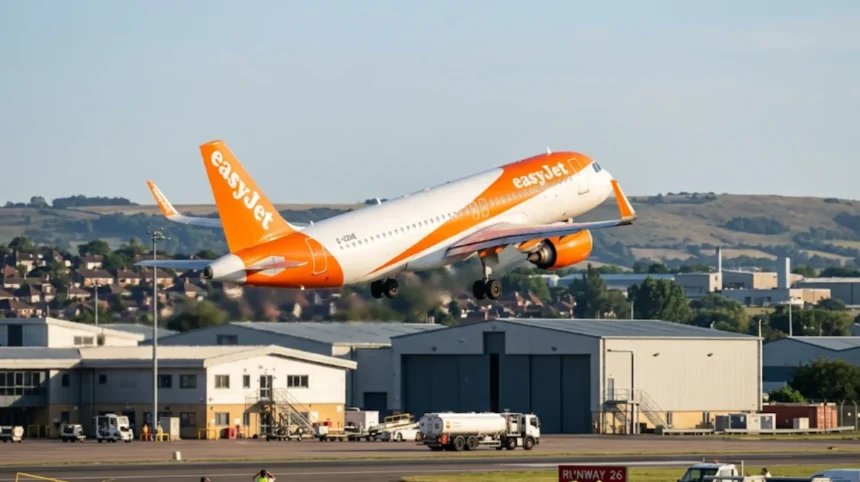
The EasyJet Airbus A320-214 takeoff error occurred on June 13, 2025, at London Luton Airport when Flight EZY2335 departed from the wrong runway intersection, becoming airborne just 65 feet above the ground with only reduced runway length remaining. The Air Accidents Investigation Branch (AAIB) classified this as a serious safety occurrence involving 180 passengers and six crew members flying to Málaga. For residents and travelers in South London, this incident highlights aviation safety risks that affect passengers departing from UK airports across the region, including those who typically fly from Gatwick or Heathrow near South London.
- What Was the EasyJet A320 Takeoff Error at London Luton Airport?
- Aircraft and Flight Details
- Critical Safety Margins Compromised
- How Did the Crew Make the Runway Intersection Error?
- Pre-Flight Performance Calculation Mistake
- Taxi and Runway Entry Errors
- What Are Runway Intersection Takeoffs and Why Are They Risky?
- Types of Runway Intersection Errors
- Distance Reduction and Safety Impact
- What Safety Investigations Were Conducted After the Incident?
- Operator Safety Actions Taken
- Related AAIB Investigations
- How Does This Error Compare to Other Aviation Takeoff Mistakes?
- Aircraft Model and Operator Patterns
- Severity Comparison
- What Are the Implications for Passenger Safety and Airline Operations?
- Airline Operational Implications
- Regulatory and Industry Response
- What Prevention Measures Stop Runway Intersection Errors?
- Procedural Enhancements
- Technology-Based Solutions
- Travel Advice for South London Passengers
What Was the EasyJet A320 Takeoff Error at London Luton Airport?
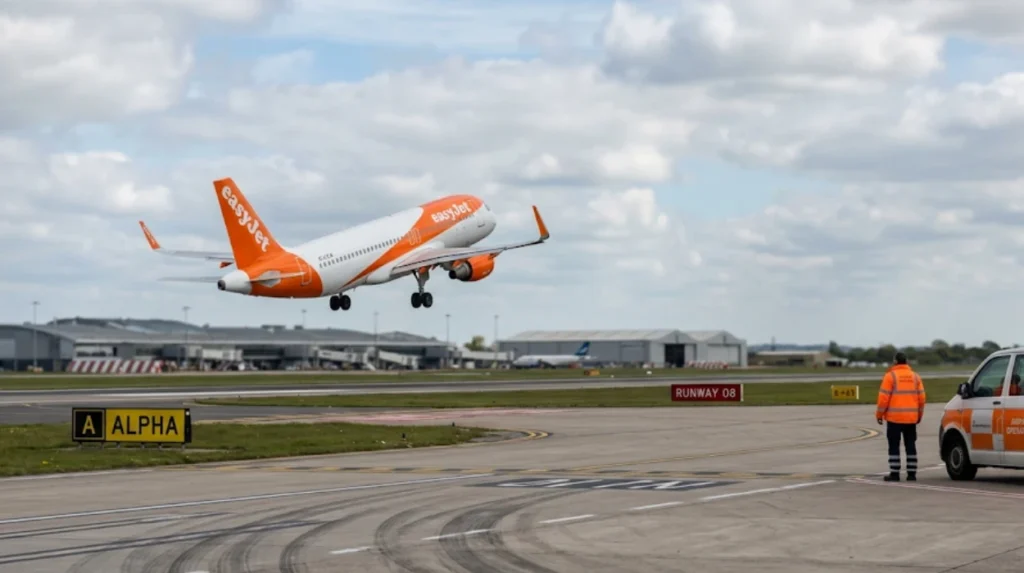
The EasyJet A320 takeoff error involved Flight EZY2335 departing from Intersection Alpha instead of the full runway length on June 13, 2025, at London Luton Airport, leaving insufficient runway distance for the aircraft’s weight. The Airbus A320-214 (registration G-EZUK) rotated with significantly less runway available than required, becoming airborne only 65 feet (19 meters) above the ground when it cleared the runway edge.
The Air Accidents Investigation Branch (AAIB), the UK’s official aviation safety investigation authority, published findings revealing the crew calculated takeoff performance for full-length runway departure but mistakenly used a shorter intersection takeoff. The co-pilot initially planned to take off from Intersection Alpha after three preceding aircraft had departed from that point. However, the aircraft’s higher-than-normal weight and environmental conditions required full runway length for safe takeoff performance.
The captain recognized the take-off point error only after landing at Málaga Costa del Sol Airport. The flight completed its journey safely and returned to Luton Airport the same day. Flight Data Monitoring (FDM) systems at the operator identified the discrepancy later that day, triggering the AAIB investigation.
Aircraft and Flight Details
The aircraft involved was an Airbus A320-214, a narrow-body commercial jet airliner manufactured by Airbus. This specific model features two engines and typically carries 150-180 passengers in standard configuration. The registration G-EZUK identifies this as a UK-operated aircraft in the EasyJet fleet.
Flight EZY2335 operated from London Luton Airport to Málaga Costa del Sol Airport in Spain. London Luton Airport (LTN) is located 28 miles north of central London and serves as a major hub for short-haul European flights. Málaga is a popular Spanish tourist destination on the Costa del Sol, receiving significant passenger traffic from UK airports including those serving South London communities.
Critical Safety Margins Compromised
The takeoff error critically reduced safety margins. Aircraft weight determines minimum required runway length for safe takeoff. The EasyJet A320’s weight at departure required full runway utilization, not the shorter intersection departure initially planned. Environmental conditions including temperature and wind further impacted performance calculations.
Intersection takeoffs reduce available runway by hundreds of meters. When aircraft experience problems during intersection takeoffs, remaining runway for aborting takeoff or emergency landing is eliminated, increasing injury and aircraft damage risk. The NTSB (National Transportation Safety Board) has documented multiple accidents where intersection takeoffs led to catastrophic outcomes when engine power was lost.
For South London residents who frequently fly to Mediterranean destinations like Málaga, understanding these safety margins helps passengers assess risks when choosing airlines and airports for their travel.
How Did the Crew Make the Runway Intersection Error?
The crew made the runway intersection error through a combination of incorrect pre-flight performance calculation, failure to verify runway position during taxi, and missed communication with air traffic control about the need for full-length departure. The co-pilot initially selected Intersection Alpha during pre-flight planning, but the crew later agreed to use full runway length due to aircraft weight without properly updating their takeoff position.
During the taxi phase, the aircraft entered the runway at Intersection Alpha despite the revised decision to use full runway length. Three preceding aircraft had departed from Intersection Alpha, creating an operational pattern that may have influenced the crew’s decision. The report identified an missed opportunity to alert air traffic control about the need for the lesser-used full-length departure position.
The crew did not notice the error during the takeoff roll. Human factors in aviation include confirmation bias, where crews expect to perform actions based on initial plans rather than revised decisions. The Tower Controller did not visually monitor the aircraft and did not notice the error, representing a second layer of safety failure.
Pre-Flight Performance Calculation Mistake
Takeoff performance calculations determine minimum required runway length based on aircraft weight, temperature, wind, and runway conditions. These calculations are critical safety procedures performed before every flight. The co-pilot completed the initial calculation using Intersection Alpha data, which provided insufficient runway for the aircraft’s actual weight.
When the crew recognized that Intersection Alpha would not provide adequate performance, they agreed to use full runway length. However, they failed to update the takeoff position in their mental model and operational execution. This represents a procedure gap where decision changes were not properly communicated or verified.
Taxi and Runway Entry Errors
During taxi to the runway, crews must verify their intended takeoff position through cockpit displays, runway signage, and communication with air traffic control. The EasyJet crew entered the runway at Intersection Alpha despite the revised decision for full-length departure. This indicates a failure in position verification procedures.
Runway intersection signage uses alphanumeric codes (Alpha, J1, J2) to identify specific entry points. Correct interpretation of these signs requires active verification. Similar incidents at Toulouse-Blagnag Airport and Manchester Airport show this error pattern occurs across different airports and operators.
What Are Runway Intersection Takeoffs and Why Are They Risky?
Runway intersection takeoffs involve departing from a point along the runway rather than the full beginning, reducing available distance by 500-1,500 meters and eliminating abort capability if problems occur during takeoff roll. These takeoffs are permitted when aircraft performance allows shorter distance, but they require precise calculation and verification because reduced runway eliminates emergency options.
An intersection takeoff occurs when aircraft line up at a taxiway intersection rather than the runway threshold. This practice saves time by reducing taxi distance but demands that aircraft weight, temperature, and wind conditions allow safe takeoff within the shortened distance. The NTSB Safety Alert 71 explicitly warns that intersection takeoffs create greater risk when problems occur.
Types of Runway Intersection Errors
Three types of runway intersection errors occur in aviation operations. First, incorrect intersection selection during pre-flight calculation means crews calculate performance for the wrong runway length. Second, incorrect runway entry during taxi means crews enter at the wrong intersection despite correct calculations. Third, communication failures occur when crews do not verify position with air traffic control.
The EasyJet Luton incident represents the second type: incorrect runway entry. The crew calculated for full runway but entered at Intersection Alpha. The Manchester Airport EasyJet incident on July 6, 2025, also involved incorrect entry: crews cleared for J1 intersection entered at J2, reducing runway by substantially less distance.
Distance Reduction and Safety Impact
Intersection takeoffs reduce available runway by specific distances. At Manchester Airport, the J2 intersection instead of J1 reduced available runway from 2,500+ meters to substantially less. At Toulouse-Blagnag Airport, the N4 intersection instead of N2 reduced takeoff distance by approximately 500 meters. The EasyJet Luton error at Intersection Alpha likely reduced runway by similar or greater distances depending on airport layout.
When aircraft become airborne with reduced runway remaining, emergency options disappear. If engine failure occurs during takeoff roll, pilots must either continue takeoff or abort within remaining distance. Intersection takeoffs eliminate abort capability when problems occur late in the takeoff roll. The NTSB documented multiple accidents where intersection takeoffs led to runway overruns when engine power was lost.
Explore More Area Guide
Best Walking Routes and Nature Trails in Bromley for Tourists and Residents
Best Cafes and Work-Friendly Spots in Bromley for Digital Nomads and Tourists
What Safety Investigations Were Conducted After the Incident?
The AAIB conducted a correspondence investigation into the EasyJet A320-214 G-EZUK incident, publishing findings on June 11, 2026, and classified the event as a serious safety occurrence requiring operator safety action. The investigation utilized the operator’s Flight Data Monitoring system data and crew interviews to determine the error mechanism.
The Air Accidents Investigation Branch (AAIB) is the UK government agency responsible for investigating civil aviation accidents and serious incidents. AAIB investigations focus on understanding causes and recommending safety improvements rather than assigning blame. The correspondence investigation category indicates the agency determined the facts through written correspondence with the operator rather than full on-site investigation.
Operator Safety Actions Taken
EasyJet implemented safety actions to amend operating procedures and trap takeoff performance errors. These procedures likely include enhanced verification steps between performance calculation and runway entry, mandatory position confirmation with air traffic control, and improved crew communication protocols for revised departure decisions. The operator’s Flight Data Monitoring (FDM) system identified the error, demonstrating the value of automated safety monitoring.
Flight Data Monitoring systems continuously record aircraft performance data including takeoff distances, thrust settings, and rotation points. FDM anomalies trigger investigations that identify procedure gaps before accidents occur. This proactive safety approach represents modern aviation safety management systems that prevent incidents through data analysis.
Related AAIB Investigations
The AAIB investigated multiple similar EasyJet runway intersection incidents. The Manchester Airport incident on July 6, 2025, involved an Airbus A320 departing from J2 instead of cleared J1 intersection, reducing runway available for departure to Kos, Greece. The AAIB published findings showing crew error combined with controller non-verification contributed to the incident.
The Toulouse-Blagnag Airport incident on July 30, 2023, involved an EasyJet Airbus A320-214 (G-EZWE) entering runway at N4 instead of cleared N2, reducing takeoff distance by 500 meters. The aircraft rotated with 500 meters of runway remaining and passed the upwind end at 180 feet height. The BEA (French aviation authority) and AAIB classified this as a serious incident.
How Does This Error Compare to Other Aviation Takeoff Mistakes?
The EasyJet A320 takeoff error matches a pattern of similar runway intersection mistakes at multiple UK and European airports, with the Luton incident being particularly dangerous due to the aircraft becoming airborne only 65 feet above the ground. Similar incidents occurred at Manchester Airport (July 2025), Toulouse-Blagnag Airport (July 2023), and Lisbon Airport (September 2019), all involving Airbus A320 aircraft and incorrect intersection selection.
The Lisbon Airport incident on September 16, 2019, involved an Airbus A320-214 (G-EZWE) becoming airborne with only 110 meters of runway remaining. The crew calculated performance using incorrect runway intersection, believing they selected shortest available length but actually using full length in calculations. This represents the opposite error: calculating for longer runway than actually used.
Aircraft Model and Operator Patterns
All documented runway intersection errors involved Airbus A320 family aircraft, suggesting possible procedural or training gaps specific to this aircraft type’s operating procedures. EasyJet operates one of the largest Airbus A320 fleets in Europe, with over 300 aircraft. The frequency of EasyJet runway intersection incidents across multiple airports indicates systemic procedure issues rather than isolated crew errors.
The A320 uses electronic flight displays showing runway position and takeoff parameters. These systems should prevent intersection errors through automated position verification. The recurrence of errors across multiple incidents suggests crews may not properly utilize these safety features or procedures lack adequate verification steps.
Severity Comparison
The Luton incident severity exceeds most similar incidents due to the 65-foot clearance height. The Toulouse incident aircraft passed the upwind end at 180 feet, providing greater safety margin. The Lisbon incident aircraft became airborne with 110 meters remaining, representing extreme risk. The Manchester incident reduced runway from 2,500+ meters but the aircraft successfully departed without the extreme low-altitude clearance seen at Luton.
Safety occurrence classification depends on injury risk and aircraft damage potential. All four incidents were classified as serious incidents because they involved substantially reduced runway with potential for runway overrun if problems occurred. The Luton incident’s 65-foot clearance represents the most dangerous margin, as any engine problem or control issue at that altitude would likely result in catastrophic outcomes.
What Are the Implications for Passenger Safety and Airline Operations?
The EasyJet A320 takeoff error demonstrates that runway intersection mistakes create serious but non-fatal safety risks when aircraft successfully become airborne, with passenger safety implications dependent on whether problems occur during the critical takeoff phase. The incident involved 180 passengers who experienced no injury because the aircraft completed takeoff safely, but the reduced runway margin meant any engine failure or control problem would likely have caused runway overrun with serious injury potential.
Passenger safety during takeoff errors depends on aircraft performance margins and problem occurrence timing. When aircraft successfully become airborne with reduced runway, the immediate danger passes. However, intersection takeoffs eliminate abort capability for problems occurring late in takeoff roll. The NTSB documented fatal accidents where intersection takeoffs led to runway overruns when engine power was lost, causing passenger deaths and serious injuries.
For South London travelers who regularly book flights with budget airlines like EasyJet to European destinations, understanding these safety risks helps inform airline selection and airport choice for their vacations.
Airline Operational Implications
EasyJet’s multiple runway intersection incidents prompted operator safety action including amended operating procedures. These changes likely increase operational complexity and may reduce takeoff efficiency through additional verification steps. Budget airlines prioritize operational speed and cost reduction, but safety procedure enhancements may increase taxi time and reduce turnaround efficiency.
The incidents highlight tension between intersection takeoff benefits (time savings through reduced taxi distance) and safety risks (reduced abort capability). Airlines must balance operational efficiency against safety margins. The AAIB recommendations likely emphasize full runway departures when aircraft weight or conditions approach performance limits, reducing intersection takeoff frequency.
Regulatory and Industry Response
The AAIB investigation findings will inform UK Civil Aviation Authority (CAA) regulatory updates and European Aviation Safety Agency (EASA) guidance. These agencies may mandate enhanced runway position verification procedures, mandatory air traffic control confirmation for intersection changes, and improved electronic flight display utilization for position monitoring. Industry-wide procedure updates prevent recurrence across all operators.
Aviation safety management systems emphasize proactive hazard identification through data monitoring. The EasyJet Flight Data Monitoring system identifying the Luton error demonstrates FDM value in preventing accidents. Industry best practice increasingly requires continuous performance monitoring with automated anomaly detection triggering immediate investigation before incidents escalate to accidents.
What Prevention Measures Stop Runway Intersection Errors?
Prevention measures include mandatory runway position verification through cockpit displays and signage, required air traffic control confirmation when changing departure intersections, enhanced pre-flight calculation verification procedures, and tower controller visual monitoring of runway entry positions. The AAIB and operator safety actions address these specific gaps that enabled the EasyJet errors.
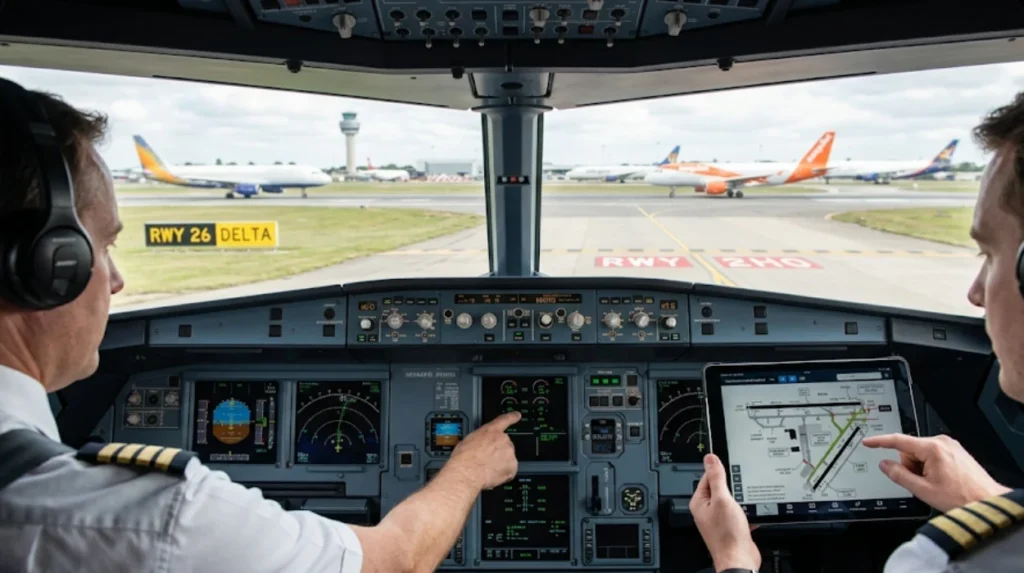
Cockpit display systems show real-time aircraft position on runway diagrams with intersection markers. Crews must actively verify position against planned takeoff intersection before runway entry. This verification step prevents the type of error where crews enter at wrong intersection despite correct calculations. Electronic flight displays on Airbus A320 aircraft provide this capability but require crew discipline to utilize.
Air traffic control confirmation creates a second verification layer. When crews plan to change from intersection takeoff to full runway departure, they must inform controllers who can verify position during taxi. The Luton report identified missed opportunity to alert air traffic control about full-length departure need. Mandatory communication requirements prevent this gap.
Procedural Enhancements
Enhanced pre-flight calculation verification includes cross-checking between flight crew members and automated system validation. The co-pilot initially calculated for Intersection Alpha, but the crew later decided on full runway without updating calculations. Procedure changes require both pilots to verify calculation updates match operational decisions before takeoff roll begins.
Runway entry procedures now include position confirmation checkpoints. Crews must verify intersection signage matches planned departure point at specific taxi waypoints. This systematic verification prevents reliance on memory or assumption. Similar procedures at other airports have reduced intersection error frequency.
Technology-Based Solutions
Advanced runway surface monitoring systems use cameras and sensors to detect aircraft position during runway entry. Tower controllers receive automated alerts when aircraft enter at unexpected intersections. Toulouse-Blagnag Airport and Manchester Airport implemented such systems after their respective EasyJet incidents, strengthening controller monitoring capabilities.
Electronic Flight Bag (EFB) systems integrate runway diagrams with real-time position tracking. These systems alert crews when approaching runway entry at incorrect intersections. Airbus has enhanced EFB functionality based on incident feedback, providing automatic position verification that reduces human error probability.
Travel Advice for South London Passengers
For South London residents planning flights to European destinations, understanding aviation safety incidents like the EasyJet A320 takeoff error helps passengers make informed decisions about airlines and airports. When booking flights from airports serving South London including Gatwick, Heathrow, and Luton, passengers should research airline safety records and consider full runway departure policies when aircraft weight approaches performance limits.
The EasyJet A320 takeoff error at London Luton Airport represents a serious but non-fatal aviation safety incident that highlights persistent runway intersection error risks across multiple airports and operators. The 65-foot clearance height demonstrates extreme danger margins when aircraft weight requires full runway but crews use intersections. Prevention through enhanced verification procedures, air traffic control communication, and technology-based position monitoring reduces future incident probability while maintaining safe air travel for passengers traveling from South London airports to European destinations.
What happened in the EasyJet A320 takeoff error at London Luton Airport?
On 13 June 2025, EasyJet Flight EZY2335 departed from the wrong runway intersection at London Luton Airport. The Airbus A320-214 used a shorter runway length than planned and became airborne with significantly reduced safety margins.