Key Points
- Bexley Council has officially approved plans for a new Go Ape high ropes course to be built in Danson Park, situated between Welling and Bexleyheath.
- The decision was reached during a tense planning committee meeting on Thursday evening, which saw angry scenes, shouting, and groans from the public gallery.
- The Conservative committee chair, Councillor Kurtis Christoforides, was forced to intervene repeatedly to request that members of the public stop interrupting the formal proceedings.
- Public resistance to the development is substantial, highlighted by a petition signed by over 2,000 individuals alongside 650 formal objections submitted directly to the council.
- The adventure park is designated to occupy the northern and western woodland sectors of the historic, Grade II-listed public open space.
Bexleyheath (South London News) June 13, 2026 — Bexley Council has formally granted planning permission for a new Go Ape high ropes adventure course within the historic boundaries of Danson Park. The decision, which marks the culmination of a highly polarised local debate, was finalised during a packed and volatile planning committee meeting on Thursday evening. As reported by local democracy reporters covering the Bexley Council proceedings, the decisive vote was met with immediate outrage from onlookers, resulting in loud shouts and groans echoing from the public gallery.
- Key Points
- What Transpired During the Tense Bexley Council Debate?
- How Did Council Members Justify the Approval?
- What Are the Main Objections Raised by the Community?
- Will Commercialisation Degrade a Grade II-Listed Heritage Space?
- Background of the Danson Park Development
- Prediction: How This Development Can Affect Local Residents and Park Users
- Shifting Dynamics of Park Usage
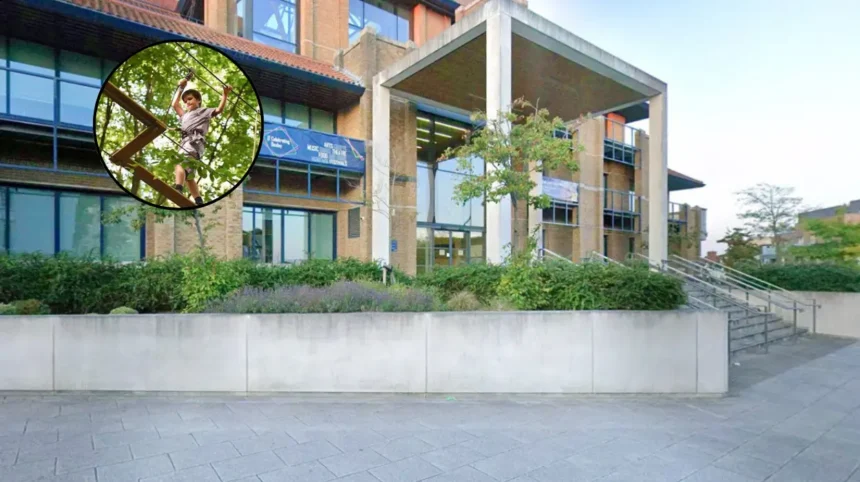
The approved development will establish a tree-top woodland adventure installation spanning across the northern and western sections of the park, an expansive open green space positioned between the communities of Welling and Bexleyheath.
The planning application had generated immense community friction prior to the meeting. According to official council records and local opposition filings, more than 2,000 residents had signed a formal petition protesting the commercial installation, while an additional 650 individual letters of objection were lodged during the public consultation phase.
The atmosphere inside the civic chamber on Thursday night reflected the heightened emotional stakes of the community. As documented in the meeting logs, the sheer volume of vocal interruptions from residents forced the committee’s leadership to take a hard line on chamber decorum.
The Conservative chair of the planning committee, St Mary’s & St James councillor Kurtis Christoforides, was compelled to pause the debate on multiple occasions, directly asking members of the public to refrain from shouting and disrupting the legal proceedings of the elected representatives.
What Transpired During the Tense Bexley Council Debate?
The tension within the chamber escalated as councillors moved closer to a final decision on the commercial lease and planning variance required by Go Ape. As reported by journalists attending the Bexley Council session, the public gallery was filled to capacity with local campaigners, conservationists, and nearby homeowners who felt their concerns regarding noise, traffic, and environmental degradation were being sidelined.
When it became clear that the voting trajectory favored approval, shouts of dissent disrupted the presentations.
As noted by reporters on the scene, Councillor Kurtis Christoforides had to visibly command order, warning that continued outbursts could result in the clearance of the gallery.
The friction highlighted a deep-seated disconnect between the council’s financial and recreational objectives and the preservation priorities of the local electorate.
How Did Council Members Justify the Approval?
In the face of heavy public criticism, committee members supporting the proposal pointed toward the long-term viability of the borough’s park infrastructure.
Proponents argued that introducing a nationally recognized brand like Go Ape would stimulate the local economy, drive tourism to Bexleyheath, and provide a modern, health-focused outdoor activity for younger demographics.
Furthermore, council officers clarified that the footprint of the high ropes course would be carefully managed to minimise irreversible damage to the woodland.
The council emphasised that commercial partnerships of this nature yield crucial revenue streams that can be directly reinvested into maintaining the remaining areas of Danson Park, which otherwise face budgetary constraints.
What Are the Main Objections Raised by the Community?
A primary pillar of the community’s resistance rests on environmental preservation. As detailed in the 650 objections submitted to Bexley Council, residents are deeply concerned about the physical impact of heavy timber platforms, steel cables, and constant foot traffic on the health of ancient trees.
The northern and western woodlands of Danson Park serve as critical habitats for local bird populations, bats, and various insects.
Campaigners argue that the noise generated by participants navigating the ropes course will permanently displace wildlife, altering the natural tranquility that has defined the park for generations.
Will Commercialisation Degrade a Grade II-Listed Heritage Space?
Beyond ecological worries, opposition groups have heavily focused on the historical identity of the site. Danson Park is recognized as a Grade II-listed landscape on the Register of Historic Parks and Gardens.
Opponents state that erecting large, conspicuous wooden structures and reception kiosks commercialises an open space that is meant to remain free and universally accessible.
Critics from the local community have stated that turning a significant portion of the public woods into a pay-to-play attraction sets a dangerous precedent for the privatization of public assets across the London Borough of Bexley.
Background of the Danson Park Development
Danson Park has long been considered the crown jewel of the London Borough of Bexley’s public parks. Opened to the public in 1925, the 75-hectare site features a large mid-eighteenth-century landscape designated as Grade II-listed, centered around a historic lake and the neoclassical Danson House.
For a century, the park has operated primarily as a free, open-access municipal space tailored toward casual recreation, sports, and nature conservation.
However, over the past decade, local authorities across Greater London have faced intense budgetary pressures due to reductions in central government funding.
To preserve public services without drastically raising council taxes, boroughs have increasingly looked toward commercializing assets within their parks.
Go Ape, an outdoor adventure company operating multi-platform high ropes courses across the United Kingdom, has frequently partnered with forestry commissions and municipal councils to install facilities in public forests and parks. While these installations generate predictable rental income and concession fees for local authorities, they often trigger localized resistance.
The conflict in Bexley represents a classic modern municipal dilemma: balancing the urgent need for non-tax revenue and active commercial recreation against the traditional preservation of undisturbed public green spaces.
Prediction: How This Development Can Affect Local Residents and Park Users
The approval of the Go Ape high ropes course is poised to significantly alter the daily experience and lifestyle of local residents in Welling and Bexleyheath, as well as the broader demographic of traditional park users.
For immediate neighbours living along the perimeters of Danson Park, the most immediate consequence will likely be felt on the local road network.
Go Ape is a high-draw regional attraction that relies heavily on visitors driving from outside the immediate borough.
Local residents can anticipate a notable uptick in weekend traffic volume and heightened competition for parking spaces on surrounding residential avenues, especially during peak spring and summer operating seasons when the park’s existing parking lots routinely reach maximum capacity.
Explore More Bexley Council News
Bexley Planning: New Flats and 24-Hour Gaming Centre Proposed in Sidcup 2026
Bexley Council Fails Dementia Patient: Compensation Ordered (Bexley, 2026)
Shifting Dynamics of Park Usage
Traditional park users—such as dog walkers, runners, elderly strollers, and bird watchers who frequent the northern and western woodlands for quiet isolation—will face a stark transition. The introduction of high-intensity recreational infrastructure means these specific woodland zones will transition from quiet, passive conservation areas into highly active, noisy commercial hubs.
Conversely, for local families and young adults within Bexley, the development will provide immediate access to outdoor adventure sports without requiring extensive travel outside the borough, effectively shifting the park’s user demographic toward younger, more active participants.