Key Points
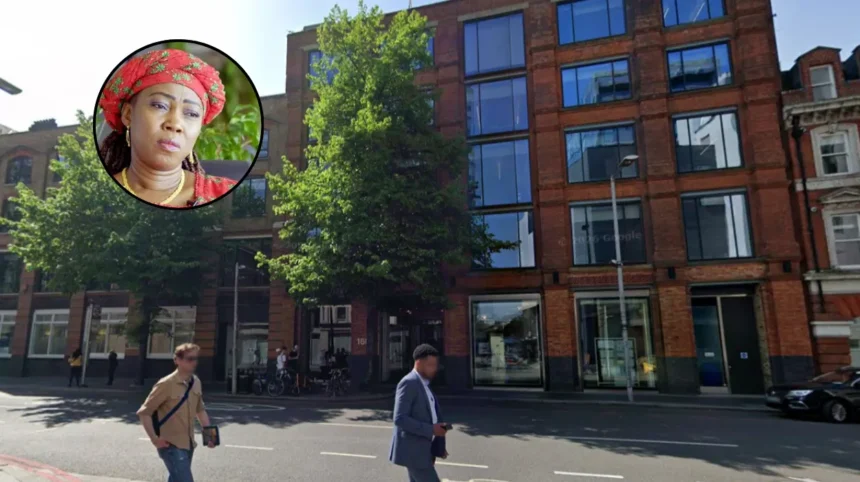
- Property Recovered: Southwark Council has officially taken back possession of a social housing flat in south London linked to Fatima Bio, the First Lady of Sierra Leone.
- The Catalyst: The repossession follows a year-long municipal investigation into the property’s usage and occupancy status, which culminated after a public admission by Bio.
- The BBC Interview: In a BBC Global Women broadcast, Fatima Bio openly defended retaining the council tenancy, stating she kept it as a “security blanket” because of her personal history as a refugee.
- Public Backlash: The admission sparked intense scrutiny across the UK and Sierra Leone, drawing sharp contrast against Southwark’s active waiting list of over 17,700 households in acute housing need.
- Reallocation Plan: Local government officials have confirmed that the flat will be fast-tracked for reallocation to an individual or family on the borough’s social housing register.
Southwark Council (South London News) June 13, 2026 – A year-long local government investigation into the tenancy of a municipal housing property has concluded with Southwark Council repossessing a flat linked directly to Fatima Bio, the First Lady of Sierra Leone. The enforcement action comes in the immediate wake of an international media broadcast where Bio defended maintaining her British social housing tenancy despite her status as a head of state’s spouse. Municipal authorities confirmed that the flat has been returned to the public housing stock to alleviate local housing shortages.
- Key Points
- Why Did Southwark Council Seize A Property Linked To Fatima Bio?
- What Did The First Lady Disclose In Her BBC Interview?
- How Did The Public React To The First Lady’s Statements?
- How Did Southwark Council Respond To The Growing Controversy?
- What Was The Legal Basis For The Repossession?
- Background Of The Southwark Housing Allocation Crisis
- Prediction: How Will This Development Affect Public Trust And Political Dynamics?
Why Did Southwark Council Seize A Property Linked To Fatima Bio?
The decision by Southwark Council to execute repossession protocols followed a protracted investigation into the lawful occupancy of the estate premises. Under UK housing legislation, secure tenancies for council properties generally require the tenant to occupy the flat as their principal or only home.
The investigation intensified following a series of public statements made by Bio that raised definitive legal questions regarding her permanent residency status and her ongoing entitlement to subsidised British municipal housing.
As reported by investigative journalists covering the London local government sector, Southwark Council had been quietly auditing the property’s usage for twelve months following standard internal flags regarding subletting or abandonment.
However, the definitive shift toward immediate repossession occurred after the occupancy status was confirmed on an international broadcasting platform by the occupant herself, leaving the local authority with clear grounds to initiate standard tenancy termination procedures.
What Did The First Lady Disclose In Her BBC Interview?
The controversy escalated into a diplomatic and local political issue following an in-depth interview broadcast by the BBC Global Women programme. In that interview, conducted by the BBC editorial team, Fatima Bio detailed her journey from a vulnerable teenager escaping a forced child marriage in Sierra Leone to seeking political asylum in the United Kingdom during the 1990s.
During the broadcast, the interviewer questioned the First Lady regarding reports that she had maintained her south London council flat despite her marriage to President Julius Maada Bio in 2013 and her subsequent relocation to the presidential lodge in Freetown.
As reported by the BBC production team, Fatima Bio stated:
“That flat was my security blanket when I had absolutely nothing. It was the place that gave me safety when I arrived in the UK as a refugee fleeing forced marriage. I kept it because, in politics, you never know what tomorrow brings, and I wanted to know I always had a safe place to return to.”
Bio further argued during the segment that she had continuously paid her rent and local council taxes on time, believing that fulfilling these financial obligations meant she was maintaining the tenancy legally. She insisted that her past struggles as an asylum seeker justified keeping a foothold in the British social safety net, viewing the property as a hard-earned personal insurance policy rather than an unavailable public asset.
How Did The Public React To The First Lady’s Statements?
The broadcast triggered an immediate wave of public indignation across two continents. In Sierra Leone, opposition political figures and civil society groups questioned the ethics of a sitting First Lady holding onto a subsidised municipal property meant for low-income families in the United Kingdom, arguing it reflected poorly on the economic narratives presented by the current administration in Freetown.
Simultaneously, in the United Kingdom, housing advocacy groups and local Southwark residents expressed profound anger.
The borough of Southwark is currently experiencing one of the most severe housing crises in metropolitan London, with high levels of homelessness and overcrowded temporary accommodations. Commentators across British media outlets noted that a property being held as a “security blanket” by an overseas public figure directly deprived a local family of a permanent home.
How Did Southwark Council Respond To The Growing Controversy?
In a formal statement issued by the Southwark Council press office, municipal officials sought to address the public outcry by clarifying the severe statistical realities governing the borough’s housing market.
According to official council data, there are currently more than 17,700 individuals and families registered on the local housing waiting list, with thousands more placed in temporary bed-and-breakfast units or out-of-borough hostels.
As reported by local government reporter Sarah Harvey of the London Evening Standard, Southwark Council Leader Kieron Williams stated that the authority has a legal and moral obligation to ensure public assets are utilized strictly by those who meet the criteria for urgent need.
Williams emphasised that social housing cannot be maintained as a secondary home or an insurance policy for individuals residing primarily outside of the country.
Explore More Southwark Council News
Southwark Council Sues CZWG for £5m Canada Water Library Leak 2026, South London
NatWest T20 Blast 2014 Cricket Finals Announced: Southwark 2026
What Was The Legal Basis For The Repossession?
Legally, Southwark Council acted under the terms of the Housing Act 1985 and subsequent amendments, which dictate that a tenant loses their “secure status” if they cease to occupy the dwelling as their primary residence. Once secure status is lost, the council can bring the tenancy to an end by serving a standard Notice to Quit.
A spokesperson for Southwark Council, writing via an official administrative release, confirmed the completion of the transfer:
“Following a thorough investigation into the occupancy status of the property in question, Southwark Council has successfully taken back possession of the flat. Our social housing stock is under immense pressure, and it is vital that every single home is occupied legally by someone with a verified, current need. This property will now be prepared for immediate reallocation to an applicant from our waiting list.”
Legal representatives for the borough noted that while timely rent payment is a necessity, it does not override the fundamental statutory requirement of continuous, principal physical occupancy.
The council did not disclose whether any financial penalties or backdated claims for housing fraud would be pursued against the tenancy holder, citing standard confidentiality policies regarding housing investigations.
Background Of The Southwark Housing Allocation Crisis
The repossession of the flat linked to Fatima Bio occurs against a broader backdrop of structural failures, funding cuts, and extreme scarcity within the British social housing sector, particularly inside inner-London boroughs.
Over the past two decades, Southwark Council has consistently ranked among the local authorities with the highest demand for affordable housing in the United Kingdom, driven by skyrocketing private sector rents and a slow rate of new municipal construction.
The root of the current crisis traces back to historical shifts in UK housing policy, notably the “Right to Buy” scheme introduced in the 1980s, which allowed millions of council tenants to purchase their homes at steep discounts.
While this policy expanded homeownership, it drastically depleted the stock of available public housing, as consecutive governments failed to replace the sold units with new social builds.
In Southwark, this depletion has created a system where only the most critically vulnerable individuals—such as those fleeing domestic abuse, individuals with severe medical disabilities, or families facing literal street homelessness—have any realistic chance of being allocated a flat.
Furthermore, the issue of “tenancy abandonment” and secondary home usage has become a major target for municipal enforcement teams across London.
Local councils have significantly increased their budgets for corporate anti-fraud units tasked with identifying tenancies where the registered tenant lives elsewhere, sublets the property for profit, or leaves the unit empty for extended periods.
The political sensitivity surrounding these empty homes has intensified as local councils face massive financial deficits driven by the cost of housing homeless families in expensive, private temporary accommodations because permanent council flats are unavailable.
Prediction: How Will This Development Affect Public Trust And Political Dynamics?
This development is poised to have substantial, lasting ramifications for two distinctly different audiences: the electorate of Sierra Leone and the residents waiting for housing within the London Borough of Southwark.
For the citizens and political community of Sierra Leone, the formal repossession of the property constitutes a notable public relations setback for the presidency of Julius Maada Bio.
Coming at a time when the West African nation is navigating complex economic challenges, including high inflation and youth unemployment, the revelation that the First Lady maintained a British social safety net asset will likely be leveraged extensively by opposition parties.
In future electoral cycles, this incident will likely be cited as an example of elite disconnect, potentially eroding public trust in the administration’s anti-corruption and fiscal responsibility rhetoric.
It may force the First Lady’s office to adopt a highly defensive posture, shifting focus toward domestic philanthropic work to repair her localized public image.
For the local community and housing applicants in Southwark, the swift resolution of this case will likely be viewed as a rare but significant victory for administrative accountability.
The visible enforcement action reassures the more than 17,700 applicants on the housing register that rules governing public welfare assets are applied uniformly, regardless of an individual’s socio-political status or international prominence.
This outcome is expected to embolden Southwark Council and other London authorities to pursue similar high-profile tenancy fraud and non-occupancy investigations with increased vigor. In the long term, while the recovery of a single flat does not structurally solve London’s systemic housing deficit, it sets a clear legal precedent: municipal properties will be rigorously protected for those who actively live and work within the community.