Key Points
- Development Value: Southwark Council is actively seeking a developer for a key worker housing scheme across two specific sites in Rotherhithe, estimated to carry a total forward value of between £120 million and £160 million.
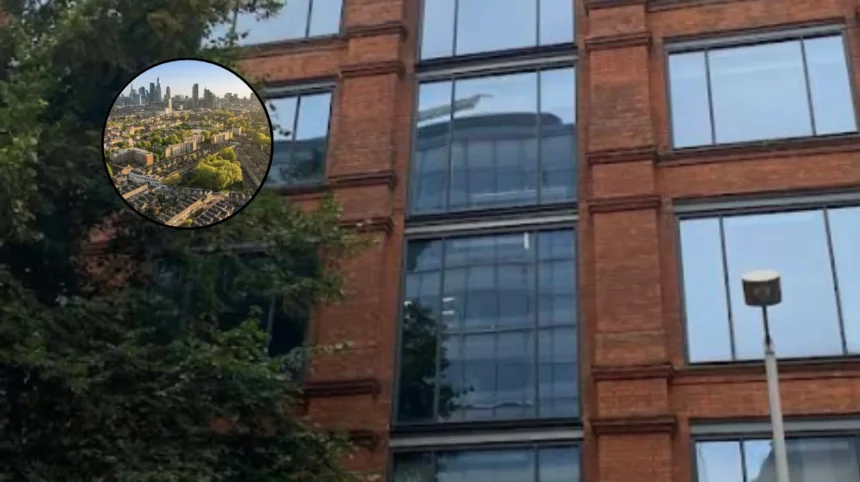
- Site Allocations: The proposed real estate project covers local authority-owned land assets located at Rotherhithe New Road and 25 Cherry Garden Street.
- Zero Cost Model: The procurement framework stipulates that the initiative will come at no direct capital cost to the local council, with the chosen commercial partner assuming all underlying financial and development risks.
- Potential Underwriting: Whilst direct delivery costs are zero for the local authority, Southwark Council may potentially underwrite up to £1.5 million (excluding VAT) in design and engineering fees during the pre-development phase.
- Strategic Timeline: The formal tender process is scheduled for launch in late July 2026, with the resulting construction and management contract projected to run from January 2027 through to March 2032.
- Policy Alignment: The borough’s initiative directly integrates into London Mayor Sir Sadiq Khan’s wider regional targets to establish 6,000 rent-controlled Key Worker Living Rent (KWLR) homes across the capital by the year 2030.
Southwark (South London News) June 16, 2026 – Southwark Council has initiated an official market procurement process to secure a private sector development partner for a major new key worker housing initiative across two distinct land parcels in the Rotherhithe district. According to municipal planning and procurement documents issued by the local authority, the comprehensive forward value of the project to the successful private sector bidder is estimated to sit between £120 million and £160 million. The development is structured to expand the borough’s supply of purpose-built, intermediate affordable housing without placing an unbacked capital burden onto the public balance sheet.
- Key Points
- What are the specific locations and financial terms of the Southwark procurement notice?
- How is the financial risk structured between Southwark Council and the developer?
- What is the anticipated delivery timeline for the contract?
- How does the Rotherhithe project fit into London’s wider key worker housing strategy?
- What are the income caps and rental calculations for the scheme?
- What is the official stance of Southwark Council on intermediate rent delivery?
- What commitments have council leadership made regarding rent-capped homes?
- Background of the particular development
- Prediction
As reported by Alex Daniel of Inside Housing, the Southwark local authority has recently published a formal early-stage Prior Information Notice (PIN) outlining the exact operational parameters of the upcoming contract.
The legal agreement will require the chosen commercial partner to absorb the full financial risk of the build. In return, the firm will gain the rights to manage the entire development lifecycle, spanning initial master planning, architectural design, and civil engineering, through to actual physical construction and subsequent long-term asset management of the completed residential homes.
What are the specific locations and financial terms of the Southwark procurement notice?
The municipal project will focus heavily on two specific land assets held within the local authority’s current property portfolio.
The first designated development zone sits at Rotherhithe New Road, whilst the second is located at 25 Cherry Garden Street. Both locations are positioned within the northern portion of the borough, an area that has experienced substantial infrastructure changes and residential regeneration over the last decade.
The council intends to utilize these urban infill plots to create high-density, energy-efficient residential blocks.
These blocks will be entirely configured to meet the specific living requirements of working professionals who keep local public services functional but remain priced out of the open market.
How is the financial risk structured between Southwark Council and the developer?
According to published procurement leads via The Construction Index, the baseline cost of the contract to the local authority’s primary capital budget is officially listed as nil.
The financial architecture of the deal dictates that the developer will fund the necessary works through private finance structures, recovering their initial capital layout via long-term rental yields derived from the finished properties.
However, the published tender documents reveal a minor financial caveat regarding the initial planning phases. While there is no direct construction cost to the council, the local authority has factored in a potential maximum value of underwriting the primary design fees.
This underwriting commitment is valued at an estimated £1,500,000 excluding VAT, which equates to roughly £1,800,000 once VAT is fully included. This legal mechanism serves as a financial backstop to protect the partner firm’s early-stage architectural expenses before full planning permissions are formally secured.
What is the anticipated delivery timeline for the contract?
The local authority expects to transition the scheme from the current early-stage market notice to a formal, competitive public tender invitation in late July 2026.
Data extracted from the construction index database indicates that the resulting contract carries an estimated operational duration of five years, two months, and two days.
The official start date for the development partnership is scheduled for January 25, 2027, with an ultimate contractual expiration and completion target set for March 26, 2032.
The Common Procurement Vocabulary (CPV) codes assigned to the notice include 71000000 (Architectural, construction, engineering, and inspection services) and 45000000 (Construction work).
How does the Rotherhithe project fit into London’s wider key worker housing strategy?
The Southwark Council scheme is designed to directly support the broader regional housing policies championed by the Greater London Authority (GLA).
As noted by Alex Daniel of Inside Housing, the contract comes amid London Mayor Sir Sadiq Khan’s regional policy push to deliver at least 6,000 strictly rent-controlled key worker properties across the capital by 2030.
Properties delivered under this initiative fall under the Key Worker Living Rent (KWLR) scheme, which targets specific employment sectors including:
- National Health Service (NHS) clinical staff and nurses
- Metropolitan Police officers and support staff
- London Fire Brigade firefighters
- Social workers, care staff, and local educators
These groups often find themselves in an institutional “housing gap”—they do not possess sufficient points to qualify for scarce traditional social housing units, yet their net salaries are vastly inadequate to comfortably absorb open-market rental rates in central London zones.
Explore More Southwark Council News
Southwark Council Sues CZWG for £5m Canada Water Library Leak 2026, South London
Fatima Bio Flat Repossessed by Southwark Council, London 2026
What are the income caps and rental calculations for the scheme?
To preserve the intermediate affordability of the KWLR model, strict financial criteria are embedded into the tenure framework. As reported within the Inside Housing analysis, household income eligibility for applicants looking to secure these tenancies is legally capped at a maximum of £75,000 per annum.
Furthermore, monthly rental rates are not pegged to fluctuating local market averages. Instead, they are calculated based on local median wages, with a strict regulatory cap ensuring that tenants spend no more than 40% of their verified net income on total housing costs.
According to statistical projections released by the Mayor of London’s office, this specific rental calculation could save an eligible key worker family occupying a standard two-bedroom home an average of approximately £7,000 per year compared to local private tenancies.
What is the official stance of Southwark Council on intermediate rent delivery?
To accelerate the delivery of these homes, regional authorities have actively encouraged boroughs and registered social landlords to access public funding mechanisms.
The London Mayor has called on housing associations, local councils, and commercial developers to submit joint bids for financial allocations through London’s £11.7 billion Social and Affordable Homes Programme, which explicitly includes the KWLR delivery scheme.
Southwark Council positioned itself as an early adopter of this specific funding model. During parliamentary and regional housing consultations held earlier this year, the borough was among the first inner-London local authorities to offer public support for the capital-wide KWLR strategy.
What commitments have council leadership made regarding rent-capped homes?
The local authority’s political leadership has repeatedly emphasized the necessity of protecting public sector workers from housing displacement.
Helen Dennis, the cabinet member for new homes and sustainable development at Southwark Council, stated that the local authority is “100% committed” to delivering rent-capped homes specifically optimized for key workers.
While Southwark Council was approached for additional direct comment regarding the specific architectural densities and unit numbers planned for Rotherhithe New Road and 25 Cherry Garden Street, no further statements were issued at the time of publication.
Background of the particular development
The procurement notice for the Rotherhithe New Road and Cherry Garden Street sites represents a continuation of Southwark Council’s established strategy of using public-private partnerships (PPPs) to address land scarcity and high construction costs.
Over the past decade, Southwark has consistently recorded some of the highest private rental averages in south London, driving essential public sector workers further out toward the metropolitan fringes and creating recruitment difficulties for local hospitals and schools.
The council has previously tested similar development delivery models to mitigate these pressures. Notably, Southwark partnered with developer and contractor Bouygues UK to deliver 150 key worker homes at Abbey Street in the SE1 area, built specifically to London Living Rent standards.
According to a project briefing by Bouygues UK, that development was situated adjacent to the Arnold Estate near London Bridge and Bermondsey stations, utilizing a Pre-Development Agreement (PDA) where Southwark capped its design fee underwriting at £750,000.
Additionally, Southwark Council has utilized similar developer-led procurement frameworks for larger estate projects, such as the ongoing Tustin Estate regeneration scheme.
That project, also delivered via Bouygues UK through Pagabo’s Developer-Led Framework, is scheduled to run until 2030 and features 700 homes, including a mixture of replacement council homes, shared equity properties, and dedicated key worker housing.
The new Rotherhithe tender applies these established procurement methods, scaling up the model into a standalone £160 million intermediate housing package.
Prediction
The deployment of this £160 million key worker scheme will directly impact intermediate-income public sector professionals employed within Southwark and its neighboring boroughs.
By introducing a significant volume of Key Worker Living Rent (KWLR) units by 2032, the development is expected to provide stable, long-term housing options for local NHS staff, emergency service workers, and teachers who are currently vulnerable to private sector rent increases.
For this specific audience, the availability of homes with rents capped at 40% of net income will likely reduce commuting times and improve retention rates within local public services.
However, because the contract stretches from 2027 to 2032, the physical supply of these units will not affect the local housing market in the immediate short term. Eligible workers will remain reliant on existing private tenancies or oversubscribed shared ownership schemes while the selected developer completes the five-year design and construction program.