Key Points
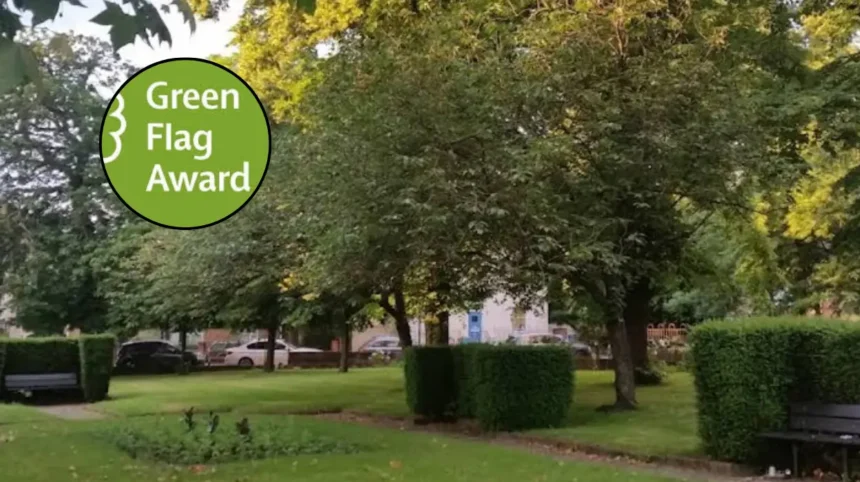
- The London Borough of Lewisham has successfully maintained its status as a premier green urban authority by retaining 18 internationally recognised Green Flag Awards for its local parks.
- The announcement coincides directly with the arrival of National Picnic Week, providing a seasonal framework for the evaluation of the borough’s vast open ecological infrastructure.
- The Green Flag Award evaluates managed public land based on highly strict parameters, including physical accessibility, structural cleanliness, ecological biodiversity, operational safety, and active community involvement.
- Beckenham Place Park, the largest singular green site in the borough, has retained its prestigious Green Heritage Site Accreditation alongside its core Green Flag status.
- The parks network is managed through a long-term public-private partnership between Lewisham Council, grounds maintenance contractor Glendale, and a highly active ecosystem of local voluntary “Friends of” groups.
Lewisham (South London News) June 17, 2026 — The London Borough of Lewisham has officially sustained its historical high-standard environmental achievements by retaining all 18 of its prestigious Green Flag Awards for its public parks and open spaces. Coinciding with the arrival of National Picnic Week, the international benchmark scheme has validated the borough’s localized efforts to provide safe, clean, accessible, and biodiverse recreational grounds for its urban population. The retention underscores the operational synergy between local government authorities, contracted land maintenance providers, and dedicated grassroots neighborhood networks across the South East London territory.
- Key Points
- How Does the Green Flag Award System Evaluate Public Spaces?
- Which Is the Largest Park in Lewisham’s Green Flag Portfolio?
- How Do the Central and Community Parks Rank Across the Borough?
- What is the Strategy Behind Lewisham’s Continuous Green Flag Success?
- Background of the Green Flag Urban Infrastructure Development
- Prediction: How This Environmental Development Will Affect Local Residents
How Does the Green Flag Award System Evaluate Public Spaces?
As documented within the official criteria of the Green Flag Award scheme, which is managed internationally by environmental charity Keep Britain Tidy under license from the Ministry of Housing, Communities and Local Government, the evaluation process avoids subjective aesthetic judgments. Instead, a panel of expert volunteer judges scores public spaces across eight distinct categories.
These legislative and operational requirements demand that parks must be welcoming, healthy, safe, secure, and structurally well-maintained, with a heavy operational emphasis placed on litter management, environmental sustainability, heritage conservation, active biodiversity propagation, and direct community involvement.
According to an official report compiled by the editorial team of the regional media title London Now, Lewisham’s ongoing retention of 18 separate flags demonstrates a sustained resilience against urban environmental degradation and municipal budgetary constraints that often threaten inner-city green infrastructure.
Which Is the Largest Park in Lewisham’s Green Flag Portfolio?
As published in the environmental register by London Now journalists, Beckenham Place Park stands as the absolute crown jewel of the borough’s park network. Spanning an expansive 96 hectares, it represents the largest singular green space inside the borders of Lewisham.
The site is a complex combination of ancient woodland, a restored Georgian mansion, and a purpose-built wild swimming lake that draws visitors from across Greater London. Beyond its natural water features and forestry, the park integrates modern recreational amenities, including multiple active cafes and a specialized BMX track designed for local youths.
Crucially, Beckenham Place Park did not merely retain its baseline Green Flag; it successfully secured its specialized Green Heritage Site Accreditation. According to official performance feedback published by Lewisham Council, the independent judges highly commended the site’s meticulous Conservation Management Plan.
The judicial panel noted that the physical planting of formal beds surrounding the Mansion House and the historic Stable Yard has directly restored the landscape’s authentic heritage, while simultaneously enhancing climate change resilience and local ecological diversity. The site hosts a highly complex mixture of ancient trees and historic hedges that remain fully integrated into the public-facing landscape.
How Do the Central and Community Parks Rank Across the Borough?
The localized reporting by London Now has outlined the specific attributes of the remaining 17 award-winning spaces, mapping out an extensive network of ecological havens across the borough:
- Bellingham Green: Operating primarily as a localized neighborhood park, this space offers well-manicured open lawns alongside a highly utilized children’s playground, acting as a crucial micro-green space for nearby residential streets.
- Blackheath: Acknowledged as one of the most historically significant open vistas in South London, this vast expanse possesses structural links to major historical milestones, including the Peasants’ Revolt of 1381. In contemporary usage, it provides a massive plateau for large-scale civic gatherings, funfairs, and seasonal community events.
- Chinbrook Meadows: This park is highly valued for its active environmental restoration, featuring a fully naturalized river corridor winding along the River Quaggy. The infrastructure incorporates dedicated sports pitches, a renovated playground, and an independent community cafe. Official data from Lewisham Council indicates that Chinbrook Meadows sits firmly in the highest-scoring bracket for international park improvement.
- Cornmill Gardens: Positioned within the immediate core of Lewisham’s urban town centre, this space utilizes modern sculptural landscaping and dedicated riverside pathways to provide an essential psychological buffer against the surrounding commercial congestion.
- Deptford Park: Located within a highly industrialized and densely populated urban zone, this vital asset provides essential sports facilities and a modern playground to support the physical health of local working-class neighborhoods.
- Forster Memorial Park: Initially opened to the public in 1922 as a permanent memorial to a local fallen soldier, this space balances dense, mature woodland areas with sweeping open grasslands, supported by an on-site pavilion cafe.
- Hilly Fields: Situated on an elevated geographic plateau, Hilly Fields is celebrated for its sweeping, unobstructed panoramic views of the broader London skyline, offering clear sightlines to architectural landmarks such as The Shard.
- Horniman Museum Gardens: Encircling the historic Horniman Museum, these famous 16-acre grounds feature highly manicured lawns, botanical themed planting structures, and an authentic Victorian bandstand, seamlessly combining cultural heritage with horticultural excellence.
- Ladywell Fields: Snaking continuously along the path of the River Ravensbourne, Ladywell Fields serves as a major spine for the borough’s green transportation corridor, accommodating continuous cycling and walking paths that link multiple neighborhoods while supporting complex riverine habitats.
- Lewisham Park: Bordering Lewisham Hospital directly, this specialized park serves an essential therapeutic function, featuring a dense collection of seasonal cherry blossoms and traditional spring flower displays designed to offer a calming space for patients, healthcare workers, and relatives.
- Manor House Gardens: This multifunctional site features a central duck pond, a local library branch, an operating cafe, and a preserved historic icehouse, with its extensive flowerbeds directly maintained by localized civic groups.
- Manor Park: Serving as a quieter, reflective companion to the nearby Manor House Gardens, this compact park offers a dedicated community garden that weaves residential streets together.
- Mayow Park: Established originally in 1878, Mayow Park is categorized as one of the oldest operational public parks in Lewisham, retaining a classic Victorian layout, mature tree canopies, a traditional bowling green, active sports courts, and a community-run cafe. Alongside Chinbrook Meadows, it ranks in the absolute highest tier of national judging scores.
- Mountsfield Park: Located on a high ridge in Catford, this open space serves as the primary civic ground for the borough’s massive outdoor festivals, most notably hosting the annual Lewisham People’s Day.
- Northbrook Park: This enclosed, highly secure green space includes an integrated dog exercise enclave, a basketball court, and children’s play equipment, making it highly insulated and popular with young families.
- Sydenham Wells Park: Steeped in spa history due to its connection to historic mineral wells, the park is currently laid out with formal water features, complex sensory gardens, and isolated woodland pathways optimized for urban wildlife spotting.
- Telegraph Hill Park: Divided into distinctive upper and lower tiers by an intersecting roadway, this park utilizes its steep elevation to provide sweeping views across the city, balanced by lower-tier community gardens and children’s play zones.
What is the Strategy Behind Lewisham’s Continuous Green Flag Success?
As revealed in public documentation by Glendale, the primary grounds maintenance contractor working in absolute partnership with the London Borough of Lewisham, the preservation of these 18 sites relies heavily on a long-term civic framework known as the Parks and Open Spaces Strategy.
This strategy intentionally shifts municipal management away from top-down bureaucratic oversight toward a model focused on localized community co-management.
As explicitly stated by Councillor Louise Krupski, the Deputy Mayor and Cabinet Member for Environment for Lewisham Council:
“Gaining an additional Green Heritage Site Accreditation is fantastic news for Beckenham Place Park and for Lewisham! This news together with successfully retaining all our Green Flags is testament to the hard work of the staff and volunteers who do so much.”
The structural backbone of this environmental network is reinforced by volunteer organizations, such as the Friends of Garthorne Road and the Friends of Dacres Wood, alongside the Lewisham Biodiversity Partnership. These groups provide thousands of hours of unpaid manual labor annually to clear waterways, manage invasive vegetation, and plant climate-resilient flora.
Explore More Lewisham News
Walking challenge raises funds for Lewisham charity supporting refugee children
Two Men Charged for Murder of Taiwo Ekerin: Lewisham 2026
Background of the Green Flag Urban Infrastructure Development
The modern consolidation of Lewisham’s 18 Green Flag parks is the direct result of a major policy shift enacted over the past two decades to transform South East London from a post-industrial transport corridor into a sustainable urban eco-zone.
Historically, areas such as Deptford, Lewisham Central, and Catford suffered from intense atmospheric pollution and severe environmental neglect following post-war industrial decline. Waterways like the River Ravensbourne and the River Quaggy were heavily canalized in artificial concrete channels, which degraded local wildlife habitats and heightened the risk of urban flash flooding.
In response, Lewisham Council partnered with private grounds management specialists, such as Glendale, and successfully applied for major structural funding from national heritage bodies and the European Regional Development Fund.
This capital was systematically deployed to break open concrete riverbeds—most notably at Ladywell Fields and Chinbrook Meadows—allowing natural floodplains to return.
By integrating these natural engineering techniques with structured community volunteering, the borough successfully elevated its parks from simple patches of grass into internationally validated biological assets. This comprehensive structural evolution laid the foundation for the 18 consecutive Green Flag awards celebrated today.
Prediction: How This Environmental Development Will Affect Local Residents
The absolute retention of these 18 high-quality Green Flag spaces will have a highly measurable, positive impact on the overall socio-economic and physiological well-being of Lewisham residents over the coming decade.
As inner-city densities continue to rise across South East London due to extensive housing redevelopments, these verified green spaces will function increasingly as the essential “heart and lungs” of the community.
For the local population—particularly families living in high-rise apartments without private gardens—the guaranteed maintenance of clean, safe, and accessible parks ensures free access to vital exercise and mental health relief.
Furthermore, the verified high standards of biodiversity and mature tree canopies will directly insulate Lewisham residents from the growing impacts of climate change, specifically lowering dangerous localized urban heat island effects during peak summer heatwaves and drastically improving urban air filtration along heavily congested arterial roads.
Financially, the verified international prestige of these parks will continue to protect local residential property values and steadily attract small-business investments, particularly in the hospitality and eco-tourism sectors surrounding major hubs like Beckenham Place Park and Blackheath.