Key Points
- Work Halted: Remedial work to replace dangerous cladding on The Lighterman Building in south-east London has abruptly ground to a halt.
- Contractor Collapse: Property company Ardmore Construction Group, tasked with the removal and replacement of the cladding, has entered administration.
- Impact on Residents: Occupants report living in a “living hell,” with the building permanently encased in scaffolding and protective plastic sheeting for over 18 months.
- Developer Response: The building’s developer, Knight Dragon, has secured the site and pledged to provide a revised completion plan to residents within four weeks.
- Broader Context: The building is one of thousands across England undergoing state-mandated remediation following post-Grenfell safety legislation banning combustible materials.
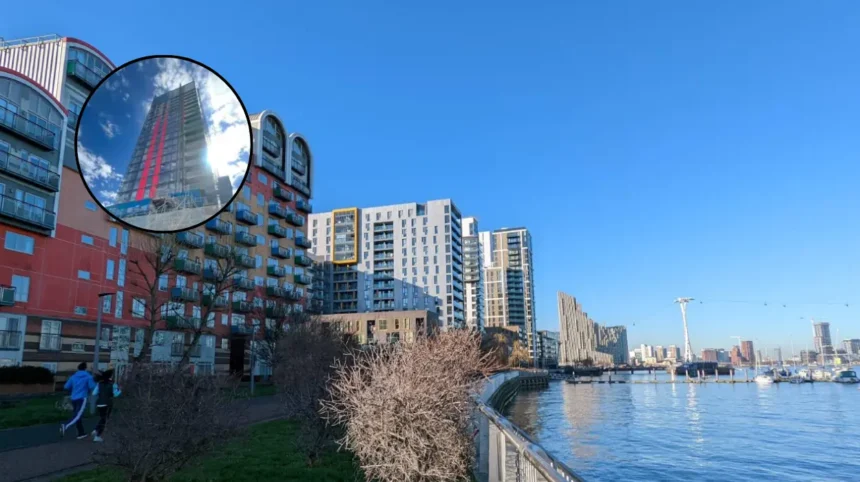
Greenwich (South London News) June 20, 2026 – Residents of a major residential block in south-east London have been left trapped in what they describe as a “living hell” after the construction firm responsible for removing dangerous cladding unexpectedly collapsed into administration. Work on The Lighterman Building, located on the Greenwich Peninsula, ceased abruptly following the financial failure of Ardmore Construction Group. The property company had been engaged in a complex, 18-month remediation project to strip and replace flammable materials from the exterior of the tower.
- Key Points
- What Has Happened to The Lighterman Building Project?
- Why are Residents Describing the Situation as a ‘Living Hell’?
- How is Developer Knight Dragon Responding to the Crisis?
- Background of the Cladding Remediation Crisis
- Prediction: How This Development Affects Leaseholders and Tenants
- Rental Market Pressures for Tenants
Following the sudden withdrawal of the workforce, the residential block remains entirely encased in heavy scaffolding and opaque protective sheeting.
The halt has sparked severe distress among property owners and tenants, who have endured nearly two years of restricted natural light, sealed windows, and persistent construction disruptions, only to be left with an unfinished, structurally exposed building.
In response to the contractor’s insolvency, the primary developer of the site, Knight Dragon, confirmed that immediate measures have been taken to stabilize the area.
The developer announced that it has successfully secured the physical site to prevent safety hazards and is currently finalising an alternative strategy to resume the cladding replacement.
Knight Dragon has committed to delivering a comprehensive update and a revised timeline to the affected residents within the next four weeks.
What Has Happened to The Lighterman Building Project?
The remediation of The Lighterman Building was initiated to bring the high-rise structure into compliance with modern fire safety regulations.
Ardmore Construction Group was contracted to undertake the delicate process of stripping away the building’s original external façade and replacing it with non-combustible materials.
However, the financial collapse of the construction firm has left the project in a state of indefinite suspension. Scaffolding structures remain erected around the entirety of the building’s perimeter, while thick protective wrap covers the windows of private residences.
According to reports compiled across regional housing monitors, residents are now facing prolonged exposure to these conditions without a clear indication of when the heavy hardware will be dismantled.
Why are Residents Describing the Situation as a ‘Living Hell’?
The psychological and logistical toll on the occupants of the Greenwich Peninsula block has intensified significantly since the work ground to a halt. In statements detailing the daily living conditions inside the shrouded tower, residents expressed profound frustration regarding the loss of basic amenities and a decline in their quality of life.
The protective sheeting, designed to shield the exposed structure from weather damage during the transition period, has effectively blocked natural sunlight from entering the apartments. Occupants have reported being forced to live with artificial lighting turned on throughout the day.
Furthermore, the presence of scaffolding has created heightened privacy and security anxieties, as walkways remain positioned directly outside private bedroom and living room windows, preventing residents from opening their windows for ventilation.
How is Developer Knight Dragon Responding to the Crisis?
To mitigate the fallout from the contractor’s administration, the developer has stepped in to manage the abandoned site. The immediate priority has shifted from active construction to site security and structural preservation to ensure the uncompleted exterior does not pose an immediate danger to the public or the occupants.
In an official statement released by Knight Dragon, the developer sought to reassure the community that the stoppage would be temporary. The company stated:
“We have secured the site and are now finalising a revised plan to complete the works. We will update residents within four weeks.”
The upcoming four-week window is currently being used by the developer to assess the volume of remaining work, negotiate contracts with alternative construction firms, and audit the structural integrity of the phases completed by Ardmore Construction Group before its insolvency.
Background of the Cladding Remediation Crisis
The crisis unfolding at The Lighterman Building is deeply rooted in the structural reforms enacted across the United Kingdom’s housing and construction sectors over the past decade.
The widespread requirement to remove and replace external facades stems directly from the catastrophic Grenfell Tower fire in North Kensington in June 2017. The disaster, which claimed 72 lives, was determined by subsequent public inquiries to have been severely accelerated by the presence of highly flammable Aluminum Composite Material (ACM) cladding and defective insulation systems on the exterior of the building.
In the wake of the disaster, the UK Government introduced sweeping legislative changes, including the Building Safety Act, which fundamentally restructured the legal responsibilities of property developers, freeholders, and construction firms.
The updated regulations strictly banned the use of combustible materials on the external walls of high-rise residential buildings exceeding specific height thresholds.
As a consequence of these statutory mandates, thousands of residential blocks across England were identified as requiring urgent remedial work to strip away non-compliant insulation and cladding systems. The financial and logistical burden of these operations has placed unprecedented strain on the UK construction supply chain. Many projects have faced extensive delays due to a shortage of specialist contractors, rising material costs, and complex legal disputes regarding whether developers or leaseholders should bear the ultimate cost of the remediation.
The collapse of firms like Ardmore Construction Group highlights the volatile financial landscape facing construction companies tasked with high-risk, fixed-price fire safety contracts.
Explore More Greenwich News
Greenwich Enforces New Mandatory Lime and Forest E-Bike Bays 2026
Reform UK Kent Councillor in Greenwich Race, Woolwich 2026
Prediction: How This Development Affects Leaseholders and Tenants
The suspension of works at The Lighterman Building is projected to have immediate, multi-layered repercussions for both the leaseholders who own properties within the block and the tenants currently renting them.
For leaseholders, the primary consequence of the contractor entering administration is the immediate freeze on property values and market liquidity. Until a building receives a clean EWS1 (External Wall System) survey certificate confirming that all combustible materials have been successfully replaced, major UK mortgage lenders routinely refuse to approve loans for prospective buyers.
Consequently, apartment owners inside The Lighterman Building will find themselves entirely unable to sell their properties or remortgage their homes. This traps individuals in a state of financial limbo, forcing them to remain on expensive standard variable interest rates if their fixed-term mortgages expire during the delay.
Furthermore, a prolonged delay in completing the fire safety works could lead to an escalation in building insurance premiums. Insurance providers assess uncompleted cladding projects as elevated risks.
If the protective wrap and exposed insulation remain unaddressed for a prolonged period, the building’s structural insurance costs may rise significantly—a financial burden that is frequently passed down to leaseholders through elevated annual service charges.
Rental Market Pressures for Tenants
For tenants residing in the building, the development likely means an extended period of substandard living conditions. The persistence of scaffolding and opaque sheeting will continue to impact physical well-being due to diminished natural light and lack of proper ventilation.
Over time, this unresolved environment is expected to drive a higher turnover of renters, downward pressure on local rental yields for landlords, and ongoing disputes regarding tenancy agreements and requests for rent reductions due to the loss of a peaceful enjoyment of the property.