Key Points
- Election Victory: Green Party candidate Esther Lie won the Crofton Park ward by-election for Lewisham Council with 1,340 votes, defeating Labour candidate Alex Brooks by a margin of 10 votes.
- Social Media Backlash: The victory followed intense campaign-trail scrutiny regarding a 2013 tweet by Lie, where she referenced Indian men at a swimming pool having “rapey grins”.
- Candidate Apology: Lie publicly apologised for the historic post, clarifying that it was a private response to a personal event while backpacking as a young person and was never intended for public view.
- Electoral Shifts: The Green Party experienced a significant drop of 7.5 percentage points in its vote share, while the Labour Party recorded an increase of 13.9 percentage points compared to previous local polls.
- Low Voter Turnout: Total voter participation fell dramatically from 51 percent during the May borough elections to 26.88 percent for the by-election on June 18, 2026.
- Broader Council Disputes: The local campaign took place against a backdrop of wider controversies regarding Green Party fiscal commitments, including disputes over local mayoral allowances.
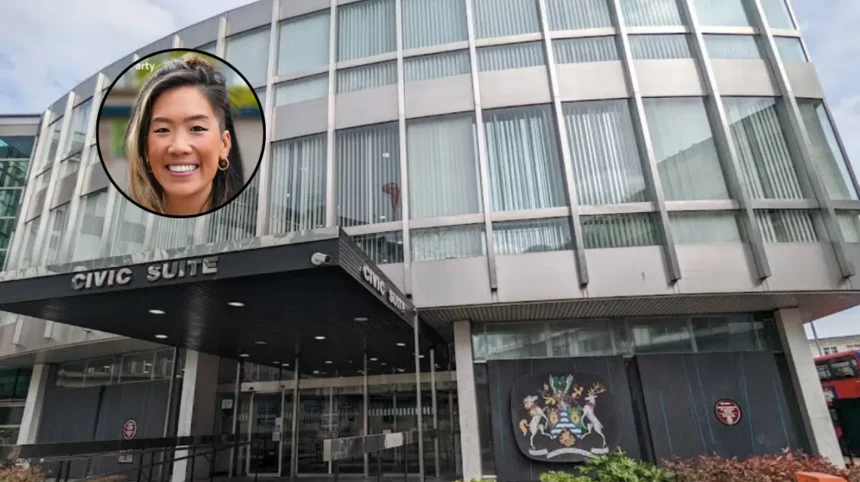
Crofton Park (South London News) June 22, 2026 – A controversial Green Party candidate has narrowly held an inner-London council seat following a highly competitive by-election recount, prevailing over her nearest rival despite a severe backlash regarding racially insensitive remarks made on social media. Esther Lie, an engagement professional at King’s College London, secured the local authority seat in the Crofton Park ward within the London Borough of Lewisham, outstripping her primary competitor by a razor-thin margin. The local political contest concluded with a tense statutory count that confirmed a drastic reduction in the political majority formerly enjoyed by her party within the locality.
- Key Points
- Did Social Media Controversies Impede the Green Party Majority?
- How Did the Labour Party Perform in the Crofton Park Poll?
- What Broader Local Government Rows Influenced the By-Election?
- Background of the Crofton Park Municipal Development
- Predictions for the Local Community and Electorate
- Increased Resource Allocation to Ward Services
- Shift Toward Risk-Averse Governance
Did Social Media Controversies Impede the Green Party Majority?
The local authority by-election, conducted on Thursday 18 June 2026, became the focus of intense scrutiny from several media titles due to historical public posts made by the incoming councillor.
As reported by political correspondent Lewis Baston of OnLondon, the Green candidate defending the Crofton Park ward faced extensive criticism during the campaign for inappropriate social media statements dating back more than a decade.
The public dispute centred around a microblogging post published by Lie in 2013 on the platform Twitter (now X). In the original post, Lie wrote:
“Almost fancied the Indian guys at the swimming pool yesterday. Despite their thick prickly torsos and rapey grins.”
The revelation of the decade-old statement sparked severe local political arguments, leading opponents to challenge her suitability for public office within one of London’s multiracial boroughs.
Ahead of the ballot opening on Thursday, Lie issued a full public apology for the statement and deleted the relevant accounts. Explaining the context of the historical remarks, Lie stated:
“The post was in response to a particular event that had happened to me whilst backpacking as a young person – and wasn’t ever meant for public consumption.”
Despite the swift public apology, the fallout significantly depressed voter enthusiasm for the local Green ticket.
The official declaration of the poll issued by Jennifer Daothong, the Returning Officer for the London Borough of Lewisham, confirmed that Lie collected exactly 1,340 votes, representing 44.9 percent of the total valid ballots cast.
The figure marked a sharp contraction of 7.5 percentage points in the Green Party’s historical vote share for the local area.
How Did the Labour Party Perform in the Crofton Park Poll?
The immediate beneficiary of the voter movement away from the Green Party was the Labour Party’s candidate, Alex Brooks.
Brooks, who serves as the vice-chair of a local housing charity and is a former president of the University of Greenwich student body, mounted a highly synchronised campaign designed to recapture the ward for the Labour group.
As reported by journalists covering the Lewisham municipal offices, the final vote tally for Alex Brooks reached 1,330 votes, capturing 44.5 percent of the electorate’s support.
This outcome reflected a notable rise of 13.9 percentage points for the Labour Party compared to previous standard local government elections.
The 10-vote margin necessitated an official recount at the municipal sorting venue before the Returning Officer could formalise the final victory for the Green candidate.
The remaining candidates on the ballot fell substantially behind the top two frontrunners. The official verification document published by Lewisham Council detailed the comprehensive breakdown of the lower-tier candidates as follows:
The Returning Officer’s ledger noted that out of an eligible ward electorate of 11,135 registered voters, a total of 2,993 ballot papers were issued. Seven ballot papers were rejected during the validation process for reasons including uncertainty or excessive selections, yielding a final valid turnout of 26.88 percent.
What Broader Local Government Rows Influenced the By-Election?
The narrowness of the Green Party’s victory was driven not only by personal social media controversies but also by wider structural tensions within Lewisham Council.
Political analysts monitoring the region observed that the first few weeks of the expanded Green presence in Lewisham had been heavily impacted by an administrative dispute regarding municipal remuneration packages.
As highlighted by OnLondon editorial staff, the Greens faced localized criticism over a high-profile campaign pledge to slash the standard mayoral allowance by 20 percent.
Rather than experiencing a reduction, the allowance structure actually advanced to £93,795 per annum, marking a net increase of 5.4 percent since the conclusion of the previous mayoral term.
In response to allegations of institutional backtracking from opposition Labour councillors, Green party spokespersons pointed out that the increase is structurally offset by a mandatory 20 percent deduction mechanism.
This mechanism automatically routes the corresponding funds directly to local food justice charities operating within the borough.
However, external political commentators argued that the technical defense compromised the insurgent, anti-status-quo branding of the local party, leaving them vulnerable to coordinated counter-campaigns by Labour’s local organizational machine.
The combination of structural policy arguments and the candidate’s personal social media crisis ultimately facilitated a double-digit percentage swing back toward the Labour Party.
Background of the Crofton Park Municipal Development
The June 2026 Crofton Park by-election was triggered directly by internal transitions within Lewisham Council.
The seat became vacant following the elevation of the sitting Green councillor, Liam Shrivastava, who successfully contested and won the overarching executive selection to become the new Mayor of Lewisham.
Electorally, Crofton Park is characterized as a settled, middle-class residential ward in South East London. Census data from 2021 indicates that the locality has a high proportion of residents identifying as White British (49 percent), showing a marginal increase over the preceding decade—a statistical trend frequently associated with regional gentrification and rising housing valuations.
Historically, the ward was a reliable stronghold for the Labour Party for several decades following the decline of local Conservative competitiveness in the early 1980s.
In recent election cycles, however, the area transformed into a primary battleground between Labour and the Greens. The cluster of wards incorporating Crofton Park, Brockley, Ladywell, and Telegraph Hill represents the strongest base of environmentalist electoral support in the capital.
The significant swing observed in this poll indicates an interruption in what had previously been a consistent upward trajectory for the Green Party across inner London.
Predictions for the Local Community and Electorate
The result of this by-election is expected to significantly alter the legislative dynamics inside Lewisham Council, directly impacting local residents, community groups, and municipal taxpayers.
Because the Green Party’s hold on this seat has been narrowed to just ten votes, the ruling local government bloc will operate under intense political pressure.
For the local community, this means that any future proposals regarding controversial environmental initiatives—such as low-traffic neighborhoods, carbon-reduction mandates, or parking surcharges—will face fierce opposition and protracted debates. Residents can expect slower implementation timelines for local infrastructure projects as the council deals with a revitalized Labour opposition.
Increased Resource Allocation to Ward Services
With a tiny majority of just 10 votes separating the two major parties, both the Greens and Labour will view Crofton Park as a critical marginal battleground ahead of the next full borough elections.
Consequently, local community groups, schools, and neighborhood associations are likely to see increased attention and funding allocations. Both parties will be highly motivated to approve localized grants, resolve street-maintenance issues, and improve public amenities to win over undecided voters.
Shift Toward Risk-Averse Governance
The severe backlash over historical social media commentary will likely cause all local political parties to implement stricter vetting procedures for their representatives.
For the local electorate, this means future political campaigns will probably become much more controlled and cautious. While this will reduce the frequency of political controversies, it may also lead to less spontaneous, more risk-averse communication from local councillors regarding community grievances.