Key Points
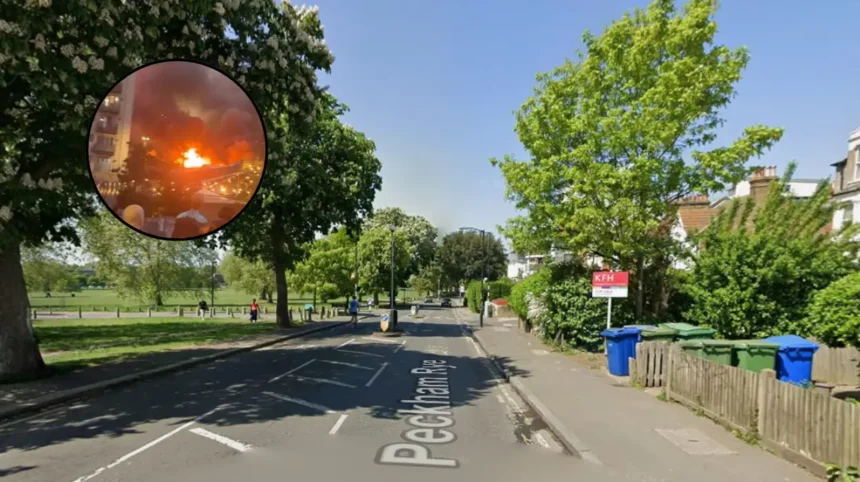
- A large fire broke out at 135 Rye Lane in Peckham on Thursday evening, 25 June, starting in a first-floor stockroom and spreading to a single-storey extension of the building.
- Around 50 people evacuated before emergency services arrived, and no injuries were reported.
- About 100 firefighters and 15 fire engines were deployed at the height of the incident.
- Crews faced difficult conditions because of heavy smoke and temperatures in the mid-30s during a record-breaking UK heatwave.
- The blaze was brought under control by 23:50 BST that night.
- Residents nearby were advised to keep windows closed because smoke spread through parts of the neighbourhood.
- The main store remained intact and was not damaged, although the extension was destroyed.
- An investigation into the cause of the fire is underway.
Peckham (South London News) June 27, 2026 — A major fire tore through part of a department store on Rye Lane late on Thursday evening, prompting a large emergency response in difficult heatwave conditions, while local residents and nearby businesses watched the incident unfold with concern.
The fire began shortly before 21:00 BST on 25 June in a first-floor stockroom at 135 Rye Lane, before spreading to a single-storey extension of the building. Around 50 people left the premises before emergency services arrived, and no injuries were reported. The main store was not damaged, but the extension was destroyed.
At the height of the incident, about 100 firefighters and 15 fire engines were on scene, and the blaze was brought under control by 23:50 BST. Residents in the area were told to keep their windows closed because smoke affected nearby streets.
How did the blaze start?
The fire was first reported in a stockroom on the first floor of the building, according to the account provided in the story.
From there, flames moved into the single-storey extension attached to the premises. That extension was destroyed, while the main store was left intact and did not suffer damage. The exact cause of the fire has not yet been confirmed, and investigators are now expected to examine the scene.
The location matters because Rye Lane is one of Peckham’s busiest commercial streets, with a mix of retail units and independent businesses.
A fire in a dense shopping area carries a greater risk of spreading to neighbouring properties, which is one reason the scale of the emergency response was so large.
How was the fire brought under control?
The emergency response was substantial, with roughly 100 firefighters and 15 fire engines deployed at peak intensity. Crews worked in extremely difficult conditions because of the smoke and the hot weather, with temperatures in the mid-30s at the time of the fire. Station Commander Craig Abbott said firefighters
“worked hard in arduous conditions to bring this fire under control,”
underlining the strain placed on the crews.
The fire was eventually contained by 23:50 BST, several hours after it first broke out. That timing suggests the incident required sustained effort through the evening, including firefighting, damping down hotspots, and preventing the blaze from spreading further. The fact that the main store was not damaged will likely be viewed as an important outcome of that response.
What was the impact on local people?
Around 50 people were able to leave the building before emergency services arrived, which helped reduce the risk of injury. No casualties were reported, and that will be the most important immediate relief for the business, staff, customers and the wider community.
Even so, the incident caused disruption on a busy commercial street and brought smoke into surrounding streets.
Local residents were advised to keep their windows shut while smoke drifted through parts of the neighbourhood.
For nearby traders and businesses, the fire would also have meant uncertainty during the evening, especially given the street’s heavy footfall and close-knit retail setting. The smoke and emergency activity would have affected movement, access and visibility in the immediate area.
Why was the heatwave significant?
The fire happened during a record-breaking UK heatwave, with temperatures in the mid-30s. That made the working conditions more severe for firefighters and may have increased the challenge of containing the blaze quickly.
High temperatures can also raise concern about storage areas, electrical equipment and general fire risk, particularly in commercial buildings.
In this case, the first-floor stockroom was the point where the fire was reported to have started. Storage areas can be vulnerable because they often contain packed goods, cardboard, packaging and other materials that can fuel a fire once ignition occurs.
The heatwave therefore forms an important part of the context for understanding why the incident drew such a large emergency response.
What is known about the building?
The address, 135 Rye Lane, includes a main retail premises and a single-storey extension. The extension was destroyed in the fire, while the principal store remained undamaged.
That distinction is important because it means the full loss was contained to part of the property rather than the entire building.
The story also notes that Copeland Park, a nearby creative hub, avoided major damage and sustained only localised effects from smoke and firefighting activity.
That will matter to people who use the area regularly, because it suggests the disruption was serious but did not escalate into wider structural damage across the neighbourhood. The immediate commercial environment on Rye Lane appears to have been protected from the worst outcome.
What happens next?
The next stage is the formal investigation into the cause of the fire. Fire investigators will focus on the first-floor stockroom and the circumstances that allowed the blaze to spread to the extension. At this point, no cause has been confirmed, so any explanation would remain speculative.
Emergency crews also worked late into the evening to make sure the fire did not reignite. Once the scene was safe, access could be restored and smoke precautions lifted.
For the business affected, the priority now is likely to be assessing structural damage to the extension, checking stock loss, and planning any recovery work.
Background of the development
Rye Lane in Peckham is a major south London shopping street with constant footfall, so even a contained fire can create immediate concern because of its potential to spread quickly.
Fires in retail settings often require rapid evacuation, a major emergency deployment and close control of smoke, especially where stockrooms and extensions are involved.
In this case, the heatwave added an extra layer of difficulty, making the emergency response more demanding than it would have been under normal conditions.
The fire also fits a wider pattern of urban incident management where emergency services must protect not just one building but the surrounding street network.
When a blaze is stopped before it reaches neighbouring premises, the wider economic and community damage is usually far lower. That appears to be the outcome here, even though the extension was lost and the business still faces disruption.
Prediction: What could this mean for local traders and shoppers?
For local traders, the most immediate effect is likely to be short-term disruption around the affected premises, including possible repairs, insurance assessments and review of stock storage arrangements.
For shoppers and residents, the fire may increase attention on safety procedures, evacuation routes and smoke precautions in busy commercial areas. If investigators link the fire risk to storage practices or heat-related conditions, nearby businesses may also face closer scrutiny of how they manage stockrooms during hot weather.
For the wider Peckham area, the incident could reinforce the importance of emergency readiness on crowded shopping streets.
The fact that there were no injuries and the main store was saved will be reassuring, but the event may still influence how businesses think about fire prevention, building maintenance and response planning during extreme weather.