Key Points
- Enforcement Action: The South London Immigration, Compliance and Enforcement (ICE) team raided Hayat Restaurant in Sidcup on April 10, 2025, discovering illegal workers on the premises.
- Financial Penalty Imposed: The Home Office handed down a £135,000 civil penalty to the restaurant’s operating company after identifying immigration offenders during the visit.
- Unpaid Debt: The substantial fine remains entirely unpaid, according to official compliance documents submitted by central government authorities.
- Licence at Risk: Bexley Council has initiated a formal review of the establishment’s premises licence, a regulatory action that could lead to the complete revocation of the restaurant’s right to operate.
- Corporate Background: The business is legally registered under Sidcup Hayat Limited, with local documents showing a history of corporate changes and local community interactions.
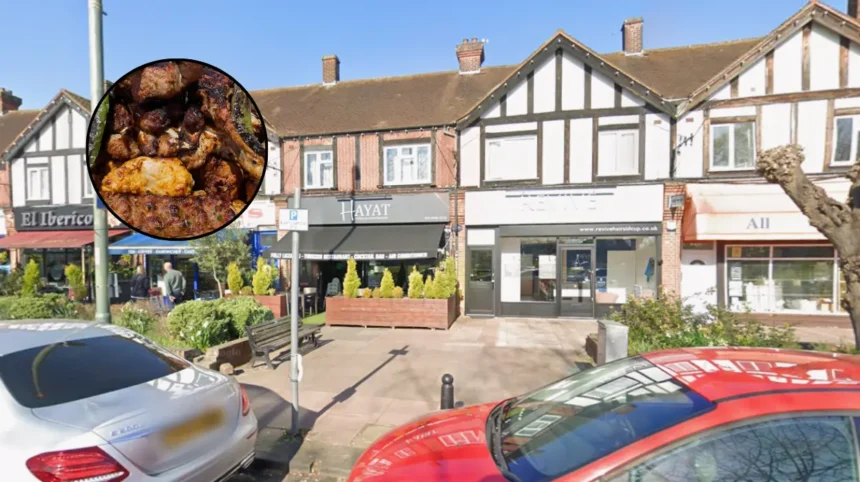
Sidcup (South London News) June 27, 2026 – A prominent Turkish restaurant in South East London is fighting to maintain its operational permissions after central enforcement teams exposed illegal working practices, resulting in a six-figure government penalty that has gone completely uncollected. Hayat Restaurant, situated at 25 The Oval in Sidcup, Kent, has become the subject of an urgent premises licence review by the London Borough of Bexley’s licensing subcommittee.
- Key Points
- Why Is Hayat Restaurant Facing A Bexley Council Licence Review?
- What Occurred During The South London ICE Team Raid On April 10, 2025?
- Who Owns Sidcup Hayat Limited and how has the Business Responded?
- How Are Home Office Civil Penalties Calculated For Illegal Working?
- Background of the Illegal Working Enforcement Strategy in South East London
- Predictions: How This Development Can Affect Local Business Communities and Consumers
The administrative intervention follows directly from an enforcement operation conducted by central government authorities, who uncovered multiple breaches of immigration employment laws. This development has triggered local regulatory mechanisms designed to penalise commercial enterprises found to be in non-compliance with statutory national legislation.
The regulatory crisis began when the South London Immigration, Compliance and Enforcement (ICE) team executed an intelligence-led visit to the commercial premises. Government documentation reveals that five individuals were found working on-site during the targeted enforcement action.
Of those five active workers, immigration officials positively identified two individuals as distinct immigration offenders, who lacked the statutory legal framework required to engage in gainful employment within the United Kingdom.
Subsequent investigations linked to the same operating parameters resulted in a total find of three illegal workers associated with the business entity, prompting the Home Office to issue a Civil Penalty Notice totalling £135,000. To date, no part of this financial penalty has been recovered by the state.
Why Is Hayat Restaurant Facing A Bexley Council Licence Review?
The administrative procedures currently threatening the daily operations of the Sidcup dining venue stem directly from national policies governing illegal employment. Under the terms of the Licensing Act 2003, local authorities are legally mandated to review commercial premises licences if a responsible authority—such as the Home Office Immigration Enforcement directorate—presents evidence that a business is failing to uphold core licensing objectives, specifically the prevention of crime and disorder.
As reported by administrative reporters tracking Bexley Council’s public notices, the Home Office formally requested the intervention after determining that the financial penalty failed to elicit a compliance response from the business owners.
Local authorities possess the statutory power to modify the conditions of a premises licence, remove the designated premises supervisor (DPS), suspend the licence for up to three months, or revoke the licence entirely.
A complete revocation would legally prohibit the venue from selling alcohol, providing late-night refreshment, or hosting regulated entertainment, effectively ending its viability as a full-service restaurant.
What Occurred During The South London ICE Team Raid On April 10, 2025?
The timeline of the enforcement action demonstrates how intelligence gathering translates into active field operations within the greater London area.
On April 10, 2025, officers attached to the South London ICE unit arrived at 25 The Oval based on specific, actionable reports indicating that the management was utilising undocumented labor.
According to official enforcement logs compiled by the attending immigration officers, five individuals were actively performing duties within the kitchen and front-of-house areas when the enforcement team secured the building.
Officers systematically cross-referenced the biometric data and identification documents of all staff members present against central Home Office databases.
This real-time verification process confirmed that two of the five individuals working at that moment had no lawful immigration status in the United Kingdom and were explicitly restricted from entering the labor market. A third worker was subsequently tied to the broader investigation of non-compliant employment practices at the venue, bringing the total number of official offenders to three.
Who Owns Sidcup Hayat Limited and how has the Business Responded?
Corporate records maintained at Companies House reveal the legal architecture behind the embattled restaurant. The venue operates under the corporate name Sidcup Hayat Limited, which is registered directly to the address at 25 The Oval, Sidcup.
As documented by corporate compliance analysts, the business has seen various structural shifts in its management over recent fiscal periods.
Local government documentation indicates that the business has historically positioned itself as a family-friendly authentic Turkish culinary establishment, serving the local population of the London Borough of Bexley.
When presented with the formal allegations and the subsequent civil penalty documentation by central authorities, the management of Sidcup Hayat Limited did not successfully clear the debt, nor did they launch a successful legal appeal capable of overturning the Home Office’s findings.
The lack of financial resolution led directly to the scaling up of the enforcement process from a monetary fine to an attack on the business’s underlying operational permissions.
How Are Home Office Civil Penalties Calculated For Illegal Working?
The magnitude of the £135,000 fine levied against the Sidcup business reflects a strict tier-based penalty framework implemented by the British government to deter clandestine employment networks.
As outlined in the official Home Office Code of Practice on Preventing Illegal Working, compliance officers assess fines based on whether the employer has a history of similar violations and whether they can demonstrate that they conducted robust “Right to Work” document checks prior to employment.
Because the total fine reached £135,000 for three workers, the calculation aligns with the heightened statutory maximums reintroduced by central government mandates to combat underground economic sectors. Employers are legally required to retain clear copies of statutory documents, such as British passports, share codes from the online checking service, or valid biometric residence permits, to establish a statutory excuse against liability.
Background of the Illegal Working Enforcement Strategy in South East London
The regulatory actions taken against Hayat Restaurant form part of a wider, multi-year operational crackdown by the Home Office Immigration Enforcement directorate targeting hospitality sectors across the United Kingdom. Over the past decade, central governments have steadily increased the administrative pressure on local businesses to act as the primary gatekeepers of the domestic labor market.
The introduction of harsher financial penalties in recent years was specifically designed to make the employment of undocumented workers economically untenable for small to medium-sized enterprises.
In South East London boroughs such as Bexley, Bromley, and Greenwich, enforcement teams have regularly partnered with local municipal authorities to coordinate joint operations. These actions link immigration enforcement directly with local council licensing departments.
The mechanism allows the Home Office to bypass lengthy civil debt collection procedures in courts by targeting a business’s most valuable asset: its local authority premises licence.
Historically, this inter-agency methodology has been deployed aggressively in metropolitan areas where the hospitality sector experiences high staff turnover and a reliance on casual labor, creating environments that regulators classify as high-risk for immigration non-compliance.
Predictions: How This Development Can Affect Local Business Communities and Consumers
This enforcement action and the impending council review are highly likely to send a ripple effect through both the local commercial ecosystem in Sidcup and the broader consumer base in the London Borough of Bexley. For neighboring commercial operators within South East London, the severity of the £135,000 fine and the public nature of the licence review serve as a stark warning.
Business owners in the regional hospitality sector will probably feel compelled to audit their internal recruitment practices immediately, implementing more rigid, formalised “Right to Work” validation processes to insulate themselves from identical existential threats. This could lead to a tightening of the local casual labor market, as businesses become risk-averse regarding unconventional or rapid hiring practices.
For the local consumer public and residents living around The Oval, the immediate impact may manifest as a disruption to the local high street economy. Should Bexley Council decide to fully revoke Hayat Restaurant’s premises licence, the business faces potential closure or an enforced shift in its business model, removing a established dining option from the neighborhood.
Such a vacancy can depress foot traffic for surrounding retail units, altering the economic dynamics of the immediate micro-locality. Furthermore, as local councils increasingly display a zero-tolerance approach toward businesses operating with unresolved federal debts, the case establishes a local precedent that could see more frequent licensing interventions across Bexley, altering how commercial properties manage regulatory compliance moving forward.