Key Points
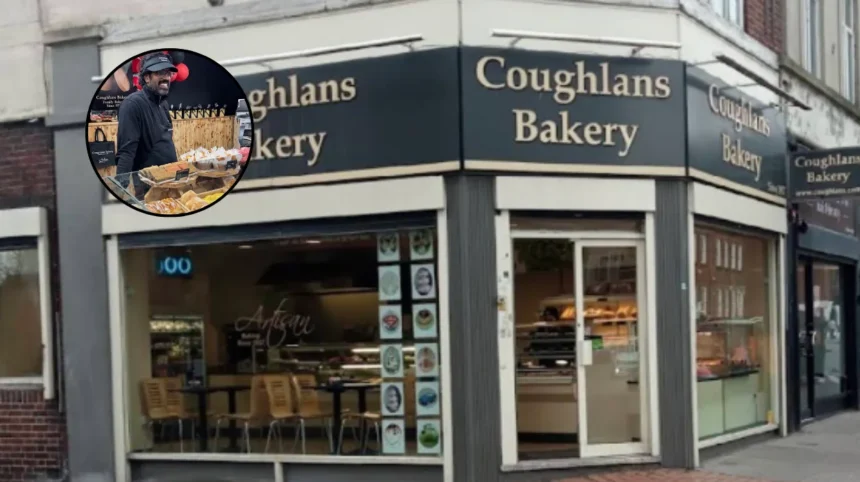
- Coughlans Bakery, a family-run business dating back to 1937, has announced the closure of all its stores after entering voluntary liquidation.
- The decision affects 31 branches in total across south London, Surrey, Kent and West Sussex; among them, 14 are specifically located across Croydon, and Surrey, including multiple sites in Croydon, Coulsdon, Wallington, Purley, Purley-Kingswood, Banstead, Epsom, Dorking, Reigate, Oxted and Horley.
- Managing director and co-owner Sean Coughlan confirmed the closure in an Instagram post and video, stating the decision was made “with the heaviest of hearts” and to ensure suppliers and staff could still be paid.
- The company cited a “perfect storm” of rising costs: higher business rates, increased employer National Insurance contributions, spikes in fuel prices linked to Middle East conflict (reportedly adding £20,000 a week), and poor footfall during recent heatwaves.
- Comedian Romesh Ranganathan, who became a co-owner of Coughlans in 2024, expressed deep disappointment and said he was “gutted” by the collapse of the 89-year-old chain.
- Voluntary liquidation was chosen to protect the ability to meet obligations to suppliers and employees, rather than continuing to trade while insolvent.
- All shops ceased trading with immediate effect from Tuesday 30 June 2026, leaving hundreds of jobs at risk and multiple local communities without their long-standing bakery.
Croydon (South London News), July 1, 2026, areas that for decades relied on Coughlans Bakery for daily bread, cakes and pastries — were among the first to see the shuttering of local branches after the company announced its closure. As reported by Romesh Ranganathan backed London bakery chain Coughlans to close all 31 stores after going into voluntary liquidation in The London Standard, the business, which first opened in 1937, has ceased trading after almost 100 years in operation.
- Key Points
- Which Coughlans Branches Across Croydon, Sutton and Surrey Are Closing?
- What Does Voluntary Liquidation Mean for Coughlans Staff and Suppliers?
- How Has the Local Community Reacted to the Closure of Coughlans Bakeries?
- Background: How Coughlans Bakery Developed and Why It Entered Liquidation
- Prediction: How Will the Closure of Coughlans Bakeries Affect Residents, Workers and Local Businesses in Croydon, Sutton and Surrey?
The news was delivered directly by managing director and co-owner Sean Coughlan in a video posted to the company’s Instagram page.
“It’s with the heaviest of hearts that I’m bringing you the news that sadly we at Coughlans Bakery are closing our doors today for the last time,”
Coughlan said, explaining that the decision to enter voluntary liquidation was taken so the company could still pay its suppliers and staff.
According to Coughlan, the bakery was hit by a “perfect storm” of financial pressures. As reported by the Londonist, he blamed rising fuel prices linked to Trump’s Iran war, new National Insurance charges and generally higher business rates, with the recent heatwave acting as the final nail in the coffin.
In an interview reflected in The Independent, Coughlan stated that increases in business rates and employer National Insurance contributions had “absolutely smashed local business”, while a spike in fuel prices following conflict in the Middle East was costing the company an additional £20,000 weekly. Footfall during the recent heatwaves further damaged sales, according to the same reporting.
Which Coughlans Branches Across Croydon, Sutton and Surrey Are Closing?
The closure affects all 31 Coughlans stores, but the impact is especially concentrated in Croydon, Sutton and Surrey, where the chain has long been a fixture of neighbourhood high streets.
As detailed in The London Standard’s full list of Coughlan bakeries closing after business goes into liquidation, Croydon alone has six branches affected: Addiscombe (299 Lower Addiscombe Rd), two sites in South Croydon (259 Brighton Road and 502 London Road), one in central Croydon (220 High St), and stores in Forestdale and Coulsdon.
Sutton-area coverage includes Wallington (two sites on Stafford Road and Woodcote Road), Purley (913 Brighton Road), Banstead (High Street and Nork Way), as well as Epsom, Dorking, Reigate, Oxted, Horley and other Surrey towns.
While the original query highlights
“14 Coughlans bakeries to close across Croydon, Sutton and Surrey”,
the broader closure list shows 31 shops in total across south London, Surrey, Kent and West Sussex, with the 14 figure likely reflecting a subset of those most visible in the Croydon–Sutton–Surrey corridor.
Regardless of the precise count, the immediate cessation of trading means that every Coughlans outlet in these areas has shut as of 30 June 2026, leaving residents without access to the brand’s familiar loaves, sandwiches and baked goods.
What Does Voluntary Liquidation Mean for Coughlans Staff and Suppliers?
The decision to enter voluntary liquidation was framed by Coughlan as a measure to protect creditors and employees. In his Instagram post, he explained:
“We have gone into voluntary liquidation. We did this so we can make sure that we can pay our suppliers, pay our staff,”
according to coverage by RTE and The London Standard.
This approach is typically used when a company is insolvent or approaching insolvency, allowing directors to work with an appointed liquidator to sell assets and distribute funds in a controlled manner rather than continuing to trade while unable to meet obligations.
The exact number of employees affected has not been itemised in the available reports, but with 31 stores across four regions, the closure is likely to impact hundreds of workers, including bakers, shop staff, delivery drivers and management.
As reported by The Independent, Coughlan described business rates and employer National Insurance increases as having “absolutely smashed local business”, indicating that the root cause was structural cost pressure rather than a single misstep.
Romesh Ranganathan, who became a co-owner of Coughlans in 2024, said he was “gutted” by the closure and expressed disappointment that an 89-year-old chain had been forced to shut down.
In an article published by The Independent, he highlighted the broader impact on local communities that had relied on the bakery for generations.
How Has the Local Community Reacted to the Closure of Coughlans Bakeries?
Reaction from customers and local businesses has been mixed disappointment and concern. In Croydon, Sutton and surrounding Surrey towns, Coughlans was not just a retailer but a long-standing local brand, with many outlets operating for decades.
The sudden closure on 30 June has left high streets without a familiar presence, with some residents noting that alternative bakeries may not offer the same range of ready-made sandwiches, cakes and daily loaves that Coughlans provided.
Social media responses and local news coverage have underscored the emotional weight of the announcement.
As reported by the Londonist, Coughlan’s use of “the heaviest of hearts” and the explicit mention of paying staff and suppliers resonated with many who viewed the chain as part of their daily routine.
The involvement of a well-known public figure like Romesh Ranganathan has also drawn additional attention, with some commentary focusing on the broader challenges facing small and medium-sized retail businesses in the UK.
Background: How Coughlans Bakery Developed and Why It Entered Liquidation
Coughlans Bakery was founded in 1937 and operated for 89 years as a family-run business, building a network of shops across south London, Surrey, Kent and West Sussex.
Over the decades, it expanded from a single bakery into a chain with multiple high-street outlets, becoming a familiar name for commuters and local residents in areas such as Croydon, Sutton, Coulsdon, Purley, Epsom and Reigate.
In 2024, comedian and broadcaster Romesh Ranganathan joined as a co-owner, bringing renewed public attention to the brand and hopes of modernising and expanding the business.
However, the group faced a period of escalating costs, including increases in business rates, higher employer National Insurance contributions and volatile fuel prices linked to geopolitical tensions in the Middle East. According to Sean Coughlan, these factors added an estimated £20,000 a week to operating costs, while recent heatwaves reduced customer footfall and sales.
By June 2026, the financial pressures had become unsustainable. In a video posted to Instagram on 30 June, Coughlan announced that the company had entered voluntary liquidation and would close all stores with immediate effect, stating that the move was necessary to ensure that suppliers and staff could still be paid. The decision marked the end of an 89-year operation for a business that had been part of daily life for many in Croydon, Sutton and Surrey.
Prediction: How Will the Closure of Coughlans Bakeries Affect Residents, Workers and Local Businesses in Croydon, Sutton and Surrey?
The closure of Coughlans Bakery is likely to have immediate and medium-term effects on residents, workers and local businesses in Croydon, Sutton and Surrey.
For daily customers, the loss means fewer options for ready-made sandwiches, fresh bread, cakes and pastries on熟悉的 high streets, potentially forcing them to travel further or switch to supermarkets and other bakeries that may not match Coughlans’ range or price point.
For employees, the closure represents a significant disruption. With 31 stores shut across four regions, hundreds of staff in bakers, shop-floor roles, delivery and management are at risk of losing their jobs. While voluntary liquidation aims to protect payments to suppliers and staff to some extent, the ultimate outcome will depend on the value of assets and the speed of the liquidation process.
Local employment agencies and support services in Croydon, Sutton and Surrey may see increased demand from former Coughlans workers seeking new roles.
Local businesses that relied on Coughlans as a nearby supplier or partner, such as cafes, convenience stores and community organisations, may also face adjustments in their supply chains.
The closure could create opportunities for other bakeries to expand into the vacated locations, but the transition is unlikely to be immediate.
In the longer term, the disappearance of an 89-year local brand may be seen as a symbol of the broader struggles facing small and medium-sized retail businesses in the face of rising statutory costs and fuel prices, as highlighted by Coughlan and Ranganathan in their public statements.