Key Points:
- Wandsworth Council turned down two separate applications to convert commercial properties into residential flats within a 24-hour period.
- The refused sites include a first-floor unit at 3 Putney Hill (refused 30 July) and a partly-vacant commercial unit at Hardwicks Square (refused 31 July).
- Both developers attempted to utilize the government’s fast-track “prior approval” process, which bypasses standard local planning scrutiny.
- The applications were rejected because both addresses lie within designated Article 4 direction zones, where automatic commercial-to-residential conversion rights have been removed.
- Article 4 directions cover roughly 60 town centre, business, and industrial zones in Wandsworth—including Putney, Wandsworth Town, and Nine Elms—and have been active since July 2022.
- Rejection under Article 4 does not permanently ban conversions; developers remain free to submit full planning applications for council evaluation.
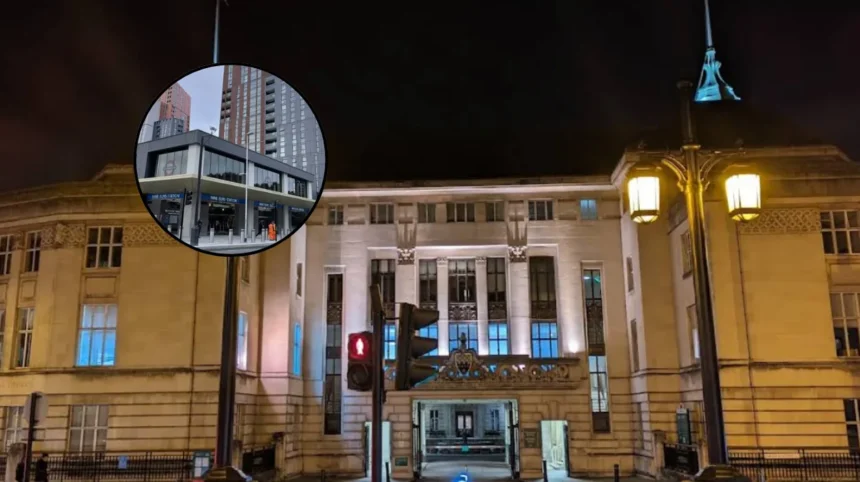
Wandsworth (South London News) August 5, 2026 – Wandsworth Council has halted two separate attempts to convert commercial premises into residential apartments, rejecting both proposals within 24 hours of each other on the grounds that they breach local planning protections. The council issued refusal notices for a first-floor commercial unit at 3 Putney Hill on 30 July, followed by a second rejection on 31 July for a partly-vacant unit at Hardwicks Square, situated just off Wandsworth High Street. Both proposals sought permission through the government’s permitted development framework, but were blocked due to active Article 4 directions designed to preserve local economic and community infrastructure.
- Key Points:
- Why Did Wandsworth Council Refuse Two Commercial-to-Residential Applications in Putney and Wandsworth Town?
- How Does an Article 4 Direction Work in Wandsworth Borough?
- What Impact Do Shop Conversions Have on Community Spaces and High Streets?
- How Have Recent Planning Decisions Affected Local Properties in Wandsworth?
- Closure of Brickwood Cafe
- Rejection of the Former Lloyds Bank Site
- Ongoing Proposals at Hardwicks Square
- How Can Residents Check If Their Local High Street Is Protected Under Planning Rules?
- Background of the particular development
- Prediction
Why Did Wandsworth Council Refuse Two Commercial-to-Residential Applications in Putney and Wandsworth Town?
Both developers sought permission using the prior approval mechanism. Under national permitted development legislation introduced by the UK government in 2021, commercial, business, and service properties can typically be converted into residential homes without needing full planning permission or conventional council evaluation.
However, Wandsworth Council turned down both submissions because both addresses sit directly inside protected zones where automatic conversion rights have been systematically revoked. By removing the prior approval route in these areas, the local authority retains full discretionary power to review proposed changes of use against local development plans and town centre preservation policies.
How Does an Article 4 Direction Work in Wandsworth Borough?
An Article 4 direction is a legal instrument used by local planning authorities to remove specific permitted development rights across designated geographical areas. When the central government introduced broader permitted development rules in 2021 to allow swift commercial-to-residential transitions, local councils were permitted to apply for targeted exemptions to protect economic vitality.
Wandsworth Council successfully introduced an Article 4 direction covering approximately 60 distinct areas across the borough, which came into force in July 2022. The designated zones encompass:
- Town centre shopping parades in Putney and Wandsworth Town.
- Commercial corridors within Nine Elms.
- Selected business parks, industrial estates, and key employment sites.
Within these 60 boundary areas, converting a commercial, office, or retail space into a dwelling requires a formal, full planning application. This ensures the proposal is publicly advertised and assessed against standard planning guidelines, including noise, light, waste storage, loss of employment space, and impact on street vitality.
What Impact Do Shop Conversions Have on Community Spaces and High Streets?
The loss of ground-floor commercial premises to residential units has raised broader discussions among urban planners and researchers regarding the social health of town centres.
Academic researchers who study urban retail environments, including experts from Sheffield Hallam University, highlight that a healthy high street functions as a shared communal room rather than merely a commercial trading venue. Their research indicates that the primary value of high street spaces lies in social cohesion, shared history, and spontaneous daily interaction.
Similarly, former retail executives and urban policy reviewers, such as Bill Grimsey—who authored multiple independent reviews into the future of UK high streets—have argued that physical commercial outlets provide essential non-residential destinations. When commercial units are continuously lost to residential flats, high streets risk losing their collective utility and transforming into inactive residential corridors.
In the case of Hardwicks Square, the location has experienced steady commercial space reduction over the past decade. Planning records reveal that commercial space at the site was converted into residential flats on at least four separate occasions since 2013 under earlier permitted development frameworks. The decision on 31 July marks the first time in over ten years that an attempt to convert commercial space at Hardwicks Square has been formally stopped.
How Have Recent Planning Decisions Affected Local Properties in Wandsworth?
The two refusals follow several notable shifts in Wandsworth’s commercial landscape:
Closure of Brickwood Cafe
Just days prior to the Putney Hill and Hardwicks Square rejections, Brickwood Cafe on Lower Richmond Road ceased trading permanently. The site is currently slated for residential development, illustrating the ongoing market pressure on hospitality and retail spaces across the borough.
Rejection of the Former Lloyds Bank Site
In January, the council rejected a separate proposal to convert the former Lloyds Bank branch into flats. Unlike the recent Putney Hill and Hardwicks Square cases, that refusal was determined on standard planning grounds—specifically regarding the loss of amenity and adverse impacts on neighboring properties—rather than an Article 4 direction.
Ongoing Proposals at Hardwicks Square
Commercial development pressure at Hardwicks Square remains active through other avenues. A separate planning application for 14 Hardwicks Square seeks permission to incorporate an existing ground-floor commercial premises into an adjoining private home to create a private swimming pool room and gym. Because this proposal was submitted as a full planning application rather than via prior approval, it will be evaluated against local planning policies, with a council decision expected by 3 September.
Explore More Wandsworth Council News
Wandsworth Council Sets Out Plans to Tackle Financial Crisis Wandsworth 2026
Wandsworth Council cuts free sport, youth bus and homes – 2026
How Can Residents Check If Their Local High Street Is Protected Under Planning Rules?
Members of the public and property owners can verify whether a specific commercial address falls within one of the borough’s protected zones:
- Interactive Policy Maps: Wandsworth Council publishes detailed statutory maps on its official Article 4 Directions portal, highlighting all 60 protected zones.
- Lawful Development Certificates: For formal and legal confirmation regarding a specific address, property owners can apply to the council for a Lawful Development Certificate (Proposed Use).
- Pre-Application Advice: Applicants seeking clarification before making formal plans can request pre-application guidance directly from a council planning officer.
Background of the particular development
The national policy context surrounding commercial-to-residential conversions changed substantially in 2021 when the UK government expanded Class MA permitted development rights. The legislation was designed to facilitate urban housing supply by allowing vacant or underutilized commercial, office, and service properties (Class E) to be converted into residential dwellings (Class C3) without submitting a full planning application.
Under standard Class MA procedures, applicants only need to obtain “prior approval” regarding a narrow set of criteria, such as transport impact, flood risk, contamination, and basic natural light provisions. Local planning authorities are generally unable to consider broader local issues—such as the balance of retail units, local employment loss, or neighborhood character—when evaluating prior approval applications.
To counter widespread loss of commercial space in economically vital areas, local councils were granted authority to implement Article 4 directions under the Town and Country Planning Act 1990. Wandsworth Council initiated its borough-wide review shortly after the national rules were introduced, gathering economic evidence to justify removing Class MA rights across 60 key sites. The resulting Article 4 direction took full legal effect in July 2022, ensuring that any subsequent conversion attempt within these designated areas must undergo standard planning scrutiny.
Prediction
The recent refusal of prior approval for properties at 3 Putney Hill and Hardwicks Square demonstrates that Wandsworth Council’s Article 4 policy is actively reshaping property development strategies within the borough.
For developers and property owners, the enforcement of Article 4 directions means that automatic fast-track conversions are no longer viable within Wandsworth’s main commercial corridors. Applicants attempting to change commercial space into residential units in these 60 zones will be required to submit full planning applications. This process involves higher application costs, longer deliberation times, public consultation periods, and strict evaluation against council policies prioritizing local economic activity. Consequently, developers may face lower success rates for speculative shop-to-flat conversions in protected areas.
For local business owners and residents, the council’s ongoing enforcement of Article 4 rules provides temporary stability for ground-floor commercial spaces. By preventing immediate, automatic conversions, the framework helps preserve physical units for shops, cafes, services, and local employment. However, because Article 4 directions only remove the automatic route rather than banning residential conversion entirely, property owners retain the right to apply through the standard planning process. As a result, commercial sites will continue to face conversion proposals evaluated on a case-by-case basis.