Key Points:
- Historic Venues Listed: Streatham Hill Theatre in Lambeth and Borough Hall in Greenwich have been included in the latest national Theatres at Risk Register.
- National Risk Scale: The 20th annual register by Theatres Trust identifies 39 performance venues across the UK threatened by closure, redevelopment, or severe structural decay.
- Emerging 1970s Vulnerability: Beyond historic heritage structures, venues constructed in the 1970s are increasingly encountering challenges that jeopardize their long-term operational viability.
- Call for Pre-Emptive Action: Theatres Trust CEO Joshua McTaggart warned that listed buildings represent “just the tip of the iceberg” and urged operators to seek early support before minor issues escalate into irreversible crises.
- Site-Specific Challenges: Streatham Hill Theatre faces structural degradation and competing conversion proposals, while Greenwich’s Borough Hall faces potential commercial redevelopment following its sale to private developers.
Southwark (South London News) August 8, 2026 – Streatham Hill Theatre in the London Borough of Lambeth and Borough Hall in Greenwich have been officially named amongst 39 performance spaces across the United Kingdom currently threatened by imminent closure, commercial redevelopment, or severe structural decay. As reported by journalist Molly Hunt of Southwark News, the announcement comes as national advisory body Theatres Trust publishes the 20th edition of its annual Theatres at Risk Register, designed to highlight culturally significant venues requiring critical intervention to secure their operational futures.
Why Have Streatham Hill Theatre And Borough Hall Been Placed On The Risk List?
The decision to place both venues on the register highlights growing concerns over the preservation of South London’s architectural and cultural heritage.
As reported by Molly Hunt of Southwark News, Joshua McTaggart, Chief Executive Officer of Theatres Trust, stated that the 39 venues featured on the register represent “just the tip of the iceberg” regarding the structural and financial pressures currently facing the sector.
As reported by Molly Hunt of Southwark News, McTaggart stated that
“theatres built in the 1970s [were] now facing a higher likelihood of challenges that could lead to long term or even permanent closure”.
Addressing the broader industry outlook, McTaggart added that
“this is a future we want to confidently avoid, and so Theatres Trust urges theatre owners, operators and local authorities to reach out to us before concerns become crises”.
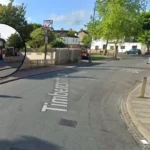
Streatham Hill Theatre, located in Lambeth, is a Grade II-listed structure originally opened in November 1929. Designed by renowned theatre architect William George Robert Sprague, it remains one of the largest suburban theatres built outside West London, with a historical capacity exceeding 2,500 seats.
The building has resided on the Theatres at Risk Register continuously since 2018 and was subsequently added to Historic England’s Heritage at Risk Register in 2021. The venue’s commercial uncertainty intensified in 2017 when its former bingo operator ceased operations. The site was subsequently sold to Hold Land South East and later acquired by Ruach City Church for a reported £4 million.
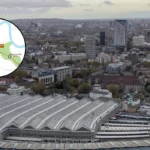
Meanwhile, Borough Hall in Greenwich—constructed in 1939 as part of the former Greenwich Town Hall complex—faces conversion threats.
Having historically served as an assembly hall and civic performance space, the site was sold in April 2024 to property developer Lita Homes for £2.475 million, with proposals emerging to redevelop the municipal facility into a hotel.
Explore More Local South London News
Schroders Capital Acquires Southwark Affordable Build to Rent Scheme 2026
Southwark Council’s New Seven Priorities and Manifesto Delivery Plans Southwark 2026
What Is The Background Of The Particular Development After The News?
The entry of Streatham Hill Theatre and Borough Hall onto the risk register follows years of complex ownership transitions, community advocacy, and planning battles across both boroughs.
At Streatham Hill Theatre, current owners Ruach City Church have reportedly invested over £700,000 in remedial building works, including efforts to tackle damp, water ingress, and structural repairs intended to return parts of the auditorium to usable condition. However, substantial conservation and refurbishment works remain outstanding.
Planning applications for the site have been a focal point of discussion between stakeholders. A formal application to alter the building’s official usage into a place of worship met with formal objections from advisory bodies, including Theatres Trust, which advocated for a mixed-use arrangement to preserve live performance capability. Discussions between the owners, local authority planners, and community campaign group The Friends of Streatham Hill Theatre have centered on finding a viable model that retains public cultural access alongside religious gatherings.
In Greenwich, the sale of Borough Hall to private developers marked a significant shift in the building’s 85-year history. Constructed as a key component of the Art Deco Meridian House complex, the assembly hall provided generations of South East London residents with civic entertainment and community theater.
The transition from public ownership to commercial development has raised concerns among local heritage campaigners regarding the potential loss of community access.
Over its 20-year history, the Theatres at Risk Register has successfully supported the restoration and reactivation of more than 80 venues nationwide. Inclusion on the list does not signify that a building is beyond repair, but rather serves as a national benchmark to channel conservation expertise, grant funding, and community organizing toward imperiled sites.
What Is The Prediction For How This Development Can Affect Local Audiences And Communities?
The continued risk designation for these South London landmarks will directly impact local residents, theatergoers, performing arts groups, and the surrounding high street economies.
For local residents and arts communities in Lambeth and Greenwich, the potential loss or restricted usage of these buildings reduces available spaces for grassroots theater, educational workshops, and civic gatherings. If Streatham Hill Theatre and Borough Hall are successfully restored or adapted into multi-use cultural hubs, local audiences stand to gain accessible venues capable of hosting large-scale touring productions and local performances without requiring travel into Central London.
Conversely, if redevelopment proposals prioritize fully private or single-use conversions, the surrounding communities face the permanent loss of major cultural assets.
From an economic perspective, high street businesses surrounding both sites—including hospitality and retail traders—rely on functional entertainment venues to drive nighttime economy footfall. The long-term resolution of these sites will therefore determine whether these historic architectural landmarks serve as economic anchors for South London or remain under-utilized real estate.