Key Points
- Bakerloo Line Expansion: Transport for London (TfL) is progressing plans for an £8 billion extension of the Bakerloo line from Elephant and Castle to Lewisham.
- Timeline for Delivery: Construction on the southern extension is anticipated to commence in the 2030s, with full passenger operations targeted for 2040.
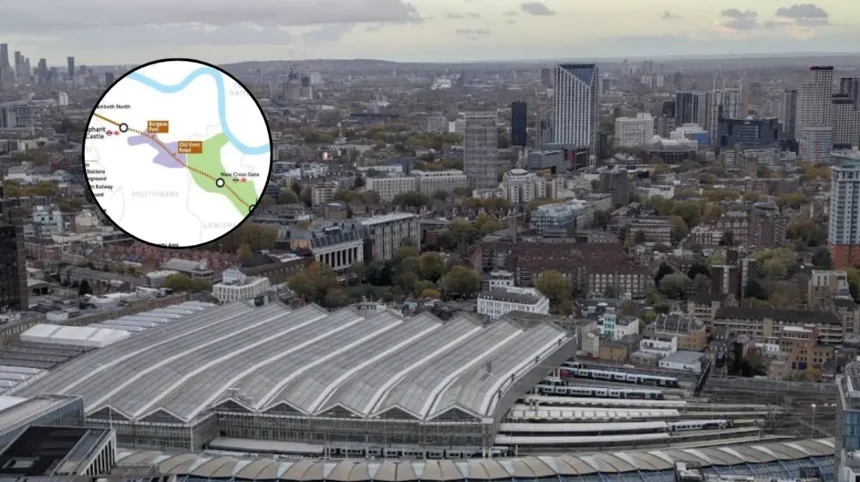
- Four Proposed Stations: The scheme encompasses potential new Underground stations at Burgess Park and Old Kent Road, alongside major underground interchange stations at New Cross Gate and Lewisham.
- Further South Speculation: Speculation remains active regarding a potential second phase extending services beyond Lewisham towards local hubs such as Ladywell and taking over national rail lines to Hayes and Beckenham Junction.
- Two Axed Stations: Plans to extend the Metropolitan line into Hertfordshire—known as the Croxley Rail Link—have been permanently shelved.
- Abandoned Infrastructure: The cancelled Metropolitan line scheme leaves two long-promised stations, Cassiobridge and Watford Vicarage Road, completely abandoned.
- Disused Track repurposed: Hertfordshire County Council is currently exploring alternative public transport and recreational uses for the disused rail corridor between Watford and Croxley.
South London (South London News) August 8, 2026 – Transport for London (TfL) is actively advancing multi-billion-pound infrastructure proposals that could introduce four new Underground stations to South London over the next 15 years, while officially shelving long-standing plans for two stations in Hertfordshire. Under updated strategic documentation, construction on the proposed Bakerloo line extension from Elephant and Castle to Lewisham is projected to begin in the 2030s, with operational services scheduled to start by 2040. However, while South London residents prepare for potential Tube connectivity, plans for the Metropolitan line expansion through Watford have been formally terminated, eliminating the planned Cassiobridge and Watford Vicarage Road stops.
- Key Points
- What are the four proposed Underground stations for South London?
- Which two Underground stations have been permanently cancelled?
- What is the background behind the Bakerloo line extension and Croxley Rail Link developments?
- Why was the Metropolitan line Croxley Rail Link project cancelled?
- How will these transport infrastructure decisions affect commuters, residents, and businesses?
What are the four proposed Underground stations for South London?
As reported by Will Twigger of MyLondon, transport documentation published by officials outlines plans to integrate four key station locations into the capital’s Underground network via the Bakerloo line extension.
The proposed route stretches southeast from the current terminus at Elephant and Castle toward Lewisham. Two brand-new Underground stops are earmarked along the Old Kent Road commercial corridor:
- Burgess Park: Positioned to serve an area currently reliant on Northern line stops at Kennington and Oval or National Rail services at South Bermondsey.
- Old Kent Road: Located centrally along the 1.7-mile historic thoroughfare between Burgess Park and New Cross Gate to support extensive urban regeneration.
In addition to these newly constructed stops, the extension project includes two major integration stations:
- New Cross Gate: Upgrading the existing station to provide direct Underground connections alongside existing London Overground and National Rail services.
- Lewisham: Transforming the existing transport hub—which currently serves the Docklands Light Railway (DLR) and National Rail network—into a major London Underground interchange.
As highlighted by Will Twigger of MyLondon, transport planners have also noted mounting speculation over potential further expansion beyond Lewisham, with local residents in neighbouring areas such as Ladywell anticipating future transport links.
Which two Underground stations have been permanently cancelled?
As reported by Will Twigger of MyLondon, plans to extend the Metropolitan line beyond the capital’s north-western boundary into Hertfordshire have been firmly shelved, with proposals for two new Underground stations now completely abandoned.
The cancelled scheme, formally known as the Croxley Rail Link project, originally envisaged rerouting Metropolitan line services away from the existing Watford terminus. The plan aimed to construct two new stations:
- Cassiobridge: Designed as the first new station on the rerouted track heading towards Watford High Street.
- Watford Vicarage Road: Earmarked as a second new stop serving local residential areas and Watford General Hospital.
As documented by Will Twigger of MyLondon, despite an original completion date targeted for 2020, work on the Croxley Rail Link was unceremoniously suspended in 2017 due to significant funding disputes and escalating capital costs.
The project has now been formally axed, with Hertfordshire County Council assessing alternative uses for the disused rail corridor between Watford and Croxley.
What is the background behind the Bakerloo line extension and Croxley Rail Link developments?
To fully understand these transport developments, it is essential to examine the historical context and financial mechanisms governing both major rail infrastructure projects.
Proposals to extend the Bakerloo line south of the River Thames date back over a century, with initial route studies conducted as early as 1913 and formal proposals drafted in the late 1940s.
The Bakerloo line itself opened in 1906 and currently operates using rolling stock that entered service in 1972, making them the oldest passenger trains in regular daily operation across the United Kingdom rail network.
Despite the age of its fleet, the line carries over 125 million passengers annually. Transport for London safeguarded the official route alignment from Elephant and Castle to Lewisham via Old Kent Road in 2021.
According to TfL estimates, extending the route will accommodate an estimated 150,000 additional daily subway trips, unlocking capacity for more than 25,000 new homes and 5,000 jobs along the Old Kent Road corridor alone.
Why was the Metropolitan line Croxley Rail Link project cancelled?
The Croxley Rail Link project was originally designed to link the Metropolitan line directly to Watford High Street and Watford Junction via a disused branch line previously operated by British Rail.
The scheme was approved in the early 2010s under a shared funding agreement between TfL, the Department for Transport (DfT), and Hertfordshire County Council.
However, projected costs rose significantly above the initial £118 million budget allocation, exceeding £284 million by 2017. A dispute regarding which authority would absorb the budget overrun led TfL to halt work on the project in November 2017.
Following years of inactivity, transport authorities officially abandoned the rail extension in favour of localized bus rapid transit and active travel solutions along the disused track.
How will these transport infrastructure decisions affect commuters, residents, and businesses?
The decisions to progress the Bakerloo line extension while abandoning the Metropolitan line extension create distinct operational and economic outcomes for different regional populations across Greater London and Hertfordshire.
For residents in Southwark, Lewisham, and surrounding South East London boroughs, the construction of the Bakerloo line extension will address a long-standing public transport deficit.
Areas surrounding the Old Kent Road and Burgess Park currently rely on bus routes or distant railway stops. Direct Tube access will significantly reduce travel times into Central London and the West End.
Property owners and real estate developers along the Old Kent Road corridor are projected to see increased investment, spurred by local authority commitments to build new housing developments near the proposed station sites.
Conversely, local residents face an extended period of urban disruption during the 2030s while heavy tunnelling and station construction take place.
For residents in Watford and the surrounding Hertfordshire commuters, the definitive cancellation of the Cassiobridge and Watford Vicarage Road stations eliminates direct Tube connectivity to Watford Junction and the town’s hospital district.
Passengers travelling from Hertfordshire into Central London must continue using existing London Overground, West Midlands Trains, or Metropolitan line services from Watford station.
Local authorities in Hertfordshire are tasked with repurposing the disused railway alignment to prevent the land from remaining derelict. Current proposals under consideration include walking and cycling greenways, as well as dedicated bus lanes to provide alternative connections between Watford and Croxley.