Key Points
- Bexley Council has officially refused a planning application to expand a house in multiple occupation (HMO) located at 65 Arbuthnot Lane, Bexleyheath.
- The proposal sought to increase the maximum capacity of the property from five to eight residents.
- Conversion plans included converting the attached garage into a habitable living space, constructing a rear conservatory, and installing cycle and refuse storage facilities.
- Local planning officers branded the proposals “unacceptable”, citing visual clutter, erosion of the area’s residential character, and insufficient parking evaluations.
- The local planning authority determined that the application failed to comply with statutory requirements under both the Bexley Local Plan and the London Plan.
- As of August 7, 2026, no formal appeal against the decision has been lodged by the applicant.
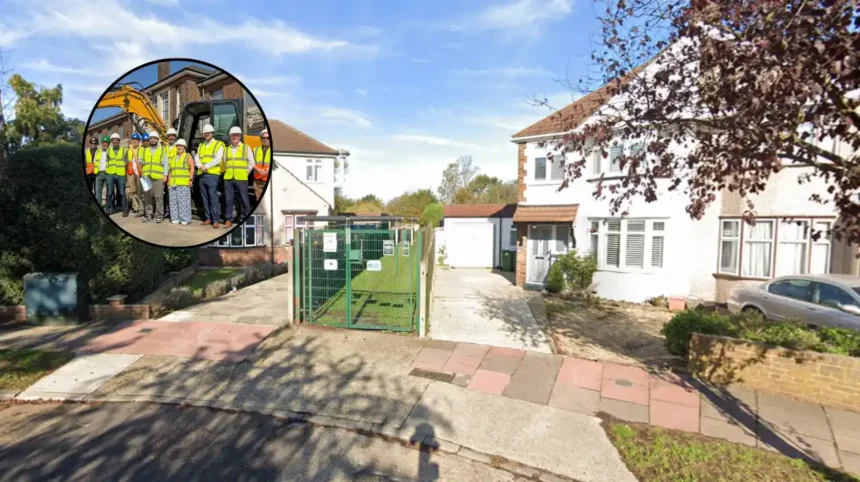
Bexleyheath (South London News) August 8, 2026 — Bexley Council has formally rejected a planning application that sought to expand the capacity of an existing House in Multiple Occupation (HMO) situated at 65 Arbuthnot Lane, labeling the scheme as “unacceptable” due to overdevelopment and character concerns. As reported by reporter Ezekiel Bertrand, the site currently operates as a Use Class C4 HMO accommodating up to five occupants. The application requested permission to modify the internal layout and structure to allow up to eight individuals to reside on the premises.
Why Was The Planning Application Rejected By Local Authorities?
The proposal aimed to expand accommodation within the two-storey detached property by converting the attached garage into a habitable room and adding a rear conservatory. In addition to internal modifications, the applicant proposed to install dedicated cycle parking and waste storage units.
As reported by reporter Ezekiel Bertrand, the applicant argued that the building had been carefully configured to provide high-quality accommodation, featuring shared kitchen and living rooms, access to a 100-square-metre rear garden, and individual bedrooms exceeding statutory minimum space requirements. The applicant also noted that the property’s close proximity to Bexleyheath town centre, nearby bus routes, and rail links would reduce reliance on private motor vehicles.
To facilitate sustainable transport, cycle storage for up to eight bicycles was planned for the rear garden, alongside a screened area at the front designed to manage refuse bins and maintain a tidy frontage.
In submissions made prior to the decision, the applicant asserted that increasing the occupant count to eight would reflect the density of a large single household, while built-in sound insulation would prevent noise disturbance between adjacent properties.
However, local planning officers ultimately rejected the proposal at the end of July. As reported by Ezekiel Bertrand, representative statements issued by Bexley Council confirmed that the development was rejected due to serious concerns over visual amenity, parking infrastructure, and waste management layout.
What Specific Concerns Were Raised Regarding Character And Parking?
A central factor in the refusal was the external visual impact of the infrastructure required to support eight separate tenants. As reported by Ezekiel Bertrand, Bexley Council issued a formal statement outlining the council’s position:
“The proposal would require the introduction of significant quantum of refuse bins and a cycle store to the front of the site which would result in visual clutter and erode the residential character of the area, harmful to, and out of character with, the surrounding neighbourhood.”
Furthermore, council officers highlighted significant deficiencies regarding transport impact and parking capacity. Although the applicant argued that residents would rely predominantly on public transport, no additional off-street parking spaces were proposed. Addressing the lack of technical traffic assessments, Bexley Council stated:
“In the absence of an overnight parking survey and clear plans demonstrating acceptable parking provision, the development would result in unacceptable parking stress or prejudice highway safety.”
Council officials further concluded that the application failed to furnish sufficient technical details regarding how waste and recycling streams would be stored and routinely collected, nor did it present adequate specifications for secure, convenient, and accessible cycle parking.
Consequently, the planning authority determined that the application breached policies established within both the local Bexley Local Plan and the wider London Plan.
As reported by Ezekiel Bertrand, no formal appeal against the council’s refusal had been registered by the applicant as of August 7, 2026.
Explore More Bexley Council News
Bexley Local Elections 2026: Conservatives Face Reform Challenge
Bexley 2026 Elections: Parties’ Pledges vs Reform Threat
Background Of The Particular Development
The property at 65 Arbuthnot Lane operates legally as an established HMO for up to five residents, falling under Use Class C4 planning rules.
The surrounding streetscape along Arbuthnot Lane predominantly comprises single-family detached and semi-detached residential dwellings.
In recent years, local councils across Greater London have increasingly scrutinised applications seeking to intensify HMO occupancy.
Local authorities frequently balance the requirement for affordable, flexible rental accommodation against potential localized issues such as street parking congestion, pressure on waste collection services, and changes to traditional suburban neighbourhood characteristics.
The rejection of the expansion at 65 Arbuthnot Lane mirrors similar planning refusals across the London Borough of Bexley, where proposals to increase tenant density without sufficient parking and infrastructure provisions have faced pushback from municipal planning committees.
Prediction: How This Development Can Affect Local Residents And Property Owners
The decision by Bexley Council to refuse the expansion of 65 Arbuthnot Lane carries immediate implications for nearby residents, local property owners, and prospective tenants in the area.
For homeowners and long-term residents living on Arbuthnot Lane and surrounding streets, the refusal prevents an increase in residential density that could have heightened competition for on-street parking spaces.
The council’s decision ensures that potential visual clutter—such as multiple wheelie bins stationed on front driveways—is controlled, helping preserve the architectural uniformity and quiet residential character of the neighbourhood.
For real estate investors and housing providers operating within Bexley, this outcome highlights the strict enforcement of local planning rules regarding waste management and parking impact.
Landlords seeking to convert properties into larger, higher-density HMOs will likely need to conduct thorough overnight parking surveys and produce robust waste management strategies before submitting planning applications. Without comprehensive empirical evidence, future applications for density increases are likely to face similar resistance.