Key Points
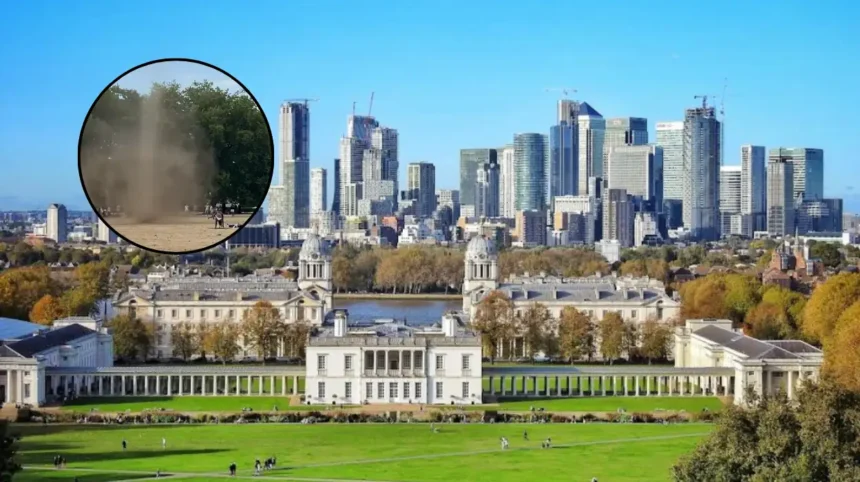
- A dust devil, described as a mini-tornado, unexpectedly swept through Greenwich Park in South East London during a warm weekend.
- The meteorological phenomenon picked up dried leaves, dust, and loose debris, creating a spinning vortex across the Royal Park grounds.
- Park visitors enjoying the sunny weather witnessed the spinning wind tunnel, which evoked comparisons to scenes from The Wizard of Oz.
- The occurrence followed a extended spell of dry, hot weather, creating ideal thermodynamic conditions for localized thermal updrafts.
- No injuries or structural damage were reported following the brief weather event.
Greenwich (South London News) August 10, 2026 – Park visitors in Greenwich were left astonished over the weekend after a mini-tornado, technically identified as a dust devil, tore through Greenwich Park during a period of hot, dry weather.
As captured on video footage circulating across UK media platforms, the localized whirlwind whipped up a noticeable column of dried leaves, soil, and ground debris, swirling rapidly across the grass while sunseekers looked on. The event occurred following a prolonged dry spell that left the ground loose and arid, creating the necessary atmospheric conditions for thermal updrafts to form. Observers described the rotating column as resembling a scene from The Wizard of Oz, though the swirl dissipated naturally after several moments without causing damage or injury.
What Happened During the Greenwich Park Whirlwind Event?
According to footage shared by eyewitnesses and reported across local news outlets, the whirlwind materialized suddenly on the grassy slopes of the Royal Park. The swirling wind tunnel rapidly gathered loose organic matter that had accumulated on the parched ground due to recent high temperatures.
As reported by local correspondents monitoring London weather incidents, the column reached several metres into the air, drawing a crowd of onlookers who watched the dust and leaves spiral upwards. The mini-tornado moved across an open section of the park before losing momentum and dispersing into the surrounding air currents.
What Causes a Dust Devil to Form in a Royal Park?
A dust devil is a well-established meteorological phenomenon distinct from a true tornado. While tornadoes form beneath rotating thunderstorm systems (supercells) and extend downwards from the cloud base, dust devils form from the ground upwards under clear, sunny skies.
According to meteorological explanations provided by weather experts, dust devils occur when intense surface heating warms the air directly above the ground. This warm air rises rapidly through a cooler pocket of air above it, creating a strong updraft. If localized wind conditions create ambient rotational forces, the rising thermal air begins to spin, pulling dust, dry foliage, and light debris into a visible vortex. The presence of dry ground, such as the sun-baked soil in Greenwich Park, provides the light material necessary to render the wind column visible to the naked eye.
How Rare Are Mini-Tornadic Dust Devils in the United Kingdom?
While frequently associated with arid desert regions, dust devils are not uncommon in the United Kingdom during the late spring and summer months. When prolonged heatwaves or dry spells bake parklands and agricultural fields, the soil surfaces reach temperatures significantly higher than the ambient air temperature.
Meteorological records indicate that most UK dust devils remain relatively weak, short-lived, and localized. They typically last anywhere from a few seconds to several minutes before the thermal equilibrium is restored and the vortex collapses.
Explore More Greenwich News
Charlton Riverside: 8,000 Homes Planned for South London 2026
Greenwich, GLA and TfL Launch Charlton Riverside Regeneration, 8000 Homes by 2026
Background of the Particular Development
Greenwich Park is one of London’s eight Royal Parks, covering 183 acres and featuring expansive elevated lawns overlooking the River Thames and Canary Wharf. Owing to its topography—specifically its sloping hills and wide open spaces—the park experiences distinct localized microclimates and wind patterns.
During summer heatwaves, park turf in South East London frequently dries out, leaving topsoil and fallen leaves exposed to direct sunlight. Similar weather events have been recorded across the UK during dry summers, where isolated thermal currents routinely produce transient wind phenomena in open fields, sports pitches, and public parks.
Prediction: How This Development Can Affect Park Visitors and Local Authorities
The occurrence of dust devils during hot spells highlights specific operational and safety considerations for park visitors, event organizers, and local authorities managing public green spaces.
- Impact on Park Visitors: For the general public, dust devils pose minimal physical threat due to their low wind speeds relative to actual tornadoes. However, sudden gusts can lift light personal items, unanchored picnic blankets, parasols, and litter into the air, causing minor inconvenience or temporary visibility impairment from swirling dust. Visitors are advised to secure loose belongings during hot, still afternoons when ground temperatures peak.
- Impact on Royal Park Authorities: Ground management teams may use these recurring summer phenomena to assess soil moisture levels and vegetation health. Prolonged dryness that enables dust devils also increases the risk of grass fires. Consequently, park managers may intensify monitoring of dry areas, issue guidelines on fire safety, and maintain clear communications regarding summer weather advisories across public grounds.