Key Points
- Critical Infrastructure Upgrade: A £7 million power network upgrade has been successfully executed between Sydenham Park and Churchfields in south London.
- Complex Underground Engineering: Engineers installed nine kilometres of high-voltage 33,000-volt (33kV) cables beneath active transport links.
- Trenchless Drilling Technology: Horizontal Directional Drilling (HDD) was used to construct an underground tunnel near Avenue Road Station.
- Zero Service Interruption: The engineering works were completed without interrupting above-ground train or tram services.
- Long-Term Network Resilience: The upgraded cables are designed to bolster local electricity supply stability and accommodate growing power demand across the region.
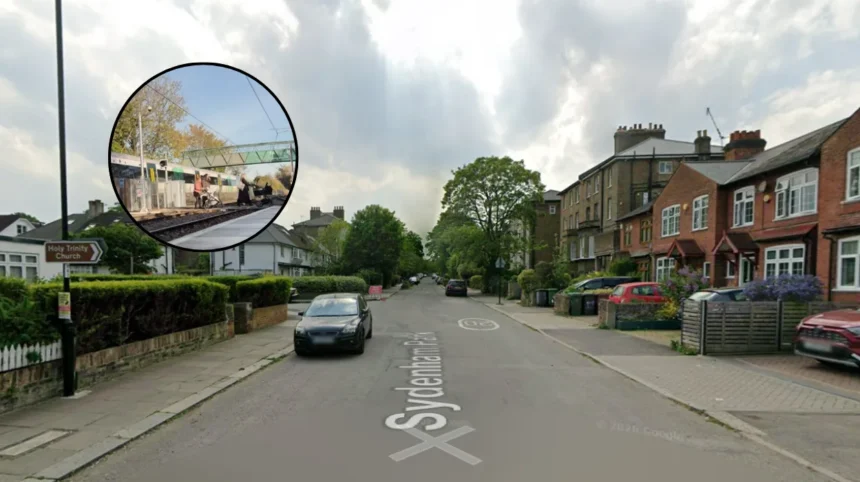
Sydenham Park (South London News) August 15, 2026 — Engineers have successfully installed high-voltage electrical cables beneath a live railway line in south London, maintaining uninterrupted rail and tram operations throughout the duration of the works. The £7 million infrastructure enhancement project required the deployment of nine kilometres of 33,000-volt underground cables connecting Sydenham Park to Churchfields. To bypass the active rail corridor without causing disruptions to daily commuter transport, engineering teams used Horizontal Directional Drilling (HDD) to construct an underground tunnel near Avenue Road Station.
How Was the Underground Cable Trench Constructed Without Stopping Rail Traffic?
The primary challenge of the project was crossing beneath the railway infrastructure at Avenue Road Station without disturbing the track alignment or interrupting above-ground transit services. Traditional cut-and-cover excavation techniques would have required closing track sections, removing ballast, and halting rail traffic.
To avoid operational downtime, engineers opted for Horizontal Directional Drilling (HDD), a surface-launched, trenchless technique. HDD involves three main stages:
- Pilot Hole Drilling: A fluid-assisted drill rig bores a small-diameter pilot path along a predetermined trajectory beneath the tracks.
- Hole Enlargement (Reaming): The initial pilot hole is incrementally enlarged using rotating reamers to accommodate the duct diameter required for the high-voltage cable conduit.
- Pipe and Cable Pullback: The high-voltage cable conduits are pulled back through the enlarged bore, allowing the 33kV cables to be installed continuously without disturbing the soil or surface infrastructure above.
By using precise steering technology to navigate the drill head, crews maintained safe clearance depths from the railway bed, eliminating the risk of ground settlement or track deformation.
Why Was the £7 Million Infrastructure Upgrade Necessary for South London?
The £7 million capital investment addresses increasing demand on south London’s power distribution grid. Transport networks, commercial developments, and residential adoption of low-carbon technologies—such as electric vehicle chargers and heat pumps—continue to increase the baseload demand on regional networks.
Installing nine kilometres of 33,000-volt (33kV) cable establishes a higher-capacity link between distribution hubs at Sydenham Park and Churchfields.
Upgrading to higher voltage cabling reduces line losses over long distances, improves network redundancy, and protects local customers against voltage instability and localized outages.
Explore More Local South London News
Former Cambridge Professor Jason Arday Found Dead in Battersea 2026
Wandsworth Tories Divided as Robert Morritt Takes Power: Wandsworth 2026
Background of the Development
The south London rail and power corridor represents one of the most densely utilized infrastructure zones in the United Kingdom. Managing power infrastructure upgrades in urban environments often requires navigating dense built environments, existing underground utilities, and strict transport regulations.
Historically, major civil engineering interventions near railway lines required extended line closures, track possessions, and temporary service suspensions.
Network Rail and local transport authorities strictly limit physical interventions that could affect track geometry, signaling equipment, or structural foundations.
The adoption of trenchless technologies like HDD has transformed urban utility installations across the UK over the past two decades.
HDD minimizes the need for extensive open-trench digging across public roads and rail rights-of-way, reducing environmental impact, noise pollution, and physical disruption to local communities. The Sydenham Park to Churchfields project relies on these established trenchless methods to modernize high-voltage distribution networks within confined metropolitan spaces.
Forecast: How Will This Infrastructure Upgrade Impact South London Communities and Transport Infrastructure?
The completion of the underground cable drilling project has several long-term implications for local residents, businesses, and transit operators in south London:
The addition of nine kilometres of continuous 33kV cabling increases overall grid capacity between Sydenham Park and Churchfields.
Local households and commercial facilities will experience fewer voltage fluctuations and reduced vulnerability to cascade outages during periods of peak energy demand.
As south London transitions toward lower-carbon transport and heating, local demand for electricity will continue to rise. The expanded 33kV network provides the operational headroom needed to support increased electrical loads from residential heat pumps and electric vehicle charging points.
The successful execution of HDD beneath active rail tracks without interrupting train or tram schedules provides a blueprint for future urban infrastructure projects.
Proving that high-voltage cabling can be installed beneath live transport corridors without track possessions reduces the financial and operational costs associated with future utility modernizations across the UK rail network.