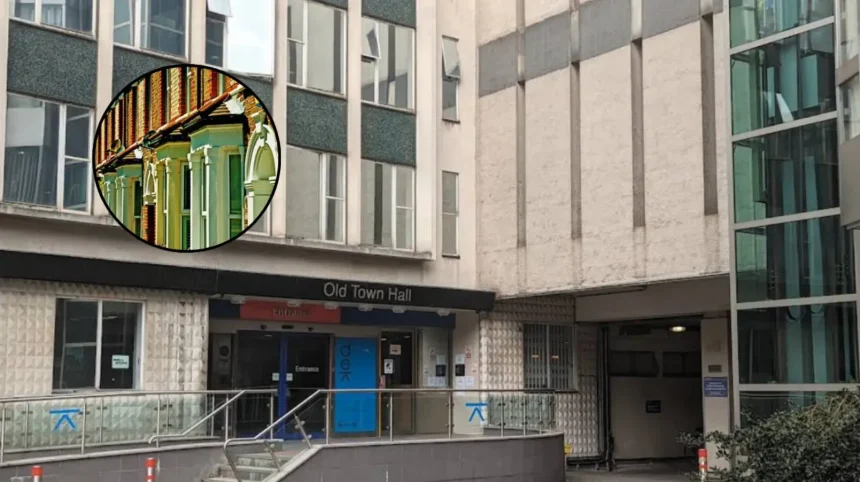
Key Points
- Taskforce Launch: Lewisham Council has unveiled a dedicated, intelligence-led Rogue Landlords Taskforce targeting sub-standard housing, waste mismanagement, and unlicensed properties.
- Targeted Operations: Operations will prioritise high-risk wards identified through data analytics, concentrating on areas with suspected unlicensed accommodation and historic non-compliance.
- Escalated Penalties: Enforcement measures will encompass prosecution and civil penalty notices, with potential fines reaching up to £40,000 per violation.
- Current Enforcement Data: Lewisham Council has already issued 153 enforcement notices during the current financial year—nearly matching the 155 notices issued across the entire previous financial year—while fines have reached £160,875, more than double the prior year’s total.
- Regional Policy Shifts: Simultaneously, Bath and North East Somerset Council has initiated public consultations regarding heightened statutory housing penalties, incorporating a proposed 50% penalty uplift for aggravating circumstances.
Lewisham (South London News) August 19, 2026 – Local authorities across England have escalated statutory enforcement against non-compliant property owners, following the launch of a specialised Rogue Landlords Taskforce by Lewisham Council alongside proposed financial penalty increases by Bath and North East Somerset Council.
- Key Points
- How will Lewisham Council deploy its new Rogue Landlords Taskforce?
- What statements have council officials issued regarding landlord compliance?
- How are other local authorities adjusting financial penalties for housing breaches?
- Background of the particular development
- Prediction: How this development can affect private sector landlords and tenants
How will Lewisham Council deploy its new Rogue Landlords Taskforce?
As reported by William Eichler of LocalGov, Lewisham Council’s newly established Rogue Landlords Taskforce will utilize data intelligence, neighborhood reporting, and targeted site inspections to identify properties operating in breach of residential regulations. Privately rented properties constitute approximately one-third of the total housing stock across the South London borough.
The taskforce is designed to shift council interventions from reactive complaint handling toward proactive inspection regimes. Officers will inspect both licensed properties where standards are suspected to have dropped and unlicensed dwellings.
Priority will be given to specific electoral wards where statistical modelling indicates a higher likelihood of housing law non-compliance, persistent fly-tipping, or systematic refuse mismanagement linked to private lettings.
According to statutory reporting released by Lewisham Council, enforcement activity in the borough has increased significantly over recent months. Since the start of the current financial year, the authority has issued 153 formal enforcement notices, approaching the 155 total notices recorded during the entire 2025/2026 period.
Financial penalties handed out since April 2026 total £160,875, representing more than double the total financial penalties collected during the previous financial year. Authorities attribute this fiscal growth to updated national legislation enabling higher civil penalty ceilings.
What statements have council officials issued regarding landlord compliance?
As cited by news outlet Property118, Councillor Natalie Thomas, Cabinet Member for Safer Homes, Homelessness and Housing Services at Lewisham Council, outlined the objective of the enforcement strategy:
“Improving conditions for renters in Lewisham has been one of my top priorities since I was appointed. Everyone deserves a safe, stable and decent place to live.
“Most landlords want to do the right thing, but we know there are still too many cases where tenants are being forced to live in properties that are mouldy, rat-infested or downright dangerous because their landlords fail to meet their legal responsibilities.
“Landlords who cut corners and break the rules should expect to be caught, but we also want this work to encourage landlords across the borough to raise their standards before enforcement action is needed. Getting fined up to £40,000 is not a good way to save money.
“By targeting rogue landlords, we can drive up standards across the private rented sector, protect residents and make sure those who break the rules are held to account.”
The authority confirmed that where statutory non-compliance is verified, enforcement options will include formal civil penalty notices, statutory remedial notices, and criminal prosecution through the Magistrates’ Courts.
How are other local authorities adjusting financial penalties for housing breaches?
As detailed by John Wimperis of the Bath Echo, Bath and North East Somerset Council has launched a public consultation reviewing its Housing Services Enforcement and Financial Penalty Policy. The proposed framework establishes updated starting penalties and statutory surcharges for property infractions.
Under the proposed guidelines, failure to comply with Houses in Multiple Occupation (HMO) fire safety standards or amenity space limits carries an initial financial penalty of £20,000.
Breaches of electrical safety duties under Regulation 3(1) of the Electrical Safety Standards carry baseline penalties starting at £12,000, rising to £20,000 if remedial action is not undertaken following formal notice.
The revised policy permits an upward adjustment of up to 50% on starting penalty figures where aggravating factors are proven. Defined aggravating circumstances include:
- Persistent non-compliance or failure to cooperate during council investigations.
- Unlawful actions continuing for periods exceeding six months.
- Severe Category 1 hazards under the Housing Health and Safety Rating System (HHSRS).
- Direct tenant harm, tenant intimidation, or intentional submission of misleading information to officers.
Conversely, the policy allows a downward adjustment of up to 50% for demonstrable mitigating factors, as well as a 20% portfolio adjustment based on the scale and operational history of the landlord or management agency.
As reported by Bath Echo, Councillor Matt McCabe, Cabinet Member for Built Environment, Housing and Sustainable Development at Bath and North East Somerset Council, stated that good housing remains vital to safer communities, better public health, and a fairer private rented sector.
The council confirmed that the policy overhaul aligns with legislative powers granted under the Renters’ Rights Act.
Explore More Lewisham Council News
Lewisham Council Receives Lausanne Road Planning Application Lewisham 2026
Lewisham Council launches rogue landlord taskforce targeting non-compliance in Lewisham 2026
Background of the particular development
The private rented sector across England has grown significantly over the past two decades, now encompassing over 4.5 million households. Local housing authorities have faced mounting pressure from tenant advocacy groups and central government to curb sub-standard living conditions, unlawful evictions, and unlicensed Houses in Multiple Occupation (HMOs).
Legislative updates, including statutory provisions within the Housing and Planning Act 2016 and subsequent reforms under the Renters’ Rights Act, expanded local authority enforcement toolkits.
Councils were granted powers to impose Civil Penalty Notices of up to £30,000—and in specific statutory instances up to £40,000—as an alternative to court prosecution for designated housing offences. Income generated from these financial penalties is ring-fenced, allowing local authorities to fund further housing enforcement activities.
Regional licensing schemes, such as Mandatory HMO Licensing, Additional Licensing, and Selective Licensing, require landlords in designated areas to register properties and demonstrate compliance with safety standards.
Despite these regulations, municipal reports indicate that enforcement remains uneven across regions due to budget constraints and administrative resource limits. Consequently, intelligence-led taskforces utilizing localized data analytics have increasingly been adopted by metropolitan authorities to optimize regulatory inspections.
Prediction: How this development can affect private sector landlords and tenants
The dual moves by Lewisham Council and Bath and North East Somerset Council signal a structural transition toward data-driven, proactive housing enforcement across English local government.
For private tenants, particularly those residing in high-density urban wards, the operational deployment of specialized taskforces is expected to decrease exposure to hazardous living conditions, such as unchecked dampness, electrical defects, and severe structural disrepair.
Proactive council inspections mean tenants may no longer bear the sole burden of reporting non-compliant landlords, reducing concerns regarding retaliatory actions or informal disputes.
However, intensified regulatory oversight could lead to short-term disruptions if non-compliant properties are served with prohibition orders, necessitating emergency rehousing or tenant relocation.
For property owners and management agencies, the expansion of intelligence-led enforcement models and increased fine structures significantly elevates financial liability for regulatory breaches.
Landlords operating unlicensed properties or failing to conduct statutory safety inspections face escalating financial risks, with combined penalties potentially reaching £40,000 alongside potential additions to national or local rogue landlord databases.
Professional letting agents and compliant landlords may experience an increased administrative requirement to maintain up-to-date documentation, gas and electrical safety certificates, and property licences.
Over time, these heightened enforcement risks may encourage marginal property investors to divest from high-risk HMO markets, while remaining landlords are likely to factor higher compliance costs into standard operational budgets.