Key Points
- Croydon Mayor Jason Perry launched an anti-fly-tipping campaign featuring video footage meant to expose illegal dumping.
- The video actually shows a local trader disposing of waste in accordance with Croydon Council’s established rules.
- Under the Time-Banded Waste Collection (TBWC) system, high street traders and flat residents put waste out overnight.
- The TBWC scheme, introduced nearly a decade ago, is cited as a major contributor to deteriorating street conditions.
- Waste bags left on pavements frequently leak fluids, create eyesores, and attract secondary fly-tipping across the borough.
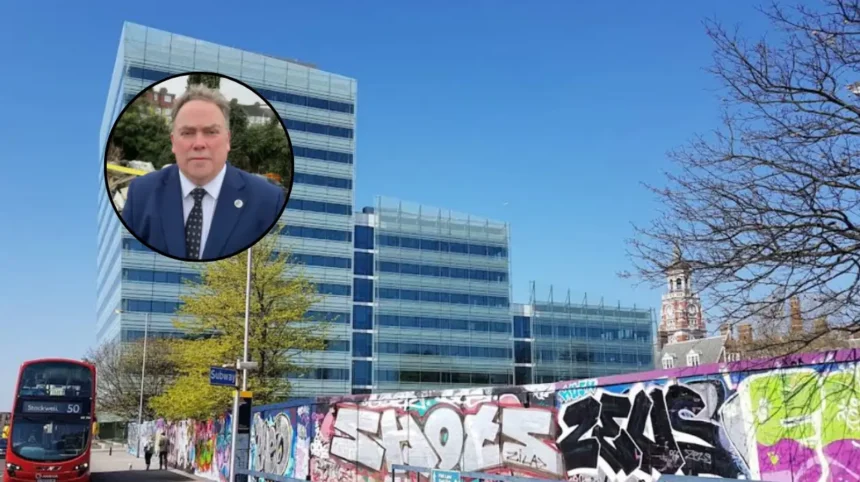
Croydon (South London News) August 20, 2026 – Croydon’s executive mayor, Jason Perry, has launched a high-profile anti-fly-tipping campaign that inadvertently highlights a local trader complying with the local authority’s own disposal guidelines. The publicity initiative, designed to showcase a “zero tolerance” stance on illegal dumping across the borough, features council-issued video footage intended to catch offenders in the act. However, the recorded activity shows a high street commercial operator depositing waste in strict accordance with instructions previously issued by Croydon Council and its primary environmental services contractor, Veolia.
The footage forms part of a local media broadcast detailing council enforcement efforts. Rather than capturing illicit activity, the sequence records a business owner placing commercial waste bags on the pavement during an approved collection window.
The initiative was intended to signal a crackdown on anti-social behavior, but the reliance on compliant waste placement has raised immediate questions regarding the coordination of the council’s enforcement strategy and its public communications.
How Did a Compliant Trader Feature in an Anti-Fly-Tipping Campaign?
The inclusion of compliant waste disposal in an enforcement campaign stems from longstanding operational policies governing waste collection on Croydon’s primary retail corridors. Nearly a decade ago, Croydon Council, alongside its waste management contractor Veolia, established the Time-Banded Waste Collection (TBWC) system.
The scheme was specifically designed for commercial premises and residential flats located above shops along busy high streets, where traditional wheelie bin storage is physically unfeasible due to space constraints.
Under the regulations of the TBWC scheme, local shopkeepers and residents living above retail units are instructed to place their black refuse sacks and recycling bags directly on the public footway within specific designated timeframes, typically overnight.
This arrangement ensures that collection vehicles operated by Veolia can clear the waste early in the morning before pedestrian footfall peaks and commercial traffic increases. The trader highlighted in the mayor’s video campaign was operating entirely within these established guidelines, adhering to the mandated overnight window for waste presentation.
Why Is the Time-Banded Waste Collection Scheme Controversial?
Despite being an official council protocol, the Time-Banded Waste Collection system is widely regarded by civic groups and local residents as a primary driver of street cleanliness issues across Croydon. Environmental groups and residents’ associations argue that placing thin plastic refuse sacks directly onto public footways creates severe hygiene and aesthetic problems.
The placement of waste bags on pavements frequently leads to fluid leakage, staining footways and causing foul odours during warmer months. Furthermore, weak plastic bags are easily torn open by wildlife, including foxes, birds, and rodents, resulting in refuse being scattered across commercial thoroughfares prior to morning collection cycles.
Local community groups also point out that the visual presence of official waste bags on the street acts as a catalyst for genuine fly-tipping, as opportunistic offenders view existing piles of refuse as an invitation to dump uncollected household items, bulky furniture, and trade waste.
Explore More Croydon Council News
Croydon Council Ordered to Repay £75,000 Care Fees Croydon 2026
Croydon Council Plans Major EV Charging Infrastructure Expansion Croydon 2026
What Is the Background to This Waste Management Crisis?
The development of Croydon’s waste management framework has been marked by structural challenges and contractual oversight spanning several municipal administrations. The implementation of the Time-Banded Waste Collection scheme nearly ten years ago was intended to resolve the problem of commercial bin storage on narrow pavements, but its ongoing application has highlighted systemic flaws in urban maintenance strategies.
Over the past decade, Croydon Council has faced severe financial constraints, including multiple section 114 notices declaring effective insolvency.
These budgetary pressures have led to reduced spending on proactive street cleansing, highway washing, and enforcement operations. Concurrently, the multi-million-pound contract with Veolia has faced continuous scrutiny from local councillors and residents regarding service standards, missed collections, and the speed at which reported fly-tips are cleared.
The decision by Mayor Jason Perry to prioritize fly-tipping enforcement formed a central pillar of his administrative pledge to restore civic pride and improve public realm standards.
However, the deployment of enforcement resources against individuals following published council protocol underlines an operational disconnect between the executive mayor’s office, the council’s environmental enforcement officers, and the operational reality of the TBWC system.
How Will This Development Affect Local Traders and Croydon Residents?
This development is likely to have direct operational, financial, and administrative impacts on high street traders, local residents, and the broader community across Croydon.
- High Street Traders: Commercial operators face increased uncertainty regarding waste disposal compliance. With enforcement campaigns failing to distinguish between official TBWC compliance and actual illegal dumping, business owners risk public misidentification, reputational damage, and potential wrongful administrative fines. This may force trade associations to demand immediate written clarification or a complete overhaul of commercial waste regulations.
- Croydon Residents: Local residents living along high street corridors will likely continue to experience sub-standard environmental conditions. As long as the TBWC system remains active in its current format without enhanced street sweeping, footways will remain vulnerable to bag ruptures, fluid stains, and secondary fly-tipping.
- Local Ratepayers: The public confusion surrounding enforcement measures creates potential financial liabilities for Croydon Council. Misdirected enforcement efforts waste administrative resources, while potential legal challenges against wrongful fly-tipping notices could result in additional costs for a local authority already operating under severe fiscal restraints.