Key Points
- Metropolitan Police officers arrested more than 400 suspects during a 10-day operation targeting south London street gangs.
- The police drive followed the 10 August fatal shooting of 25-year-old bus driver Auguste Marie Bile-aka Amoa, who officers believe was not the intended target.
- Armed units and plainclothes teams focused on Lambeth and Southwark, where eight homicides have occurred since April.
- Officers seized 38 weapons, including a sawn-off shotgun and seven blades found on a child who was carrying them wrapped for delivery.
- Police briefings showed four rival gangs operate within a single square mile, with territories in areas like Upper and Lower Tulse Hill separated by only a few yards.
- The August operation follows a July crackdown that yielded 300 arrests, 38 seized weapons, and a home raid that uncovered £4 million in cash alongside a kilogramme of cocaine.
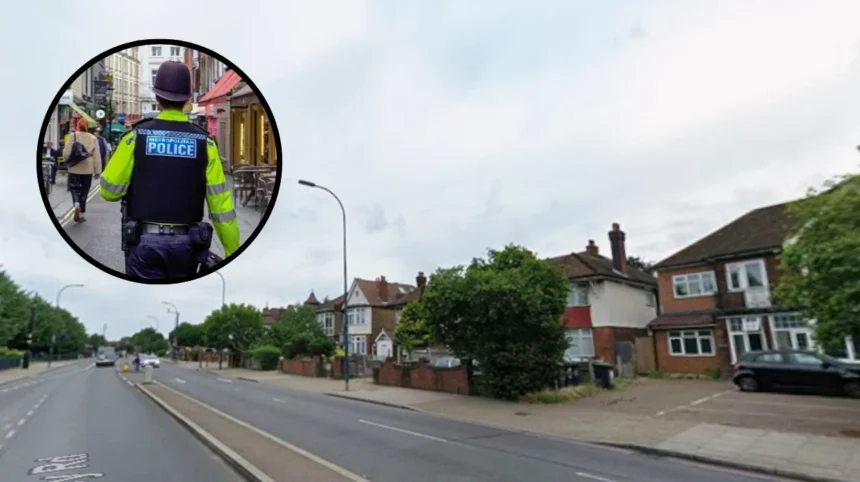
South London (South London News) September 4, 2026 – More than 400 people have been arrested by Metropolitan Police officers during a major ten-day enforcement crackdown on street gangs across south London. As reported by John Dunne, Senior News Correspondent for Metro, the high-profile police operation was launched following the fatal shooting of 25-year-old bus driver Auguste Marie Bile-aka Amoa on 10 August 2026. Metro reports that detectives believe Mr Bile-aka Amoa was not the intended target of the hit, but was caught in the crossfire alongside an injured relative who was with him in the vehicle. The fatal shooting prompted senior officers to dispatch armed response units and plainclothes teams into heavily contested gang territories across the boroughs of Lambeth and Southwark, where eight homicides involving stabbings and shootings have been recorded since April.
Metro’s reporting team joined specialist police units on the ground following an operational briefing at Lambeth’s police headquarters in Walworth. During the briefing, intelligence officers displayed screens detailing known gang affiliates, suspect vehicles, and precise territorial boundaries. Intelligence maps showed four rival street gangs operating within a single square mile. Units subsequently deployed across Brixton and Clapham, coordinating over secure radio channels while uniformed street patrols provided routine cover backed up by rapid-response tactical teams.
The physical proximity of rival gang territories in south London remains a primary driver of localized violence. As reported by John Dunne of Metro, an escorting officer on the patrol ride-out noted: “It’s just a matter of yards between territory, it’s so close. Tulse Hill is a prime example.” The officer demonstrated how separate gang structures govern Upper and Lower Tulse Hill, meaning residents or rival members can cross into hostile territory simply by walking a few yards down a street. Along the route, officers pointed out three separate makeshift memorials dedicated to murdered young men within an area spanning just a few hundred square metres.
During the specific ten-day surge running from 17 to 26 August, operational teams seized dozens of bladed weapons, firearm components, and suspected illicit vehicles. In one stop-and-search intervention, officers arrested a young boy carrying seven blades—including large machetes—wrapped in packaging that investigators suspect was being transported to order for gang members. In another incident, a youth was found carrying a sawn-off shotgun, a modification increasingly favoured by localized networks to maximize physical damage at close range.
During Metro’s ride-along, officers swooped on a vehicle highlighted by Automatic Number Plate Recognition (ANPR) cameras. The driver was arrested on an outstanding domestic abuse warrant, while police sniffer dogs conducted a detailed forensic sweep of the vehicle to uncover concealed weapons or contraband. Shortly after, teams responded at high speed to reports of a shooting in Streatham, which was later downgraded after officers established the victim had been hit by a paintball discharge rather than live ammunition. Refined response protocols ensured armed teams were on site within minutes, with an officer telling Metro: “You just never know before you arrive on the scene what you will face. In this instance it was a paintball, but next time it could be a bullet.”
Senior police commanders emphasized the urgency of suppressing escalated street violence. As reported by John Dunne of Metro, Detective Chief Inspector Emma Bond, who oversaw the operation, stated:
“We have seen a rise in serious violence which is concerning. We are seeing a rise in youth violence and gang tensions so this operation is aimed at suppressing that violence. I would say gang violence is rising faster in this area of London than others and that’s why we have this targeted approach.”
Further detailing the operational recoveries, Metro cited Detective Superintendent Gareth Gilbert, who stated:
“A shotgun was seized on a stop and search by officers which could have caused untold harm. A child was arrested with seven knives, including a machete. They were wrapped as if being delivered to order. These children are victims as well as often as they are being used by the gangs.”
Frontline officers expressed frustration over the cycle of youth recruitment into local criminal factions. As reported by John Dunne of Metro, one operational officer reflected on the human toll of street violence, stating:
“We are doing all we can. We know these individuals in gangs. One young boy I knew well from the streets. He was cheeky and I liked him but of course he was on the wrong path. He ended up dead and I say to these young boys: Do you want to end up like that?”
The late-August surge builds directly upon an earlier police operation conducted in July, which resulted in 300 arrests and the confiscation of 38 weapons. That previous operation featured one of the largest cash seizures stemming from a stop-and-search in Metropolitan Police history, where an initial stop of a man carrying £35,000 in a plastic bag led to a residential search warrant that uncovered £4 million in cash and a kilogramme of cocaine.
Explore More Local South London News
Lambeth Council Launches Local Plan Consultation Across South London Borough 2026
Battersea Power Station Approved for 200 Council Homes, Battersea 2026
Why Has Police Action Escalated in South London Boroughs?
The escalation in police tactical deployments across Lambeth and Southwark stems directly from a sharp spike in fatal gang-related incidents over the spring and summer months. Eight homicides recorded across both boroughs since April created an urgent imperative for the Metropolitan Police to disrupt organized criminal networks. The killing of 25-year-old bus driver Auguste Marie Bile-aka Amoa on 10 August served as the primary trigger for immediate tactical intervention. High-density stop-and-search strategies, ANPR camera tracking, and plainclothes surveillance were combined to dismantle supply lines and remove weapons from circulation before retaliatory attacks could occur.
How Do Micro-Territories Drive Local Street Violence?
Micro-territorial boundaries in boroughs like Lambeth create heightened risk for local youths due to the extremely close proximity of rival turf. In areas such as Tulse Hill, boundaries separating Upper and Lower factions are measured in yards rather than miles. These tight borders mean that young individuals crossing a street can inadvertently enter territory controlled by an opposing gang, exposing them to sudden violence or armed reprisal regardless of whether they hold active gang affiliation.
What Specific Weapons Are Officers Uncovering During Searches?
During the August operation, police seized a wide array of offensive weapons and firearms. Interceptions included sawn-off shotguns—chosen by gang members for their concealability and high damage potential—alongside various bladed weapons. Officers noted an increasing trend of young runners transporting multiple packaged knives and machetes across neighborhood lines, functioning essentially as courier services delivering weapons to senior gang members on demand.
Background of the South London Gang Crackdown
Street gang dynamics across south London, particularly within the London Boroughs of Lambeth and Southwark, have historically been defined by hyper-localized territorial identity. Over the past decade, enforcement agencies have observed a transition from large, borough-wide criminal groups to smaller, neighborhood-based blocks centered around specific housing estates, postcodes, or even individual streets.
This fragmentation has intensified rivalries, as the physical distance between opposing groups has shrunk to adjacent streets and housing developments. Infrastructure tools like Automatic Number Plate Recognition (ANPR), targeted stop-and-search procedures, and intelligence-led gang monitoring units have been systematically deployed by the Metropolitan Police to track multi-borough movements and stem the flow of illegal firearms and bladed items.
Simultaneously, the economic structure of these street gangs relies heavily on the distribution of Class A drugs, often connected to broader County Lines networks operating out of inner-city London into surrounding counties. High-value cash seizures, such as the £4 million haul and cocaine recovery triggered by a single stop-and-search in July, demonstrate the deep financial integration between localized street violence and large-scale organized crime. The recruitment of minors as couriers for drugs and weapons remains a persistent enforcement challenge, prompting local authorities and police units to treat exploited youths simultaneously as suspects and victims of criminal exploitation.
Prediction: How This Development Will Affect Local Residents and Public Safety
The intensive police intervention across south London is expected to bring distinct short-term and long-term impacts for local communities, young people, and regional law enforcement operations.
- For Local Residents and Families: In the immediate term, the heightened presence of armed units, plainclothes officers, and high-visibility patrols across Lambeth and Southwark is likely to provide a temporary suppression of overt street violence and firearm usage. However, increased reliance on stop-and-search measures may also heighten friction between local communities and police teams if residents feel over-policed during routine travel across neighborhood borders.
- For At-Risk Youth and Community Groups: The interception of weapon delivery networks and the arrest of over 400 individuals will temporarily disrupt gang supply chains. Conversely, without sustained community intervention, social support, and gang exit strategies, the arrest of senior or prominent figures risks creating power vacuums within local estates, potentially leading to volatile turf shifts among younger affiliates seeking to establish control.
- For Public Transport Workers and Commuters: Following the death of bus driver Auguste Marie Bile-aka Amoa, public transport staff operating late-night routes through high-risk postcodes are likely to demand enhanced security measures and increased police visibility near major transport hubs, transit depots, and exposed residential stops.