Key Points
- Over 1,700 patients and healthcare personnel have submitted a petition demanding that King’s College Hospital NHS Foundation Trust and Guy’s and St Thomas’ NHS Foundation Trust commit to rejecting Palantir’s Federated Data Platform.
- The petition was formally presented at a King’s College Hospital trust board meeting on Wednesday 16 September 2026.
- Campaigners are urging trust leadership to write to NHS England and government ministers, requesting that the national contract break clause in February 2027 be exercised to terminate the £330 million agreement.
- Concerns focus on Palantir’s background in military surveillance, border enforcement, and potential interoperability between health platforms and law enforcement agencies.
- While King’s College Hospital trust has not deployed the platform, Guy’s and St Thomas’ trust has an instance deployed and is enabling the ‘my clinical feedback’ application.
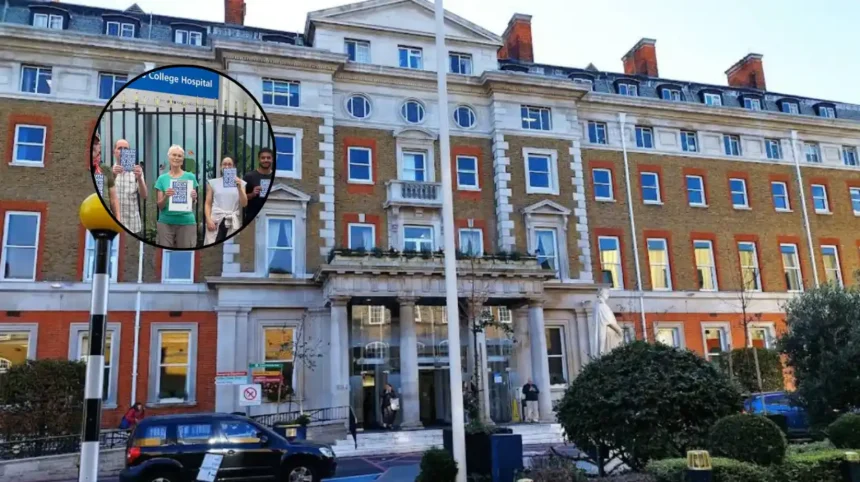
South London (South London News) September 16, 2026 – More than 1,700 patients and NHS workers have signed a petition calling on south London’s two largest NHS trusts—King’s College Hospital NHS Foundation Trust and Guy’s and St Thomas’ NHS Foundation Trust—to commit to never using the Federated Data Platform (FDP) supplied by the American military surveillance firm Palantir. Campaigners handed in the petition at a King’s College Hospital trust board meeting today, informing board trustees of widespread local opposition to the £330 million contract awarded by NHS England.
Why Are Patients and Staff Opposing the NHS Palantir Contract?
The campaign centres on serious opposition among local residents and healthcare professionals regarding the involvement of a United States data analytics firm in handling National Health Service data. The petition features signatures from a wide array of healthcare staff across both trusts, including nurses, porters, doctors, occupational therapists, and healthcare assistants, alongside local patients.
Campaigners highlighted concerns surrounding the software’s capabilities and its developers’ background in defence, border control, and intelligence analytics. A central anxiety raised in the petition is the potential for patient health information fed into a civil platform to possess interoperability with surveillance or intelligence tools used by law enforcement agencies and police forces in the United Kingdom.
According to a statements issued during the petition submission, a doctor at King’s College Hospital, identified as Lara F., expressed strong personal objections regarding professional practice and patient care:
“As a doctor at King’s College Hospital, I am outraged by the idea that to care for my patients, I could be forced by my employer to input sensitive medical information into Palantir’s Federated Data Platform. Palantir has made it abundantly clear that it is a dangerous company. A company that has expertise in building mass surveillance programs for deadly ends should be let nowhere near the health data of a diverse community like the one we serve in southeast London.”
Similarly, a patient at St Thomas’ Hospital, identified as Ali, shared their reaction upon learning about the national software rollout outside the clinical facility:
“As a patient at St Thomas’s Hospital, I was alarmed when I was handed a leaflet outside the hospital informing me that the NHS has signed a contract with Palantir. All of us across the country should be doing everything in our power to force NHS trust bosses and politicians to put a stop to this madness. There is zero public appetite for handing public contracts and our health data to an American spytech company.”
What Specific Action Are the Campaigners Requesting From Trust Leadership?
The signatories are formally requesting that the leadership teams of both south London trusts issue written representations to NHS England and key political decision-makers in government. Specifically, they are urging local trust executives to advocate for using the upcoming contract break clause scheduled for February 2027. Exercising this clause would enable NHS England to end the central contract with Palantir entirely prior to its full duration.
Opponents of the software argue that local NHS trusts hold significant leverage because implementation of the Federated Data Platform is not currently mandatory across England’s health system. Individual trusts and Integrated Care Boards (ICBs) maintain the authority to raise concerns or decline to deploy the software locally.
Human rights organisations have also raised formal objections regarding the firm’s broader corporate activities. Amnesty International UK has condemned the presence of the company within the national healthcare system, arguing that firms accused of contributing to serious human rights violations in occupied Gaza should not be embedded within health operations in England. Additionally, critics frequently highlight the firm’s software provision to the US Immigration and Customs Enforcement agency (ICE), where it has provided technological infrastructure used in immigration enforcement operations across the United States.
Background of the Development
The controversial introduction of the Federated Data Platform follows a history of debate surrounding external technology providers in the UK public sector. The FDP was commissioned by NHS England as a national software framework intended to sit across NHS Trusts, ICBs, and NHS England central operations to link, integrate, and analyse existing patient data to streamline operational efficiency and waiting list management.
In 2021, the Department of Health and Social Care terminated a separate data agreement with Palantir regarding adult social care following public scrutiny and criticism from civil liberties groups. Despite those previous developments, NHS England awarded the firm the overarching £330 million FDP contract to manage national health data infrastructure.
Local adoption across south London remains varied:
- King’s College Hospital NHS Foundation Trust: Has not implemented the Federated Data Platform and currently uses none of the software applications linked to the FDP. Previous responses to Freedom of Information (FOI) requests indicated that the trust was investigating the potential use of the system, though no binding commitment to deploy has been made.
- Guy’s and St Thomas’ NHS Foundation Trust: Stated in January 2026 that an FDP instance had been deployed at the trust. Leadership confirmed it was enabling the ‘my clinical feedback’ application while reviewing other FDP-linked software applications for potential future deployment.
Health policy groups, including the health charity Medact in a published briefing, have noted that local health bodies retain the discretion to decline local implementation while alternative data management solutions are explored. NHS England retains the option to end the three-year deal during its scheduled contract review in early 2027.
Prediction: How This Development Can Affect Patients and Healthcare Staff
This public campaign and the ongoing dispute over data platform adoption have direct implications for both healthcare personnel and patients served by south London NHS trusts:
- Impact on Healthcare Staff: For clinicians, nurses, and administrative staff, local deployment decisions affect daily clinical workflows and data entry procedures. If trusts press ahead with full deployment, staff who harbor ethical or privacy objections regarding the software vendor may face professional friction regarding mandatory data entry protocols. Conversely, if trust management agrees to decline the FDP, administrative teams will continue relying on existing internal data systems or require alternative software solutions to manage patient queues and clinical feedback.
- Impact on Patients and Service Users: For the local patient population, the outcome of this dispute directly shapes how personal medical information is stored, processed, and integrated across regional and national databases. Continued opposition and public demonstrations could increase requests from patients seeking to understand or opt out of specific data-sharing mechanisms where legally permissible. Furthermore, if public trust in health data governance declines due to ethical concerns over external software providers, patients may feel hesitant to disclose sensitive personal information during clinical consultations, potentially affecting the accuracy of medical records and direct clinical care delivery.