Key Points
- Impacted Establishment: Little Baobab, an award-winning Muslim-owned Senegalese restaurant and social enterprise, faces an uncertain future following the sudden shutdown of its location at the Africa Centre.
- Loss of Operations & Training: The disruption forced the immediate suspension of its free chef-training programme, which provided practical kitchen skills to young people seeking entry into the hospitality industry.
- Property & Inventory Damage: Food stocks and catering machinery stored within the building’s basement level were damaged due to subsequent flooding after the venue was shuttered.
- Operational Circumstances: Staff members arrived at the premises in early July to discover they were unable to open due to site-related issues, receiving no advance notification.
- Financial Position: Prior to the sudden disruption, Little Baobab was serving between 500 and 600 diners weekly, alongside catering contracts and regular live music programming.
- Industry Acclaim: The eatery won an African food award at the 2025 Be Inclusive Hospitality Spotlight Awards and was ranked second in Time Out’s guide to London’s best Nigerian and West African restaurants.
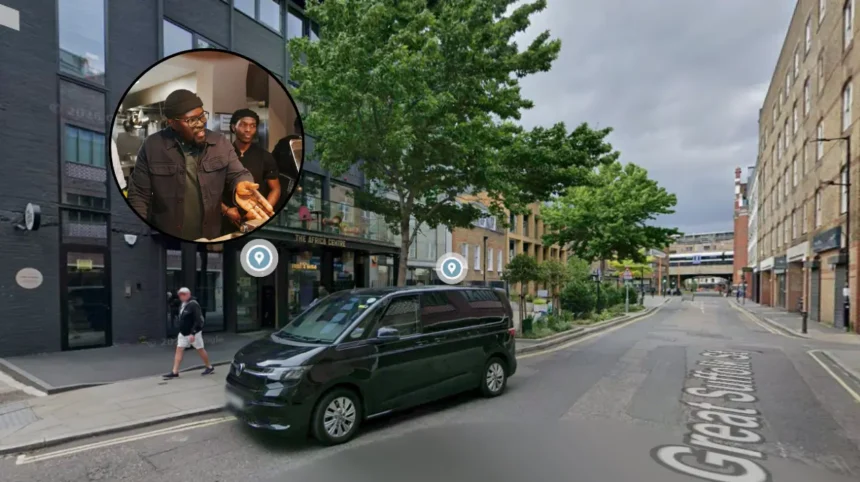
Southwark (South London News) September 22, 2026 – As reported by reporter at Hyphen, the award-winning Senegalese establishment Little Baobab has been thrown into financial uncertainty following the unexpected closure of its primary location within the Africa Centre in Southwark, south London. The abrupt shutdown has halted the restaurant’s operational capacity, leaving its management facing thousands of pounds in physical losses and suspended business operations.
- Key Points
- How has the shutdown affected the restaurant’s chef-training programme and community work?
- What were Little Baobab’s commercial and critical achievements prior to the closure?
- Background of the particular development
- Prediction: How this development can affect the local community, young trainees, and independent hospitality operators
As detailed by reporter at Hyphen, a member of the restaurant’s staff arrived at the venue in early July only to be informed that the restaurant could not open due to an unspecified problem with the site. Founder and owner Khadim Mané stated that
“I did not have any notice, so we didn’t know what’s happening,”
leaving the entire enterprise unable to trade for over two months.
As outlined by reporter at Hyphen, additional damage occurred after the building was closed, when flooding in the Africa Centre’s basement destroyed food and equipment integral to the business and its educational branch. Expressing the emotional and commercial toll of the venue’s sudden loss, Mané stated that
“Right now I’m just in the dark,” adding,
“I don’t know what’s going to happen.”
How has the shutdown affected the restaurant’s chef-training programme and community work?
As highlighted by reporter at Hyphen, the unexpected closure forced the immediate suspension of Little Baobab’s free chef-training school. The initiative, whose community work was featured by Hyphen earlier in 2026, was designed to guide young individuals into professional culinary careers through a combination of online learning, in-person theoretical sessions, and hands-on commercial kitchen experience.
As noted by reporter at Hyphen, the physical materials, machinery, and food items stored in the basement to maintain this social initiative were severely impacted by the flooding incident following the building’s locking. The cessation of the programme deprives young trainees of access to mentorship and practical industry training.
What were Little Baobab’s commercial and critical achievements prior to the closure?
As reported by reporter at Hyphen, the Muslim-owned West African restaurant took over the ground floor space of the Africa Centre in September 2024. The move followed a decade during which the business operated as a mobile unit, running pop-up events, external catering, and festival stalls across the country.
As chronicled by reporter at Hyphen, the transition to Southwark provided the business with a permanent physical anchor, where it offered regular lunch and dinner services alongside curated live music events. Mané confirmed that business had been booming prior to the disruption, with the establishment regularly feeding 500 to 600 customers per week alongside a steady stream of catering contracts.
As documented by reporter at Hyphen, the establishment achieved significant industry recognition, winning an African food award at the 2025 Be Inclusive Hospitality Spotlight Awards. Furthermore, the venue was recently ranked second overall in Time Out’s definitive guide to London’s best Nigerian and West African restaurants. Reflecting on the effort invested into establishing the permanent site, Mané stated that
“I came to the centre, I bought new stuff, I created something really strong,”
adding that
“It’s like our little baby. You don’t want to leave your baby like that.”
Background of the particular development
The Africa Centre represents one of the most prominent cultural institutions for the African diaspora in the United Kingdom. Founded as a charity and social hub in Covent Garden in 1964, the organisation historically served as a focal point for activists, writers, artists, intellectuals, and community members, frequently described as a “home away from home” for generations of West African and broader continental diaspora populations.
In 2022, after decades in central London, the Africa Centre relocated its headquarters south of the river to a multi-storey facility in Southwark. The integration of Little Baobab in September 2024 was intended to solidify the centre’s ground-floor presence by pairing traditional Senegalese hospitality and West African gastronomy with the institution’s cultural, artistic, and community programming. The site provided Little Baobab with its first static kitchen infrastructure after ten years of temporary venues, making the recent operational halt a critical setback in the organisation’s long-term commercial progression.
Explore More Southwark News
Southwark Council Adds Social Rent Homes At Ledbury Estate 2026
Southwark Council Refuses Elephant & Castle Affordable Housing Cut 2026
Prediction: How this development can affect the local community, young trainees, and independent hospitality operators
The ongoing impasse at the Africa Centre holds direct consequences for several distinct stakeholder groups across London’s hospitality and cultural ecosystem:
- Impact on Young Industry Aspirants: The indefinite suspension of the free catering school halts an accessible, low-barrier pathway for young people seeking professional qualifications in culinary arts. Without alternative premises or funding to replace damaged equipment, prospective students lose access to structured practical training, live kitchen experience, and direct industry mentorship.
- Impact on the Local Cultural Economy: For the Southwark community and the broader West African diaspora, the operational paralysis of both the restaurant and the surrounding hub reduces the availability of dedicated cultural spaces. The loss of a venue that systematically paired traditional Senegalese cuisine with live performance art diminishes the visibility of West African cultural enterprise in central London.
- Impact on Small Business Resilience: The scenario illustrates the severe vulnerabilities faced by independent social enterprises operating within third-party premises. Without advance notice or immediate compensation mechanisms for flood-damaged inventory, small operators risk complete capital depletion. For Little Baobab, prolonged inaction increases the risk of permanent workforce displacement and forces the owner into a position of having to restart commercial setup from zero.