Key Points
- Newly submitted planning documents sent to Lewisham Council reveal that American fast-food chain KFC is set to open a new branch at 142-144 Lewisham High Street.
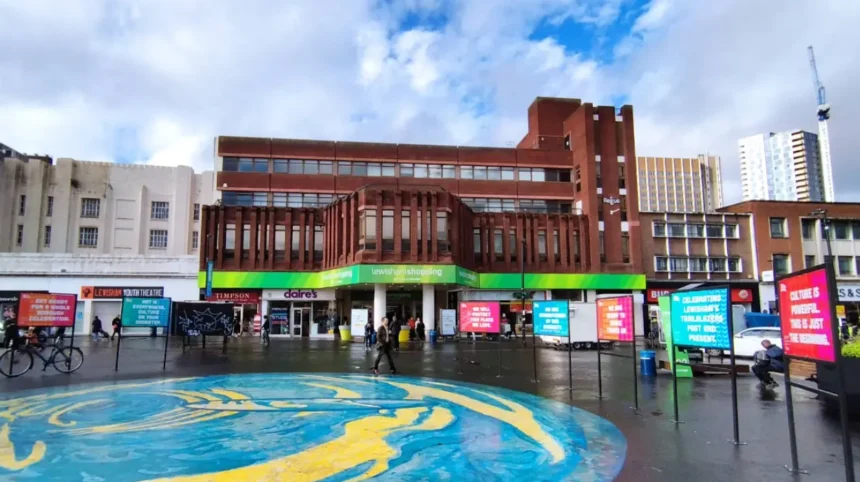
- The targeted space is part of a prominent 1930s art-deco building originally constructed as a flagship Woolworths store, which has lost much of its original character over subsequent decades.
- The ground-floor retail unit was previously divided and occupied by high-street brands, including Curry’s and Gap Outlet, and was most recently used as a Youth Theatre space.
- While Superdrug has maintained its presence on one side of the historic High Street frontage for decades, the remaining space has seen frequent commercial tenancy shifts.
- The site features a rear entrance connecting directly to the Lewisham Shopping Centre mall, a layout feature common to pre-1970s High Street shops in the district.
- Major multi-phase regeneration plans proposed by developer Landsec for the adjacent Lewisham Shopping Centre leave the former Woolworths structure intact, scheduling any potential works for later development phases.
Lewisham (South London News) September 23, 2026 – A portion of a historic 1930s art-deco building situated on Lewisham High Street is slated to become a new KFC restaurant under recently lodged local authority plans.
As reported by J Smith of Murky Depths, official documents submitted to Lewisham Council confirm that the fast-food establishment intends to take over the commercial unit at 142-144 Lewisham High Street. The specific premises targeted for conversion previously accommodated a Curry’s electrical shop and a Gap Outlet store, before its most recent operational stint as a Youth Theatre.
As reported by J Smith of Murky Depths, the entire structure was original built to house a Woolworth’s department store during the 1930s, though the premises has progressively lost almost all of its original architectural character following decades of retail modifications.
As reported by J Smith of Murky Depths, the building’s frontage along the High Street has long been sub-divided into separate retail operations, with beauty retailer Superdrug maintaining a persistent multi-decade presence on one side of the historic facade, whilst the secondary unit moved through successive tenants, changing from Curry’s to Gap and subsequently to the Youth Theatre.
As reported by J Smith of Murky Depths, in common with several other local retail establishments built prior to the construction of the adjacent 1970s indoor shopping centre, the former Woolworth’s site gained a secondary rear entrance leading directly into the shopping mall, mirroring architectural adaptations seen in neighbouring commercial properties such as the recently closed Marks & Spencer building.
Will the New KFC Establishment Impact the Broader Regeneration Plans for Lewisham High Street?
As reported by J Smith of Murky Depths, the arrival of KFC at 142-144 Lewisham High Street aligns with a wider period of transition for the town centre, though it does not directly interfere with imminent structural demolitions planned for the area.
As reported by J Smith of Murky Depths, major overall redevelopment proposals put forward for the adjacent shopping centre site do not envisage the demolition of the former Woolworth’s building. Any potential structural works or physical developments connected to this specific property are slated to occur in a subsequent phase of the master plan.
As reported by J Smith of Murky Depths, early architectural renders produced in 2022 highlighted possibilities for re-applying historic signage to the building, alongside the potential integration of food, beverage, or bar facilities on the first-floor level. However, formal plans for this specific stage of development have not yet reached detailed approval or completion.
As reported by J Smith of Murky Depths, the initial phase of the wider town centre regeneration is concentrated further to the north. This primary phase triggered the recent relocation of Boots, which vacated its long-standing post-war High Street premises—another local landmark that suffered aesthetic decline over recent decades—to establish a new store inside the shopping centre. Meanwhile, adjacent structures, including the NatWest building and the 1970s shopping centre entrance point, are earmarked for future clearance.
As reported by J Smith of Murky Depths, the tenancy submission by KFC in the southern block underscores that the comprehensive, multi-phase transformation of the broader shopping complex remains several years away from full execution, allowing commercial units along this stretch to continue operating under new leases.
Background of the Lewisham High Street Development
The commercial site at 142-144 Lewisham High Street represents a typical example of mid-20th-century British high-street commercial architecture that has undergone substantial adaptation over the past century. Originally erected in the 1930s as a purpose-built department store for F.W. Woolworth & Co., the building was designed in the company’s distinctive art-deco architectural style, featuring expansive retail floor plates and high frontage visibility.
Following the decline and eventual liquidation of the Woolworths chain across the United Kingdom in the late 2000s, many of its large-format town-centre properties were subdivided to accommodate multiple smaller retail operators. At the Lewisham site, this led to a split frontage: one section was secured long-term by Superdrug, while the other unit accommodated a succession of major national brands, including consumer electronics retailer Curry’s and clothing vendor Gap Outlet. In recent years, as traditional retail demand shifted, the space temporarily transitioned into a community venue, functioning as a Youth Theatre.
The building’s physical integration with the adjacent Lewisham Shopping Centre, constructed during the 1970s, required the addition of rear access corridors, enabling foot traffic to move seamlessly between the open-air High Street and the covered indoor mall. In recent years, land owner Landsec submitted comprehensive multi-billion-pound regeneration proposals for the entire precinct, detailing plans to replace parts of the 1970s shopping center with updated retail spaces, public realms, and high-density residential towers. However, due to the phased nature of the master plan, heritage buildings along the High Street—including the former Woolworths premises—were designated to remain intact in the medium term, permitting ongoing commercial applications such as KFC’s proposed restaurant usage.
Explore More Lewisham News
Baring Road Overnight Closures and Travel Guidance for Lewisham 2026
Lewisham Officers Reject Deptford Bridge Tower as Greenwich Signals Support 2026
Prediction: How This Development Will Affect Local Residents and Businesses
The conversion of a key unit within the former Woolworths building into a KFC fast-food venue is likely to produce distinct operational, economic, and visual effects across different groups within the Lewisham community.
Local Shoppers and High Street Visitors
For local consumers, the addition of a national fast-food brand will increase quick-service dining options in the central retail district. The establishment provides a high-volume food service on a major pedestrian thoroughfare, potentially increasing footfall along the southern section of Lewisham High Street. However, some residents who favoured community-focused uses for the building, such as the former Youth Theatre, may perceive the shift toward quick-service dining as a loss of diverse, non-commercial community infrastructure.
Nearby Independent and Chain Retailers
Neighbouring retailers, including long-term occupant Superdrug, may experience altered footfall patterns. Quick-service fast-food establishments generally generate high evening traffic and consistent daytime customer flows, which can increase overall street activity. Conversely, neighboring businesses could face localized operational challenges, such as increased litter, potential congestion on the pavement during peak dining hours, and delivery driver activity associated with online food delivery services.
Local Property Owners and Urban Regeneration
From an urban planning perspective, filling a vacant retail unit with an established corporate tenant provides short-to-medium-term commercial stability and active window frontage along the High Street. It ensures the building remains commercially active while wider, multi-year redevelopment schemes progress elsewhere in the borough. However, because the fast-food installation relies on the current building layout without restoring the property’s original 1930s art-deco exterior features, the development will leave the long-term aesthetic profile of the historical facade largely unchanged until future phases of the overall district master plan are formally initiated.