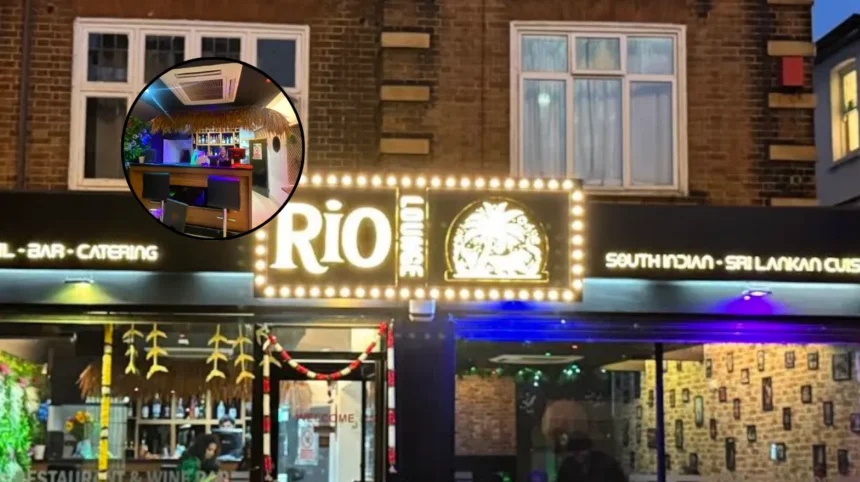
Key Points
- Zero-Star Rating Issued: Rio Lounge, an Indian and Sri Lankan restaurant located at 162-164 Cherry Orchard Road, Croydon, received a zero-star food hygiene rating—the lowest achievable score—following a council inspection.
- 43-Day-Old Food Discovered: Food safety inspectors uncovered extreme hygiene breaches, including food stored up to 43 days past its date label (dated May 22), six-week-old items retained in refrigeration, filthy surfaces, and accumulating rubbish.
- Immediate Closure Agreement: The restaurant agreed to close with immediate effect due to an “imminent risk to public health,” requiring a deep clean, staff retraining, and structural repairs before re-opening.
- FSA Standard Failures: The establishment required “urgent improvement” across all three evaluation pillars set by the Food Standards Agency (FSA): hygienic food handling, structural cleanliness and condition, and management of food safety.
- FOI Disclosure: Freedom of Information (FOI) documents obtained by media outlets detailed cracked flooring with built-up food debris, grease-laden ventilation filters, dirty hand-washing basins, and structural pest entry risks.
Croydon (South London News) September 24, 2026 – Inspectors from Croydon Council’s food safety team were left stunned during a routine visit to Rio Lounge, located on Cherry Orchard Road, when they uncovered severe public health breaches. As reported by Ezekiel Bertrand of Your Local Guardian, the Indian and Sri Lankan dining establishment was subjected to a thorough inspection that revealed food stored inside refrigeration units for up to 43 days—labeled May 22 and kept over six weeks past its viable shelf life. Alongside expired ingredients, officers recorded filthy kitchen surfaces, inadequate food storage practices, and significant rubbish piling up within the external premises.
As reported by Ezekiel Bertrand of Your Local Guardian, food safety officers awarded the venue a hygiene score of zero out of five under the national Food Hygiene Rating Scheme. Under the statutory guidelines defined by the Food Standards Agency (FSA), a zero-star score indicates that “urgent improvement is necessary” to protect public health and prevent potential foodborne illnesses. Furthermore, details released via a Freedom of Information (FOI) request obtained by Ezekiel Bertrand of Your Local Guardian confirmed that the business agreed to close with immediate effect due to an “imminent risk to public health” until all corrective measures were completed.
Why Did Rio Lounge Receive The Lowest Possible Food Hygiene Score?
The inspection evaluated Rio Lounge across the three core criteria assessed during any standard environmental health audit. Officers determined that the establishment required urgent remedial action in every single category examined.
- Hygienic Food Handling: This area examines how food is prepared, cooked, reheated, cooled, and stored. As reported by Ezekiel Bertrand of Your Local Guardian, the presence of 43-day-old food in the fridge highlighted fundamental failures in date labelling, stock rotation, and temperature management.
- Cleanliness and Condition of Facilities: This assessment evaluates the physical environment, layout, ventilation, handwashing equipment, and pest control provisions. As reported by Ezekiel Bertrand of Your Local Guardian, inspectors documented cracked flooring with built-up food debris, heavily greasy ventilation filters, a hand basin contaminated with food waste, and accumulated external rubbish increasing the risk of pest ingress.
- Management of Food Safety: This pillar checks whether a business maintains formal written systems to ensure food served to the public is safe, alongside assessing staff training and inspector confidence in future compliance. As reported by Ezekiel Bertrand of Your Local Guardian, the council team recorded a total breakdown in safety management protocols, noting that safety paperwork was inadequate and staff required urgent refresher training.
As reported by Ezekiel Bertrand of Your Local Guardian, the Food Standards Agency publishes these metrics openly to assist consumers in making informed decisions. While a five-star rating represents “very good” compliance and a three-star rating denotes “generally satisfactory” standards, a zero rating is reserved strictly for premises presenting severe risk factors.
How Has The Business Responded And What Is Its Current Operating Status?
Following the publication of the zero-star rating on the official FSA portal, journalists sought to inspect the physical premises and seek clarification from the business owners regarding the corrective actions being taken.
As reported by Ezekiel Bertrand of Your Local Guardian, reporters visited the Cherry Orchard Road premises during hours when the restaurant was listed online as being open for business; however, the venue was observed to be shuttered with no operational activity. Ezekiel Bertrand of Your Local Guardian further noted that formal inquiries were sent to Rio Lounge management for comment, but no response was received prior to publication. Under standard regulations, food businesses receiving a zero rating maintain the right to appeal the decision within 14 days, submit a formal ‘right to reply’ outlining completed corrective measures, or apply for a paid re-inspection once all highlighted statutory breaches have been rectified.
Background Of The Croydon Food Safety Framework
The Food Hygiene Rating Scheme operates as a joint initiative between the Food Standards Agency and local authorities across England, Wales, and Northern Ireland. In the London Borough of Croydon, environmental health officers conduct unannounced inspections of all food business establishments—ranging from fine dining venues and takeaways to school canteens—to ensure strict compliance with the Food Safety and Hygiene (England) Regulations 2013 and the Regulation (EC) No 852/2004 on the hygiene of foodstuffs.
Inspections are prioritized using a risk-based assessment framework, where establishments handling high-risk foods or exhibiting a history of poor compliance are subjected to more frequent unannounced audits. When severe failures are identified, local authorities possess statutory powers under the Food Safety Act 1990. These powers range from issuing formal Hygiene Improvement Notices (HIN) and Emergency Prohibition Notices—which immediately shutter a venue if an imminent risk to health exists—to initiating criminal prosecutions in the Magistrates’ Court, which can result in unlimited fines or operational bans for business proprietors.
Explore More Croydon News
Croydon Approves 2026 Strategy to Reduce Temporary Accommodation in Croydon 2026
Croydon Proposes GPS Tags for Persistent Shoplifters in Croydon 2026
Prediction: How This Development May Impact Local Consumers And Businesses
This development is likely to have immediate and far-reaching consequences for several key stakeholder groups across the local area:
- Impact on Local Consumers and Diners: Public trust among local residents in Croydon is expected to experience a sharp decline regarding nearby dining establishments. With food safety ratings publicly searchable via central government databases and local media coverage, consumer scrutiny will intensify. Local diners are likely to exercise heightened caution, relying strictly on door-displayed FSA stickers and digital hygiene scores before choosing where to purchase food.
- Impact on Nearby Hospitality Businesses: Surrounding food vendors and compliant restaurants along Cherry Orchard Road and the wider East Croydon area may see a temporary shift in footfall. While reputable businesses maintaining four- and five-star ratings could experience an influx of cautious customers diverted from lower-rated premises, the overall reputation of the local dining corridor could face short-term collateral strain until regulatory compliance across the district is visibly reinforced.
- Impact on Local Regulatory Enforcement: Croydon Council’s food safety team is likely to increase the frequency of unannounced follow-up visits across high-risk establishments in the borough. The exposure of severe breaches serves as a catalyst for local authorities to double down on monitoring, ensuring that businesses failing to maintain basic hygiene standards are swiftly brought into compliance or removed from operation to safeguard public health.