Key Points
- Berrylands station in South London is scheduled to reopen at the end of September following a closure that began on Monday, May 11, for an extensive £6 million modernisation scheme.
- The project, a joint initiative managed by Network Rail and South Western Railway (SWR), was designed to replace ageing 1930s timber platforms and supporting structures resting on a five-metre embankment.
- Engineers have replaced the old infrastructure with durable glass-reinforced plastic platforms, alongside widening narrow sections to improve overall accessibility and safety.
- Passengers will benefit from upgraded platform lighting, closed-circuit television (CCTV), customer information screens, station help points, and newly installed waiting shelters.
- During the closure period spanning over four months, rail replacement bus services operated every 30 minutes between New Malden and Surbiton while the ticket office, car park, and toilet facilities remained completely shut.
- Additional surveys undertaken during construction revealed significant deterioration within parts of the station staircases, prompting engineers to install temporary staircases on both sides of the station to maintain safe access upon reopening.
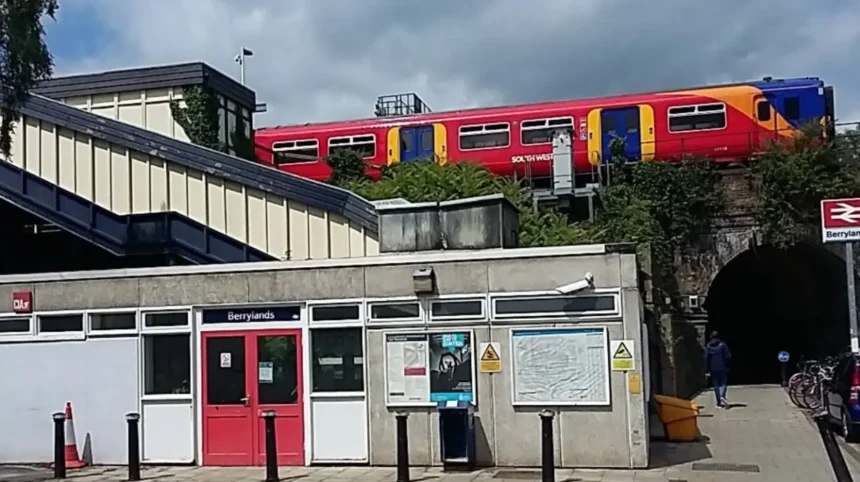
South London (South London News) September 25, 2026 – As reported by George Murrell, Wessex Route Renewals Director speaking on behalf of Network Rail and South Western Railway, Berrylands station is reopening to the public to provide passengers with a much brighter, more welcoming environment equipped with modern platforms and enhanced facilities. The closure, which commenced on Monday, May 11, was implemented to facilitate a comprehensive £6 million overhaul aimed at bringing the vital suburban transport hub into the modern era. As detailed by transport journalists covering the regional infrastructure project, the station sits atop a five-metre-high embankment and previously relied on timber platforms and structures dating back to the 1930s that had reached the end of their operational lifespan.
What Specific Infrastructure Improvements Have Been Delivered During the £6 Million Makeover?
As outlined in official project updates published by Network Rail, the heavy engineering works focused primarily on the total removal and replacement of the station’s two deteriorating timber platforms. In their place, engineers installed advanced glass-reinforced plastic modules designed to substantially extend the structural integrity and operational life of the station for decades. Furthermore, narrow sections of the platforms have been widened to improve pedestrian flow, safety, and accessibility for all travellers. Alongside structural renewals, the project incorporated the installation of new platform lighting, upgraded CCTV coverage, modern customer information screens, station help points, and fresh waiting shelters on both platforms.
How Were Commuters Affected During the Four-Month Construction Phase?
According to operational notices issued by South Western Railway, the complete shutdown of Berrylands station meant that all scheduled SWR services ran straight through the location without stopping for the duration of the works. To maintain connectivity for local residents, a dedicated rail replacement bus service ran every 30 minutes between New Malden and Surbiton. Commuters travelling towards London were instructed to use New Malden station, while those heading toward Woking were directed to join services from Surbiton. During this period, the station’s ticket office, car park, and toilet facilities were entirely closed to the public. Local communities also navigated minor disruptions, including intermittent footway restrictions on Lower Marsh Lane, parking suspensions on Chiltern Drive, and temporary road closures permitted to facilitate heavy construction access.
Why Are Temporary Staircases Being Installed Upon Reopening?
As specified in recent technical statements released by Network Rail’s asset management team, further investigation during the construction phase revealed significant structural deterioration within parts of the existing station staircases. Prioritising passenger and staff safety above all else, project leaders decided that the permanent staircases would remain closed even as the platforms reopen. To guarantee uninterrupted public access, construction teams initiated the fast-tracked assembly of temporary staircases on both sides of the station, ensuring that the reopening schedule at the end of the month remains on target. Final snagging works and site demobilisation will continue through November, though these final touches will not impact passenger train services.
Background of the Development
The £6 million transformation of Berrylands station stems from decades of wear on infrastructure that originally dated back to the 1930s. Situated on a high embankment in south-west London, the station serves as a critical commuter link on the South Western Railway network connecting suburban passengers toward London Waterloo and regional hubs. Over preceding years, minor maintenance and localized platform extensions—such as those completed in 2014—kept the station operational, but the core timber platforms ultimately deteriorated past their sustainable economic and operational life. Network Rail selected a synchronized, dual-platform closure strategy over a staggered single-platform approach to halve the overall construction timeline, avoiding prolonged multi-year disruption and responsibly managing public expenditure.
Prediction
The reopening of Berrylands station will immediately restore direct rail connectivity for local residents, commuters, and businesses who have relied heavily on substitute bus services since May. For daily commuters travelling from south-west London, the transition from timber surfaces to modern, widened glass-reinforced plastic platforms will eliminate persistent safety concerns associated with narrow boarding zones and ageing structures. Furthermore, the integration of advanced CCTV, contemporary customer information screens, and upgraded lighting is expected to enhance passenger confidence, improve evening security, and streamline journey reliability. While the initial deployment of temporary staircases indicates that minor follow-up civil engineering will continue into late autumn, the overarching development secures a resilient, low-maintenance transport gateway capable of serving the local community reliably for generations to come.