Key Points
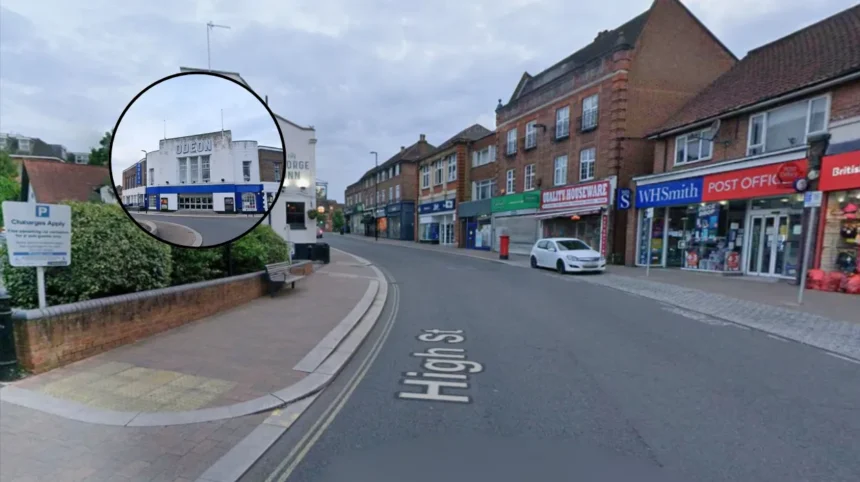
- The historic ODEON cinema on Beckenham High Street will permanently close its doors at the end of November 2026.
- Landlord and building owner Citygate Church has decided to repurpose the site into a place of worship and community venue.
- Citygate Church is preparing a formal planning application for Bromley Council to change the building’s use.
- Proposals include returning the Art Deco venue to a single auditorium, restoring its exterior, and unearthing original decorative features currently concealed.
- Pre-application discussions between Citygate Church and Bromley Council officers have already taken place.
- ODEON confirmed that its primary focus is redeploying affected staff to alternative cinema venues across its regional network.
- A public drop-in consultation meeting is scheduled for Saturday, 10 October 2026, at Citygate Church on Rectory Road, with online consultation open until Tuesday, 13 October 2026.
Beckenham (South London News) September 26, 2026 — As reported by Rebecca McCulloch of MyLondon and Ezekiel Bertrand of the News Shopper, the historic Grade II-listed ODEON cinema located on Beckenham High Street will permanently cease operations at the end of November 2026 after its landlord, Citygate Church, took the commercial decision to repurpose the premise.
- Key Points
- What Is the History and Architectural Heritage of the Beckenham Cinema Building?
- How Will the Property Be Converted into a Place of Worship?
- What Steps Are Required in the Planning Approval Process with Bromley Council?
- Background of the Particular Development
- Prediction: How This Development Can Affect the Local Community and Cinema Visitors
The upcoming closure will bring an end to a quarter-century of continuous operation by the cinema chain, which took over the lease in 2000. As reported by Ezekiel Bertrand of the News Shopper, an official ODEON spokesperson stated:
“ODEON Beckenham will be closing at the end of November 2026, following the landlord’s decision to repurpose the building. The cinema will continue to welcome guests as usual until then.”
The official spokesperson further added via statements provided to media outlets:
“We would like to apologise to our guests for any inconvenience this will cause. Supporting our team is our number one priority, and we will look to secure roles for as many affected colleagues as possible at our other cinema locations. We have been proud to serve our guests at ODEON Beckenham and to have brought years of film magic to the local community.”
As reported by Rebecca McCulloch of MyLondon, building owner Citygate Church is preparing a formal planning submission to Bromley Council to convert the multi-screen Art Deco complex into a dedicated place of worship and local assembly space. Pre-application discussions between the church leadership and municipal planning officers at Bromley Council have already taken place to establish the parameters of the development.
According to consultation materials published by Citygate Church and cited by MyLondon, the proposed structural and architectural works aim to return the internal structure of the Art Deco building to a unified single auditorium format. The project plans to reveal original interior decorative elements that have remained obscured by sub-division works, alongside carrying out essential repair and restoration work on the building’s external façade.
To outline the development plans to local residents and stakeholders, Citygate Church has announced a public drop-in meeting from 10:00 to 14:00 on Saturday, 10 October 2026, at its premises on Rectory Road, Beckenham. Furthermore, local residents are being invited to participate in an online feedback survey regarding the site’s future, which will remain open until 17:00 on Tuesday, 13 October 2026.
As detailed by Rebecca McCulloch of MyLondon, the site has operated as a continuous entertainment venue since 1930, when it initially opened its doors to the public as The Regal Cinema with a screening of The Rogue Song. Over the subsequent seven decades, the property transferred between multiple entertainment operators before ODEON acquired the leasehold in 2000. The structure retained its architectural prominence on the High Street, narrowly escaping damage during a major structural fire at an adjacent commercial property in September 2025, which was successfully contained by the London Fire Brigade before reaching the cinema.
What Is the History and Architectural Heritage of the Beckenham Cinema Building?
The site located on Beckenham High Street represents a notable example of 1930s suburban cinema architecture in Greater London. Originally commissioned and constructed as The Regal Cinema, the building opened to audiences in 1930 during the golden age of British picture house expansion. Its design features distinct Art Deco visual elements, reflecting the popular aesthetic, structural engineering, and cultural motifs of the interwar period.
Over decades of commercial operation, the venue underwent structural alterations to adapt to changing film distribution models and cinema audience trends. Most significantly, the original grand single auditorium—designed to accommodate large audiences during the early era of talking pictures—was subdivided into a multi-screen configuration containing six individual auditoriums. This adaptation allowed the facility to screen multiple titles concurrently during its tenure under ODEON management from 2000 onwards.
Recognised for its historical and architectural interest, the building received Grade II-listed status, placing statutory protections on its key structural features and external appearance. The survival of its original internal architectural detailing behind modern screening dividers has made it a subject of historic interest among architectural conservators and local heritage groups.
How Will the Property Be Converted into a Place of Worship?
The physical conversion proposed by Citygate Church involves substantial architectural alterations to reverse previous commercial conversions. The central aspect of the church’s draft proposal submitted during pre-application discussions with Bromley Council involves removing the internal partition walls that previously divided the space into six separate screening rooms.
By dismantling these modern internal partitions, the project intends to re-establish the venue’s historical layout as a singular large-format assembly space. Citygate Church indicated on its consultation platform that this restoration process will expose original plasterwork, decorative cornicing, and architectural features installed during the building’s 1930 construction that were covered during previous renovations.
In addition to internal reconfigurations, the planned works incorporate external conservation procedures. The exterior façade facing Beckenham High Street will undergo masonry repairs, restoration of original brickwork and stone accents, and maintenance to stabilize the building’s envelope in compliance with Grade II listing heritage standards enforced by local planning guidance.
What Steps Are Required in the Planning Approval Process with Bromley Council?
Before any structural transformation or change of use can commence, Citygate Church must secure formal planning permission and listed building consent from Bromley Council. Because the structure is Grade II-listed, any internal or external alterations are subject to stringent planning regulations under national heritage guidelines and local planning framework policies.
The process initiated by the applicant involves several structured stages:
- Pre-application Consultation: Preliminary discussions have been conducted between Citygate Church representatives and Bromley Council planning officers to review spatial requirements, transport impact, and heritage conservation standards.
- Public and Community Engagement: The applicant has opened a consultation window ending on 13 October 2026, allowing local residents, business owners, and community organisations to view draft plans and submit feedback via online surveys and public drop-in sessions.
- Formal Application Submission: Following community engagement, a full planning application detailing change of use (from Commercial, Business and Service to Worship/Community use) and listed building consent will be submitted to Bromley Council’s planning portal.
- Statutory Consultation Period: Bromley Council will publish the formal application, initiating a statutory public notice period during which neighbours, local heritage groups, highways authorities, and Historic England can submit official representations.
- Planning Committee Decision: Planning officers will evaluate the application against local development plans, heritage preservation guidelines, and public comments before presenting a recommendation to the council’s Planning Control Committee for a final decision.
Background of the Particular Development
The transition of commercial picture houses into places of worship and multi-purpose community hubs reflects broader commercial and demographic trends across the United Kingdom’s leisure and property sectors. Over the past decade, traditional multi-screen cinema operators have faced evolving economic conditions driven by changing media consumption habits, the expansion of direct-to-consumer digital streaming services, rising operational overheads, and shifting high street footfall patterns.
Concurrently, independent religious groups and non-denominational churches in metropolitan areas have frequently sought large, high-capacity commercial properties equipped with expansive floor plates, steep-tiered seating, and central urban access. Former 1930s cinema buildings—built specifically for high-capacity public gatherings—often fit these spatial criteria, providing existing structural layouts capable of hosting large congregations without requiring complete ground-up construction.
In the case of the Beckenham site, the property’s ownership structure was previously established when Citygate Church acquired the freehold of the High Street building. While ODEON continued to operate the premises under a commercial lease agreement, the impending conclusion of that arrangement allowed the landlord to exercise its property rights to repossess the site for its own operational and ministerial purposes. This shift reflects a wider regional pattern in South London and Greater London, where historic leisure structures are increasingly repurposed by owner-occupiers for social, educational, and religious functions.
Prediction: How This Development Can Affect the Local Community and Cinema Visitors
The permanent closure of ODEON Beckenham and the subsequent conversion of the building into a place of worship will produce distinct operational, social, and economic effects across various segments of the local population in Beckenham and the wider London Borough of Bromley.
Impact on Filmgoers and Local Cinema Visitors
For local moviegoers, the closure removes the sole primary cinema venue operating directly within Beckenham High Street. Residents seeking first-run theatrical film screenings will need to travel to alternative neighboring cinema facilities, such as venues located in Bromley town centre, Crystal Palace, or West Wickham. This shift increases average travel times for local families, young people, and elderly filmgoers who previously relied on the local High Street facility for low-cost, walkable leisure activities.
Impact on High Street Commercial Footfall and Evening Economy
The departure of a multi-screen commercial cinema alters the night-time economy of Beckenham High Street. Cinemas typically generate secondary footfall for surrounding food and beverage businesses, including local restaurants, pubs, and dessert parlours, prior to and following movie showtimes. The shift from a commercial entertainment venue operating late into the evening seven days a week to an assembly building primarily active during specific weekend services and weekday community slots may alter footfall patterns for nearby hospitality vendors during peak evening trade.
Impact on Local Heritage and Architectural Preservation
From a structural and historic conservation standpoint, the repurposing plan offers a defined path for physical restoration. Because Citygate Church intends to reverse previous structural subdivisions and unearth hidden 1930s Art Deco architectural features, the building’s historic interior may see enhanced long-term protection and preservation compared to continuous commercial adaptation. The restoration of the exterior facade also ensures the physical structure remains maintained as a prominent visual landmark on the High Street.
Impact on Community Facilities and Congregation Services
For members of Citygate Church and local community groups, the acquisition and full occupation of the building provides a centralized, high-capacity facility for religious services, youth programmes, and social outreach activities. The conversion into a single large auditorium creates a localized venue capable of hosting mid-scale community events, conferences, and civic gatherings, shifting the building’s functional role from commercial film exhibition to localized communal assembly.