Key Points
- Diocese Confirmation: The Diocese of Southwark has confirmed that members of the far-right group Patriot Platform have been attending services at a Church of England parish in Morden, south London.
- Attendance Figures: Investigation by anti-fascist publication Searchlight reveals that over 25 members of the movement are attending worship and considering holy baptism.
- Internal Attribution: The attendance numbers were disclosed by Jason Armstrong, a member of the South London Patriots and a churchwarden at the parish, during an appearance on the Christian YouTube channel Tough Talk.
- Prominent Figures Involved: Patriot Platform leader Daniel Thomas (also known as Danny Tommo) is among those reported to have attended services at the Morden church.
- Legal Status of Leader: Thomas was recently charged with criminal damage and failing to disclose a device PIN following an incident in the English Channel where he allegedly slashed a boat; he has pleaded not guilty.
- Episcopal Statement: Senior leadership from the Diocese of Southwark stated that whilst the Church welcomes all individuals, “we find in the Bible no grounds for the justification of Christian nationalism.”
- Distinction Between Welcome and Endorsement: The diocese emphasised that extending a pastoral welcome does not equate to condoning political ideology, menacing behaviour, or anti-migrant rhetoric.
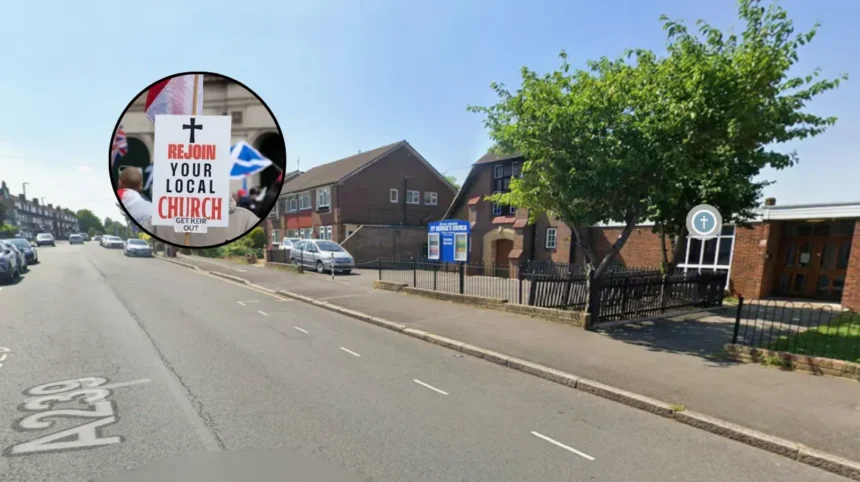
Morden (South London News) September 26, 2026 — The Diocese of Southwark confirmed on September 26, 2026, that members of the far-right organisation Patriot Platform have been regularly attending Christian worship at a Church of England parish in Morden, south London. The formal acknowledgment follows an investigation by Searchlight magazine indicating that more than 25 individuals linked to the group are participating in services and evaluating options for formal baptism. The attendance figures originated from Jason Armstrong, a churchwarden at the Morden parish and member of the South London Patriots, who disclosed the movement’s presence during an interview on the Christian online platform Tough Talk.
Among the figures reported to have joined congregational worship is the leader of the Patriot Platform, Daniel Thomas, who operates publicly under the pseudonym Danny Tommo. Thomas was charged with criminal damage and failing to comply with a device access order following an incident in the English Channel, where he was filmed allegedly damaging an inflatable vessel. Appearing at Basingstoke Magistrates’ Court, Thomas entered a plea of not guilty to both charges. Responding to public concerns regarding the group’s association with the church, diocesan leadership confirmed awareness that members of the Patriot Platform movement were gathering at the location, acknowledging worries regarding anti-migrant rhetoric being preached alongside Christian doctrine.
Church authorities reiterated that the open-door policy maintained across South London parishes does not imply alignment with the political activities or beliefs of visitors. Representatives noted that each week churches across the diocese welcome individuals from diverse ethnicities, political perspectives, and ideological backgrounds based on the theological belief that the gospel is accessible to all. However, leadership stressed that hospitality must not be confused with institutional backing. The diocese explicitly deplored violent or menacing conduct contrary to UK law or destructive to human dignity, maintaining that welcoming attendees does not constitute endorsement of their actions. Addresssing the ideological core of the group’s messaging, the bishops issued a direct theological rejection, stating that scripture offers no justification for Christian nationalism, grounding their stance in long-standing institutional commitments to anti-racism, interfaith engagement, and advocacy for marginalised populations.
What Is the Background of This Particular Development?
The development emerges against a backdrop of heightened political tension regarding cross-Channel migration and the deliberate adoption of religious symbolism by right-wing activism in the United Kingdom. Over recent months, the Patriot Platform has established itself as an umbrella network coordinating demonstrations across Dover, Portsmouth, and various immigration handling facilities. Led by Daniel Thomas, an associate of activist Stephen Yaxley-Lennon (known as Tommy Robinson), the movement has frequently incorporated Christian identity markers into its public branding, framing its political campaign around the protection of traditional British heritage.
The specific involvement with the parish in Morden came to public light following monitoring by Searchlight magazine, a publication focused on tracking far-right movements. The disclosure that over two dozen activists were attending church services was verified through public comments made by local churchwarden Jason Armstrong on the Tough Talk YouTube channel, where he discussed the group’s spiritual interest and potential baptisms.
This intersection of activist operations and parish life coincided with legal proceedings involving Thomas. The activist was arrested at a BP service station after live-streaming footage showing him using a blade on a rigid inflatable boat in the Channel while an emergency responder was present. Subsequent legal appearances at Basingstoke Magistrates’ Court confirmed he faces crown court trial proceedings in Portsmouth, with his legal representative, Simon Pentol KC, arguing that the charges pertain strictly to criminal damage rather than political activism. The convergence of these legal matters and high-profile protests prompted senior church authorities in Southwark to issue a definitive clarification regarding the boundary between Christian pastoral care and the political ideology of Christian nationalism.
How Could This Development Affect the Involved Stakeholders and Wider Audience?
The clarification issued by the Diocese of Southwark carries direct implications for churchgoers, local communities, and the broader social landscape across the United Kingdom.
For Local Parishioners and the Anglican Communion
For regular attendees of the Morden parish and the wider Church of England, the formal presence of a organized political movement within local worship creates complex operational and pastoral dynamics. While Anglican governance prioritises open access to sacraments and services, congregants may experience heightened scrutiny or security concerns during public worship. The diocese’s firm stance provides clear guidance to local clergy and churchwardens, establishing that while individuals cannot be barred from public services based solely on political views, church premises and theological frameworks cannot be utilised to legitimize anti-migrant campaigning or nationalist agendas.
For the Patriot Platform and Right-Wing Movements
For members of the Patriot Platform and similar organisations attempting to anchor their political platform within traditional Christian institutions, the explicit statement from episcopal leadership erects an official barrier. By declaring that the Bible offers no grounds for Christian nationalism, the institutional Church formally rejects attempts by activists to claim theological backing for anti-immigration campaigns. This clear theological line complicates efforts by such movements to use mainstream religious platforms to expand their appeal or recruit through established congregational structures.
For Anti-Racism Groups, Migrant Support Organisations, and the Wider Community
For advocacy groups monitoring political extremism and organizations supporting asylum seekers, the statement offers official confirmation of the boundaries set by regional church leadership. The public rejection of Christian nationalism and re-affirmation of anti-racism commitments assures community groups that central church structures are actively monitoring political infiltration attempts. Conversely, the situation highlights ongoing challenges for civil society and law enforcement as political groups increasingly move between public demonstrations, digital media platforms, and traditional community institutions.