Key Points:
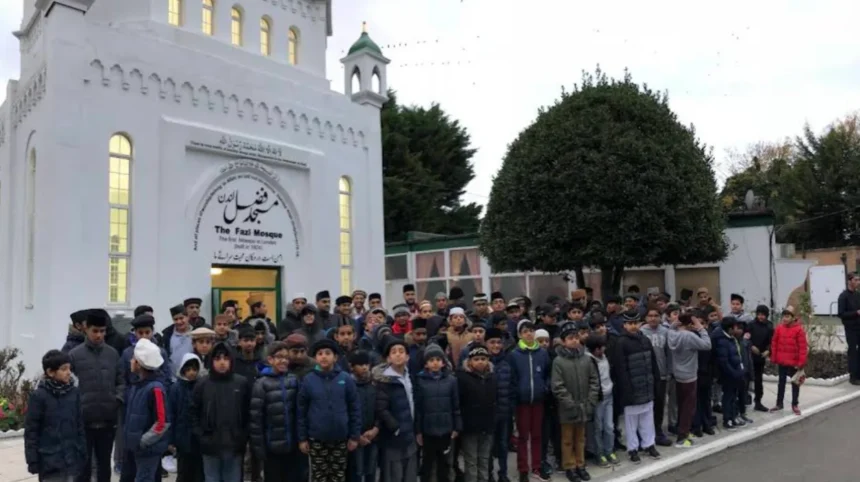
- The Fazl Mosque, London’s first purpose-built mosque located in Putney, is celebrating its 100th anniversary.
- The mosque was inaugurated a century ago after being funded almost entirely by donations from the Ahmadiyya Muslim community in India, where many women sold their jewellery to fund the construction.
- Over 600 dignitaries, including MPs, peers, and foreign diplomats, attended the original opening ceremony.
- Centenary celebrations included a street party, a banquet attended by over 1,000 people from across the UK, and the distribution of 10,000 meals to homeless people.
- The current imam, Usman Shazad Butt, highlighted the milestone as both a moment of joy and a reflection on the mosque’s commitment to serving humanity and fostering peace.
- The Ahmadiyya community originated in late 19th-century Punjab, with its first UK missionaries arriving in 1913.
Putney (South London News) October 7, 2026 – One hundred years after a historic call to prayer first echoed through the south London neighbourhood of Putney, the Fazl Mosque has marked its 100th anniversary with widespread community events and charitable initiatives. Established as London’s first purpose-built mosque, the institution commemorated its centenary by distributing 10,000 meals to homeless individuals across the capital, hosting a street party, and holding a grand celebratory banquet attended by more than 1,000 guests from across the United Kingdom.
How Was the Fazl Mosque Founded and Funded a Century Ago?
The historical foundations of the Fazl Mosque date back to the early 20th century following the arrival of the Ahmadiyya Muslim movement’s first missionaries in the United Kingdom in 1913. These early representatives became a regular presence at Hyde Park’s Speakers’ Corner, engaging in public dialogue and lay foundation work for an established centre in the capital.
The funding for the construction of the Putney mosque was raised almost exclusively through voluntary contributions from Ahmadiyya community members in India. Historical records indicate that numerous women sold their personal jewellery and family valuables to ensure the necessary financial resources were secured for the land acquisition and building work in south London.
Upon its completion, the inauguration ceremony drew more than 600 distinguished guests, including British Members of Parliament, peers, and international diplomats. During the official opening proceedings, a letter from Mirza Basheer-ud-Din Mahmood Ahmad, the second caliph of the Ahmadiyya community, was formally presented to the audience. In the letter, Mirza Basheer-ud-Din Mahmood Ahmad stated that “we will try to remove the feelings of hatred and enmity from betwixt the followers of different religions and will do our best to create the true spirit of search.”
What Role Does the Mosque Play in the Modern Local Community?
In the present day, the institution continues to function as a focal point for religious services, local civic engagement, and charitable activities. Reflecting on the 100-year milestone, Usman Shazad Butt, who has fulfilled the role of imam at the mosque for the past four years, outlined the dual purpose of the anniversary celebrations as both a period of commemoration and a renewal of social duties.
Usman Shazad Butt stated that “marking 100 years is a moment of joy for us but also of reflection as we remind ourselves of our responsibilities,” adding that these obligations encompass “not only to pray five times a day but to serve God’s creation. The mosque serves as a beacon of hope and peace.”
Imam Usman Shazad Butt, who grew up attending services at the Putney location prior to taking up his official duties, reflected on his personal connection to the site, stating that “throughout my whole life, this mosque helped me — someone who was born and raised here in this country — shape who I am and what I stand for.” He further noted that “on a personal level, it’s a huge honour for me to be able to serve this mosque at the time when it is celebrating 100 years.”
What Is the Background of the Ahmadiyya Muslim Community in the UK?
The Ahmadiyya movement traces its historical origins to the late 19th century in the Punjab region of South Asia. Followers of the movement accept Mirza Ghulam Ahmad as the promised Mahdi and Messiah. Following the arrival of its pioneers in Britain prior to the First World War, the community sought a permanent location to establish headquarters and a regular place of worship, leading directly to the acquisition of the site in Putney and the eventual opening of the Fazl Mosque in the 1920s. Over the subsequent decades, the site served as a key administrative and spiritual centre for the UK branch of the movement.
What Is the Future Outlook for the Community and Local Stakeholders?
The completion of the centenary events indicates that the mosque will maintain its established focus on interfaith outreach, local civic cooperation, and direct charitable provision. For the local population in Putney and broader London, the institution’s ongoing public programmes—such as large-scale meal distributions and open neighborhood events—are expected to continue fostering civic integration and structured charitable support for vulnerable demographics.