Key Points
- An subterranean Second World War air raid shelter capable of accommodating up to 800 people has been uncovered during major town centre regeneration works in Lewisham.
- The subterranean structure successfully withstood a direct Nazi rocket attack during the war that killed over 50 people on the high street above.
- Construction on a new market canopy was delayed after engineering teams encountered exceptionally thick concrete and unmapped underground structures.
- Entrances to the wartime shelter remain sealed, meaning the facility will be preserved beneath the newly renovated market.
- Lewisham Council has indicated it will explore options for public access if sufficient community interest is expressed.
Lewisham (South London News) October 9, 2026 — As reported by Darryl Chamberlain of The Greenwich Wire, an underground air raid shelter constructed during the Second World War to protect up to 800 civilians has been uncovered beneath Lewisham town centre during major regeneration works. The subterranean facility, which survived a lethal wartime rocket strike on the high street, was re-encountered by engineering teams undertaking groundwork for a new street market canopy.
- Key Points
- How Was the Underground Wartime Shelter Discovered?
- What Is the Historical Significance of the Lewisham Shelter?
- Will the Public Be Allowed Access to the Subterranean Structure?
- Background of the Lewisham High Street Development
- Prediction: How This Development Can Affect the Local Community and Stakeholders
How Was the Underground Wartime Shelter Discovered?
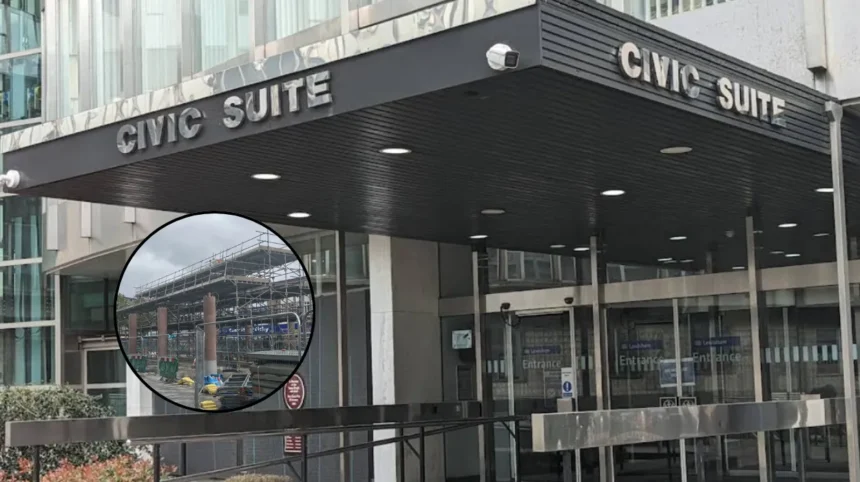
As detailed by Darryl Chamberlain of The Greenwich Wire, the discovery emerged following delays to the installation of a new market canopy in Lewisham high street. Lewisham Council published a formal progress report regarding the town centre overhaul—which incorporates a revised market layout alongside a culture and business hub within the local library—noting that subterranean obstructions had slowed progress.
According to the council’s progress documentation, site operations encountered exceptionally deep concrete, unmapped utilities, water infrastructure, and a previously uncharted underground structure built for wartime defence. Historical reports from 1939 confirm that exceedingly heavy concrete was poured as an overhead covering during the original construction to safeguard civilians against heavy bombing raids.
What Is the Historical Significance of the Lewisham Shelter?
As noted by Darryl Chamberlain of The Greenwich Wire, the shelter is notable for having withstood a high-street attack during the Blitz era that resulted in more than 50 civilian fatalities. Archives indicate that during a specific attack, no warning sirens sounded prior to the impact, leaving shoppers and local stallholders unable to reach the safety of the underground bunker.
While a nearby Marks & Spencer department store was completely destroyed in the explosion, the shelter sustained minimal structural damage, and its sole occupant at the time survived unharmed. Public anger surrounding the failure of the warning system persisted after the incident, culminating in Prime Minister Winston Churchill being booed by local residents during a campaign visit to Lewisham the following year.
Will the Public Be Allowed Access to the Subterranean Structure?
As reported by Darryl Chamberlain of The Greenwich Wire, there is currently no physical access for members of the public, as the entry points were sealed in the years following the conclusion of the Second World War. Consequently, the shelter is scheduled to remain sealed beneath the foundations of the modernized market canopy.
However, Lewisham Council officials have stated that the authority would review potential options to enable public access or visibility if sufficient interest is demonstrated by the community.
Background of the Lewisham High Street Development
The discovery of the wartime air raid shelter occurs within the framework of Lewisham Council’s broader master plan to modernize the town centre infrastructure. Designed to revitalize the local economy, the regeneration project involves installing a permanent canopy over the historical street market to protect traders and visitors from inclement weather, alongside upgrading public realm spaces and establishing a commercial and cultural hub within Lewisham Library.
Subterranean survey complications are common across older urban environments in London, where wartime civil defense infrastructure was rapidly built during the late 1930s and early 1940s. Many public air raid shelters, street-bunker networks, and reinforced subterranean chambers were closed off and capped with concrete following the war, resulting in incomplete mapping within modern municipal utility databases.
Prediction: How This Development Can Affect the Local Community and Stakeholders
The unearthing of the wartime shelter is expected to impact several distinct groups within the area:
- Local Traders and Shoppers: Construction timelines for the new market canopy have faced disruption due to the extra engineering required to clear and secure the reinforced concrete structures underneath. In the short term, stallholders may experience extended operational adjustments until civil engineering works conclude.
- Local Historians and Heritage Advocates: The revelation provides an opportunity for local heritage groups to advocate for the preservation or formal documentation of Lewisham’s wartime history. If public interest leads to secondary site assessments or digital access initiatives, it could enhance cultural heritage engagement within the borough.
- Lewisham Council and Infrastructure Developers: The necessity to navigate uncharted wartime infrastructure presents logistical and budget considerations for project managers. Future development plans along the high street will likely require comprehensive ground-penetrating radar surveys to account for additional forgotten civil defense works.